

413 results

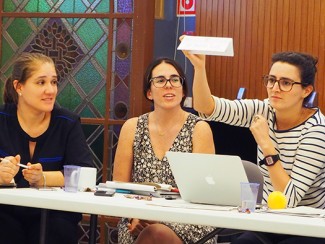
Tunis, September 24, 2018—The International Center for Transitional Justice and the University of Birmingham launched Voices of Memory, an interactive exhibition inspired by a collective of nine Tunisian women from across the country and from different generations. The exhibition is the first collective testimonial of Tunisian women who experienced human rights abuses under the Ben Ali regime.

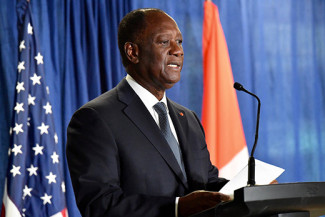
On the eve of Côte d'Ivoire’s 58th independence anniversary, in a dubious attempt at “social cohesion,” President Alassane Ouattara granted amnesty to 800 persons accused or convicted of crimes against the state during the post-election crisis of 2010-2011. Former First Lady Simone Gbagbo — who had been tried for undermining state security — and other high-ranking officials associated with former President Laurent Gbagbo’s party, the Ivorian Popular Front (FPI), were among those released. The lapses in accountability and acknowledgment in Cote d’Ivoire have emboldened perpetrators and made it impossible for many victims to move on with their lives. The challenges of transitional justice processes present clear obstacles to the sustainable peace that the people of Cote d’Ivoire have been working toward.

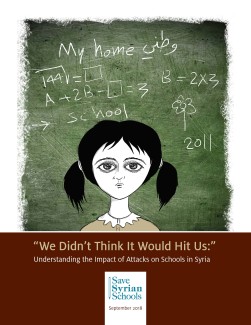
This report examines attacks on schools in Syria from multiple angles: from the legal implications of such attacks to the everyday impact on students, teachers, families, and society at large. It is the product of Save Syrian Schools, a collaborative project led by...

A new report on attacks on schools in Syria harnesses documentation to call attention to atrocities and advance storytelling, truth seeking, acknowledgment. It is the product of Save Syrian Schools, a collaborative project led by 10 Syrian civil society organizations and the ICTJ that demands an end to the killing of Syrian children and justice for the bombing of schools.

Life continues to stand still for the many families of the missing and disappeared in Lebanon. The Lebanese War ended 28 years ago, but for these families the war rages on. A recent legislative breakthrough, however, might finally pave the way for Lebanon to confront this legacy.

By looking at the documentation efforts of Syrian civil society organizations, this paper challenges the notion that criminal prosecution is the sole avenue of justice available for alleged crimes in Syria. Documentation could be used for important other avenues of justice, such as ac...

ICTJ sits down with Syria Expert Nousha Kabawat to pause and reflect on the progress made so far in building capacity, raising awareness, and initiating high-level dialogue to address what remains a perilous situation.

TUNIS—ICTJ hosted a conference on May 2 and 3 to address the current challenges facing Tunisia’s Specialized Criminal Chambers (SCC) as it proceeds to adjudicate cases of serious human rights violations committed under the former regime. The 90 guests who attended included members of Tunisia’s Truth...

This briefing paper focuses on the role of victims of human rights violations in criminal proceedings. This paper will provide examples of recent developments in the advancement of victim participation in criminal proceedings in international criminal law and domestic jurisdictions.&n...

Pursuing justice in a transitional context may take the form of multiple measures and goes beyond the pursuit of criminal prosecutions. Tunisia’s Basic Law on Transitional Law, adopted in December 2013, is a case in point. Despite its flaws, the the law introduced a fairly c...