



129 results

The conviction of Thomas Lubanga is a milestone for the international criminal justice system and may make an important contribution to the development and definition of the right to reparations in international human rights law. Accompanying a submission filed with the ICC in advance of its reparations proceedings, ICTJ has produced a briefing note examining what lessons the court can learn from the broader transitional justice field.

The conviction of Thomas Lubanga is a milestone for the international criminal justice system established by the Rome Statute, and may make an important contribution to the development and definition of the right to reparations in international human rights law. ICTJ has produced a br...

After three years on trial and a total of seven in detention, Thomas Lubanga gained the dubious notoriety of becoming the first person to be convicted by the International Criminal Court (ICC) in The Hague. It would be encouraging if the court, including the prosecution, indicated it saw Lubanga’s judgment as an opportunity to learn critical lessons as well as celebrate a historic day in international justice.

For the millions of victims of the country’s successive wars, Lubanga is just one of many who are responsible for crimes on an astonishing scale. Congolese authorities must end the widespread impunity enjoyed by those who remain in positions of power in the government and military or violence and instability are likely to continue for years to come.

Case studies on the use of pardons in Argentina, Chile, El Salvador, Peru, and South Africa.

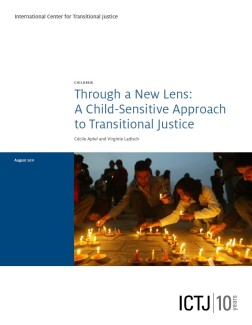
“Through a New Lens: A Child-Sensitive Approach to Transitional Justice” analyzes experiences of four countries—Liberia, Democratic Republic of Congo (DRC), Colombia and Nepal—and identifies some key lessons on children’s participation in transitional justice measures. Authored by Céc...

ICTJ filed an amicus brief in the apartheid reparations case before the Southern District Court of New York on November 25, 2009. The brief supports a decision by the South African Government not to oppose legal action against five international companies that are accused of aiding an...

The South African Coalition for Transitional Justice (SACTJ) submits the following comments regarding the May 11, 2010 General Notice 282 published in the Government Gazette. The Coalition objects to the Notice 282 regulations on procedural, constitutional, and international law groun...

On May 11, the South African Department of Justice and Constitutional Development (DOJ) invited comments on new regulations governing the distribution of reparations to victims of the apartheid era in the form of medical and educational benefits. Civil society organizations and groups representing survivors’ interests have raised concerns regarding the scope of the regulations, as well as the DOJ’s overall failure to engage with survivors and consider their views when drafting reparations policies.

The development of effective transitional justice policies in the Democratic Republic of Congo has been plagued by lack of security, fear of destabilization, limited political will, and scarce resources. This paper focuses on three specific measures of transitional justice: prosecutio...