

256 results

This report is the result of research conducted by consultant Olga Lucía Gaitán for the International Center for International Justice (ICTJ) to analyze the rulings handed down by the Justice and Peace Chambers and the Criminal Chamber of the Supreme Court of Justice in Colombia. The ...

By this summer, dozens of paramilitaries and guerrillas in Colombia's Justice and Peace process will have already spent eight years in prison. In accordance with the law, those who fulfill their obligations to contribute to the truth and provide reparation to victims should be released after serving eight years. In this op-ed, ICTJ's Maria Camila Moreno analyzes the valuable lessons learned through this process.

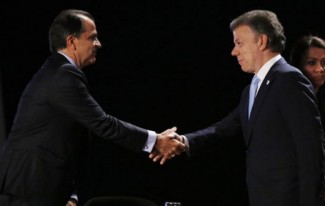
The recent re-election of Colombia’s president, Juan Manuel Santos, brings hope to a country seeking to end a half-century of conflict. But, as with so many peace processes, finding a balance between creating a stable accord and acknowledging the terrible injustices that occurred during the conflict can be difficult to achieve.

More than fifty years of conflict in Colombia have left hundreds of thousands of victims of multiple forms of violence, such as forced disappearance, murder, extra-judicial executions, kidnappings, torture and various forms of sexual and gender-based violence, including rape.

Truth commissions can make important contributions to peace processes if all parties can agree on common objectives and there is genuine local political will to shed light on past events. This is the key finding of a new study – titled “Challenging the Conventional: Can Truth Commissions Strengthen Peace Processes?” – to be released on 19 June 2014 by ICTJ and the Kofi Annan Foundation.

This joint report by ICTJ and the Kofi Annan Foundation explores common assumptions about why truth commissions are created in the wake of armed conflict and what factors make them more likely to succeed – or fail. It arises from a high-level symposium hosted by the two organizations ...

Recent developments in the country are challenging the taboos of publicly acknowledging sexual violence and paving the way to addressing the impact of conflict on women. Steadily, a broader conversation on a gender-sensitive approach to truth and accountability is burgeoning in Colombia, as well as on promoting women’s active participation in decision-making processes to redress victims of human rights violations.

Colombia is at a crossroads after the results of the first round of the presidential elections, and the results could have grave consequences for the country's ongoing peace talks. In this interview, Maria Camila Moreno, director of ICTJ's Colombia program explains what's at stake.

ICTJ participated in the launch of a new report on the relationship between transitional justice and development, launched by the Swedish International Development Agency (Sida).

A new amnesty law passed by the government in the Democratic Republic of the Congo (DRC) will grant amnesty to hundreds of members of armed groups engaged in hostilities, including members of the infamous M23 rebels, but stops short of pardoning serious crimes.