


203 results

Transitional justice, at the core of its mission, strives to “break the ground on a future of peace and stability.” For countries with a violent or repressive past—and this can be said of most—implementing truth-seeking, criminal justice, reparations, and institutional reform measures forms the basis for establishing a culture of justice and respect for the rule of law.

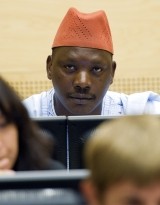
The conviction of Thomas Lubanga is a milestone for the international criminal justice system and may make an important contribution to the development and definition of the right to reparations in international human rights law. Accompanying a submission filed with the ICC in advance of its reparations proceedings, ICTJ has produced a briefing note examining what lessons the court can learn from the broader transitional justice field.

The conviction of Thomas Lubanga is a milestone for the international criminal justice system established by the Rome Statute, and may make an important contribution to the development and definition of the right to reparations in international human rights law. ICTJ has produced a br...

The National Conference to Launch a Dialogue on Transitional Justice in Tunisia was held on Saturday, April 14 in Tunis, initiating a process which should result in the adoption of a comprehensive law on transitional justice by the country’s National Constituent Assembly. ICTJ president David Tolbert delivered a keynote address.

After three years on trial and a total of seven in detention, Thomas Lubanga gained the dubious notoriety of becoming the first person to be convicted by the International Criminal Court (ICC) in The Hague. It would be encouraging if the court, including the prosecution, indicated it saw Lubanga’s judgment as an opportunity to learn critical lessons as well as celebrate a historic day in international justice.

For the millions of victims of the country’s successive wars, Lubanga is just one of many who are responsible for crimes on an astonishing scale. Congolese authorities must end the widespread impunity enjoyed by those who remain in positions of power in the government and military or violence and instability are likely to continue for years to come.

This year’s Annual Emilio Mignone Lecture on Transitional Justice, coordinated by ICTJ and the Center for Human Rights and Global Justice at the NYU School of Law, focused on the intersection between transitional justice and international development.

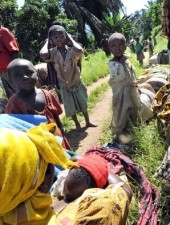
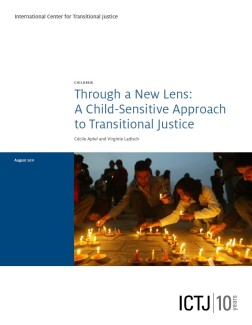
“Through a New Lens: A Child-Sensitive Approach to Transitional Justice” analyzes experiences of four countries—Liberia, Democratic Republic of Congo (DRC), Colombia and Nepal—and identifies some key lessons on children’s participation in transitional justice measures. Authored by Céc...

The International Criminal Court (ICC) must better communicate what is driving its actions to the public of the Middle East and North Africa (MENA) and elsewhere around the world if it is to develop confidence in its capacity to act as a guardian of international criminal law.

The development of effective transitional justice policies in the Democratic Republic of Congo has been plagued by lack of security, fear of destabilization, limited political will, and scarce resources. This paper focuses on three specific measures of transitional justice: prosecutio...