


124 results

ICTJ welcomes the appointment of seven distinguished experts as members of the Brazilian National Truth Commission. The government has taken a historic step to honor victims and ensure the people of Brazil know the full truth about the human rights abuses committed in their country; the pursuit of justice can only make Brazilian democracy stronger.

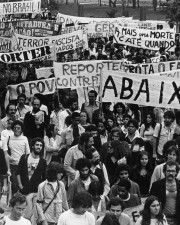
NEW YORK, March 15, 2012—Brazilian federal prosecutors announced yesterday that they have opened a criminal investigation against a military officer accused of the enforced disappearance of civilians during the 1964–1985 military dictatorship. This is a welcome blow against the use of a 1979 amnesty law to shelter government agents who committed horrific crimes against civilians from accountability.

Last week's decision by the International Criminal Court (ICC) in The Hague confirming four Kenyans must answer to charges of crimes against humanity does not excuse their government from responsibility to pursue justice at home, writes ICTJ vice president Paul Seils.

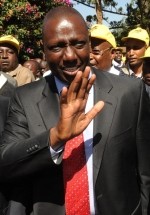
The decision of the International Criminal Court (ICC) confirming charges of crimes against humanity against William Ruto, Joshua Sang, Francis Muthaura, and Uhuru Kenyatta, and declining to confirm charges against Henry Kosgey and Mohammed Ali is a reminder that the vast majority of victims have still not seen justice done, the International Center for Transitional Justice (ICTJ) said.

Ambassador Bethuel Kiplagat’s recent attempt to return to the Truth, Justice and Reconciliation Commission (TJRC)—pending resolution of serious allegations implicating him in acts connected to human rights violations and corruption—threatens the viability and credibility of the TJRC process, ICTJ said.

During a thematic hearing December 13–14, Kenya's Truth, Justice and Reconciliation Commission (TJRC) heard testimonies from children on their own experiences as part of the commission's investigation into gross human rights violations and historical injustices in the country between 1963 and 2008.

Brazil’s recent decision to examine the abuses of the military dictatorship from several decades ago could change the face of democracy at home, making it more genuine and transparent. At the same time it could have a wider impact, allowing Brazil to take a decisive stand on human rights regionally and internationally.

This year marks the 20th anniversary of the publication of Children of Cain, the first book by writer and journalist Tina Rosenberg. ICTJ spoke with Rosenberg about how political violence has evolved in Latin America over the past 20 years, and the continuing need for accountability for past atrocities.

This year marks the 20th anniversary of the publication of Children of Cain, the first book by writer and journalist Tina Rosenberg. ICTJ spoke with Rosenberg about how political violence has evolved in Latin America over the past 20 years, and the continuing need for accountability for past atrocities.

NEW YORK/BRASÍLIA, Oct. 27, 2011—The Brazilian Senate’s passage of the National Truth Commission bill yesterday represents an important step for the struggle against impunity. The Government of Brazil now has the opportunity to acknowledge a painful past and to implement an effective tool to establish the facts about past abuse, to help victims heal and to allow Brazilian society to understand a painful period of their history, therefore preventing recurrent violations.