171 results

Based on the findings of over 450 interviews, this briefing paper looks at the socioeconomic impact of enforced disappearances on the wives of the disappeared in Nepal. More than 1,000 people remain unaccounted for after Nepal’s 10-year conflict ended in 2006. The majority were young ...

In the brutality of armed conflict or tyranny of a repressive regime, many who go missing are never found again: whether “disappeared” by agents of the state or abducted by an armed faction, the whereabouts of thousands are still unknown to this day. On this International Day of the Disappeared, ICTJ recognizes that enforced disappearances constitute crimes against humanity, and they affect women in ways unique from the impact on men.

Children and youth are especially vulnerable to the effects of conflict and gross human rights violations. In this edition of the ICTJ Program Report, ICTJ's Children and Youth Program Director Virginie Ladisch talks with us about the importance of integrating child and youth sensitivity into transitional justice mechanisms.

In a new op-ed, ICTJ Vice President Paul Seils argues that Kenya’s Truth, Justice and Reconciliation Commission (TJRC) should have been the shining light that led the way in restoring trust and confidence in office holders, institutions and government. Instead, its final report is mired in pointless controversy. Now, Kenya has a key opportunity to address allegations that the president's office interfered with the report's findings.

The International Center for Transitional Justice ICTJ welcomes the release of the Truth, Justice and Reconciliation Commission (TJRC) Report, which is the result of an official truth-seeking process undertaken by Kenya following the 2007/2008 post-election violence. The report shares the TJRC’s findings on gross violations of human rights, economic crimes, illegal acquisition of public land, marginalization of communities, and ethnic violence between 1963 and 2008.

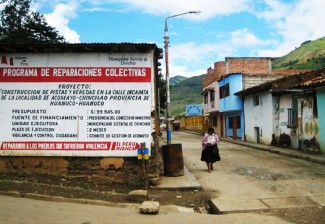
Reparations seek to recognize and address the harms suffered by victims of systematic human rights violations. ICTJ’s Reparative Justice program provides knowledge and comparative experience on reparations to victims' groups, civil society and policymakers worldwide. In this edition of the ICTJ Program Report, we look at ICTJ's work on reparations in dynamic transitional contexts such as Nepal, Colombia, Peru, DRC, and Uganda.

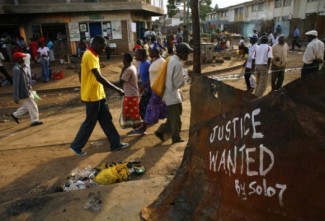
ICTJ released a briefing paper today examining current opportunities for prosecuting serious crimes within Kenya’s national judicial system, including crimes committed during the postelection violence of late 2007 and early 2008 (PEV), which claimed 1,113 lives and displaced an estimated 660,000 people. Titled “Prosecuting International and Other Serious Crimes in Kenya,” the paper looks at legal and institutional reforms that may be needed at the national level to effectively investigate and prosecute the worst crimes of the PEV period, including murder, serious assault, and rape.

This briefing paper focuses on the topic of prosecuting international and other serious crimes in Kenya, including crimes committed in the context of the postelection crisis of late 2007 and early 2008. In particular, it identifies and analyzes obstacles and opportunities for such pro...

In this edition of ICTJ's Program report, Kelli Muddell, director of ICTJ's Gender Justice program, reflects on ICTJ’s vision of gender justice, the challenges facing survivors of sexual and gender-based violence in times of transition, and how ICTJ is working to address inequality in countries like Colombia, Nepal, and Tunisia.

In a major effort to promote accountability for serious crimes in Africa, ICTJ joined hundreds of human rights groups and transitional justice partners to ask the African Union to prioritize justice. Addressed to the new African Union (AU) Chairperson Dr. Nkosazana Dlamini-Zuma, the letter warns that strained relationships between the AU and the International Criminal Court (ICC) may put justice at risk.