

1519 results

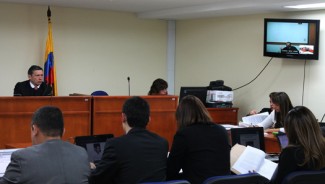
After seven years of waiting for the UN-backed Special Criminal Court (SCC) in the Central African Republic to begin operations, victims of the country’s civil war had hoped to finally see the first tangible step toward justice on April 25 when the first trial opened in the capital Bangui. The trial was initially set to begin on April 19, 2022, but was abruptly postponed when the defense attorneys failed to show up in an apparent boycott over their wages. When the defense lawyers returned to court on April 25, they immediately requested an adjournment, which was granted, and the trial was postponed again until May 16. It is very likely that this incessant postponement will further deflate already diminished confidence among victims in the SCC’s ability to deliver justice.

In order to create lasting reconciliation between the victims of post-election violence and the Côte d’Ivoire state, the reparations program must respond to the most serious consequences of the violence for victims through measures that address their long-lasting socioeconomic, psychosocial, and education-related effects for victims and their children. To do that, ICTJ's Cristián Correa and Didier Gbery spent more than a year discussing needs with victims groups throughout the country.

ICTJ acknowledges and welcomes the decisive action undertaken by the Office of the Prosecutor of the International Criminal Court, requesting the arrest of Israeli Prime Minister Benjamin Netanyahu, Defense Minister Yoav Gallant, and three Hamas leaders – Yahya Sinwar, Mohammed Diab Ibrahim Al-Masri, and Ismail Haniyeh – for war crimes and crimes against humanity.

Thousands of victims of Peru’s internal conflict are still awaiting compensation and benefits as part of a 2005 national reparations plan, says a report released today by ICTJ. “Reparations in Peru: From Recommendations to Implementation,” looks at the government of Peru’s mixed record of providing compensation to individuals and communities that suffered some of the most serious crimes during the conflict.

Reparations for victims of sexual and gender-based violations (SGBV) raise a series of complicated questions and implementation challenges around how to acknowledge this category of victims and deliver reparations without exposing victims to stigma and rejection. Victims must weigh the risk of...

On March 22, Syrian victims and activists will gather in Geneva, Switzerland for a public hearing-style event examining the impact of the destruction of schools in the context of the Syrian conflict. The event will be hosted by the International Center for Transitional Justice and the ten Syrian organizations that together comprise the Save Syrian Schools project. A livestream will be available.

Kampala—On the 23rd of July, the Ugandan Judiciary announced that the pretrial hearing of the case Uganda v. Thomas Kwoyelo had been adjourned indefinitely, due to a shortage of funds needed to hold the hearing. The Pretrial Judge of the International Crimes Division (ICD) was expected to deliver a...

A new report from the International Center for Transitional Justice and the Martin Chautari Institute highlights the continued need for truth about the human rights abuses committed during the country’s 10-year civil war. The report is aimed at helping those working on truth seeking in Nepal to better understand the gaps that currently exist between victims’ needs and rights, public policy and the current transitional justice process.

In Lebanon, in the absence of an overarching curriculum, young people are growing up with scant knowledge of the country’s civil war. Over the past year, ICTJ has sought to fill this knowledge gap by holding oral history workshops with university students and connecting them with the Co...

For many young people in countries that have experienced gross human rights violations, hip hop culture has been a lifeline and a surefire way to communicate their concerns and their will to resist oppression and change reality for the better. Through its initiatives in several countri...