

1526 results

Despite considerable progress, rising tensions between and among various actors have illuminated the need to evaluate peace-building efforts from a transitional justice perspective. This report, based on research conducted by ICTJ and Acehnese civil society, aims to provide such an ev...

This volume examines the effects, risks, and potential of extending the field of transitional justice to cases that do not present a key moment of political transition to peace or democracy and instead are defined by political continuity and ongoing conflict. It begins with analyses o...

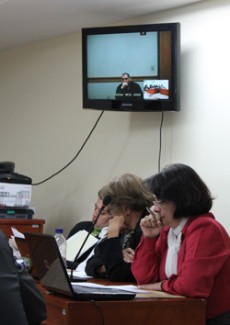
The Justice and Peace Chamber ruling in the hearing to verify the legality of the charges against Hebert Veloza Garcia contained information on the context in which these occurred. According to the Tribunal, it thus seeks to “contribute elements that underpin the analysis of the modus operandi, the patterns, if any, and the dynamics in which the criminal structure under the command of Hebert Veloza Garcia, alias “H.H.” was organized, as well as to “establish the judicial truth with respect to the criminal actions of the paramilitary groups in different regions of the country.”

This manual was developed within the Framework Agreement for Cooperation between the International Center for Transitional Justice (ICTJ) and the Attorney General's Office in Colombia. This agreement was signed to provide technical assistance to the National Analysis and Context Unit ...

Continuing political repression, cronyism, and ongoing conflicts are disrupting attempts to put Myanmar on a linear path to democracy, peace, and development, says a new report from the ICTJ. According to the report, titled “Navigating Paths to Justice in Myanmar’s Transition,” dealing with current and historical abuses is essential to achieving genuine progress on peacebuilding and economic development in the country.

Transitional justice has for the most part not prioritized issues related to displaced persons. Transitional justice measures do, however, have a bearing on displaced persons’ interests and on efforts to resolve displacement, in particular with regard to durable solutions, which inclu...

This paper examines the benefits of introducing justice-related considerations into disarmament, demobilization and reintegration (DDR) programs, an idea that has only recently been considered. Drawing links between DDR and reparations programs – the former a peace and security measur...

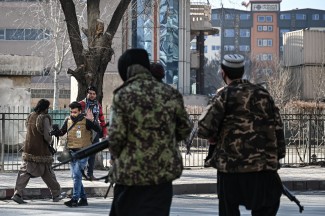
Since the Taliban seized control of Afghanistan in August 2021, the regime has put in place a series of policies severely restricting independent media and giving it all but total control over news outlets and their content. Kobra Moradi is a lawyer and researcher working with Afghanistan Human Rights and Democracy Organization and author of the recent report, Afghan Media Under the Taliban: Restrictions and Violations. ICTJ sat down with the author to learn more about what impact these restrictions have had on journalists and the free press, and the important role media can still play in such a repressive regime.

For 21 years, the people of The Gambia lived under the dictatorship of military strongman Yahya Jammeh. Now, The Gambia is working to step up to the challenge of unpacking the past, building a brighter future, and ensuring that it never relapses into repression, violence, and exclusion. The ICTJ spoke with Dr. Baba Galleh Jallow and Musu Bakoto Sawo, the Executive Secretary and Deputy Executive Secretary of the TRRC, respectively, to hear their insights about their work and how the TRRC can build upon other efforts to put victims at the forefront of The Gambia’s transformation .

In the summer of 2009, ICTJ’s Research Unit completed a major research project on the relationship between transitional justice and development, two fields that until now have proceeded in isolation from one another. In May 2009, In May, Pablo de Greiff and Roger Duthie sat down with...