

1519 results

UN operations are due to end in Côte d’Ivoire next June, but the country must pursue a victim-centered approach to justice even after UNOCI leaves. An ICTJ-organized conference works to prepare government, civil society, and the diplomatic community for the UN departure and chart a way towards justice and a stable peace for all of Côte d’Ivoire.

The Liberia Truth and Reconciliation Commission (TRC) released its final report in December 2009 after more than three years of operations. The report offers valuable insights into Liberia’s turbulent history, including the gross human rights violations committed during the country’s ...

Based on significant field research and interviews with the Higher National de-Baathification Commission, this report focuses on Iraq’s purge of members of Saddam Hussein’s Baath Party, which is the most well-known example of large-scale and politically based dismissals in the Middle ...

Across the state of Maryland, communities are coming together to uncover the truth about racial terror lynchings and seek redress for the enduring consequences of these crimes. “More than the poll tax, the grandfather clause, and Jim Crow segregation, lynching and the threat of lynching...

There are at least 40 known lynchings in the state of Maryland. Activists, descendants, and others in the community have worked hard to uncover the truth, preserve the memory of victims, and provide redress. This video explores this legacy of racial terror and its impact on Black commun...

Eight years into a brutal war, the people of Yemen are still suffering through the worst humanitarian crisis on earth. The war has resulted in over 370,000 deaths, more than half of which are linked to indirect causes such as hunger and preventable diseases. Around 4 million people have been...

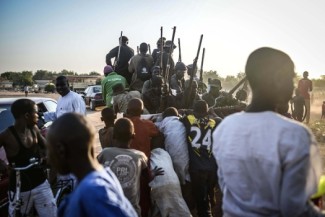
In this op-ed, ICTJ President David Tolbert explains why ignoring Boko Haram will only enable it to commit more atrocities. He argues that Nigeria’s government and the international community must learn the lessons of the LRA and act immediately to save lives and bring perpetrators to justice.

In an unprecedented act of unity, youth activists from across Bosnia and Herzegovina united to visit sites of former detention camps and pay respect to victims from all ethnic groups and sides of the conflict. Some 50 activists of the initiative “Because It Matters” from Prijedor, Banja Luka, Mostar, Tuzla, Sarajevo, Ljubuski, Gradiska, Konjic and other cities visited locations in Hadzici, Celebici, Jablanica, and Dretelj, where crimes were committed against civilians of Bosniak, Serb, and Croat ethnicities.

This paper provides an overview of the major issues and recent developments in transitional justice in Bosnia and Herzegovina (BiH). It examines the International Criminal Tribunal for the former Yugoslavia (ICTY), local trials, the proposed Truth and Reconciliation Commission, the Sr...

The transitional justice review of Bosnia and Herzegovina says that in spite of important achievements in Bosnia and Herzegovina in terms of transitional justice, a number of substantive concerns remain. The report's recommendations include supporting the implementation of the Nationa...

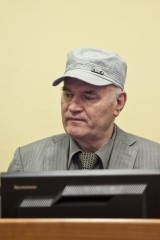
The trial of Ratko Mladic for genocide, crimes against humanity, and multiple war crimes committed during the war in Bosnia and Herzegovina, began yesterday. But these charges have done little to damage the hero status he enjoys today among the majority of Serbs, writes Refik Hodzic. Unless this legacy is addressed in the communities of Srebrenica and the rest of Bosnia, the outcome of his trial may prove to be merely symbolic, if that.

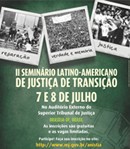
The second Latin American Conference on Transitional Justice closed July 8. In the concluding remarks, ICTJ Truth and Memory Program Director Eduardo Gonzalez stated that while this conference has focused on sharing the comparative experiences throughout Latin America, this has not been an academic exercise but a call to action. Read more on the conference blog

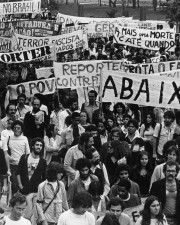
Brazil’s new government is showing strong support for the passage of a bill creating a National Truth Commission investigating past human rights violations, writes Eduardo González, director of ICTJ's Truth and Memory Program. ICTJ also spoke with Marlon Weichert, human rights activist and regional prosecutor for Brazil's Federal Public Ministry, on the current debate surrounding truth-seeking and accountability in Brazil.

ICTJ spoke with Marlon Weichert, prominent human rights advocate and regional prosecutor with the Federal Public Ministry of Brazil (Ministério Público Federal), on Brazil's pending truth commission bill and calls for accountability measures addressing past violations in Brazil.

Brazil’s recent decision to examine the abuses of the military dictatorship from several decades ago could change the face of democracy at home, making it more genuine and transparent. At the same time it could have a wider impact, allowing Brazil to take a decisive stand on human rights regionally and internationally.

ICTJ applauds Brazil’s momentous step toward the creation of a truth commission and notes opportunities to ensure its success. Brazil’s Chamber of Deputies approved on Wednesday a bill creating the National Truth Commission to establish the facts and responsibilities about crimes committed under the country’s military regime.

Although Brazil's dictatorship ended years ago, focus on transitional justice there is peaking now, as debate stirs over how to best address its past. Recent developments - including the Brazilian government's proposal of a truth commission, the opening of national archives, and the Inter-American Court of Human Rights' decision limiting the 1979 amnesty law - are at the core of the discussion. Eduardo Gonzalez, director of ICTJ's Truth and Memory Program, discusses the role accountability for the past can play in Brazil today.

NEW YORK/BRASÍLIA, Oct. 27, 2011—The Brazilian Senate’s passage of the National Truth Commission bill yesterday represents an important step for the struggle against impunity. The Government of Brazil now has the opportunity to acknowledge a painful past and to implement an effective tool to establish the facts about past abuse, to help victims heal and to allow Brazilian society to understand a painful period of their history, therefore preventing recurrent violations.

ICTJ welcomes the appointment of seven distinguished experts as members of the Brazilian National Truth Commission. The government has taken a historic step to honor victims and ensure the people of Brazil know the full truth about the human rights abuses committed in their country; the pursuit of justice can only make Brazilian democracy stronger.

Eight years ago, the United Nations General Assembly declared June 19 as the International Day for the Elimination of Sexual Violence in Conflict in an effort to raise awareness about this endemic tactic of war; honor the innumerable victims and survivors across the world, as well as those working to end these violations; and ultimately eradicate this dehumanizing practice. History has shown that whenever there is a political or security crisis juxtaposed with a militarized response, conflict-related sexual violence is deployed as a tactic to subdue, dehumanize, and terrorize civilians and opponents.

Transitional justice, at the core of its mission, strives to “break the ground on a future of peace and stability.” For countries with a violent or repressive past—and this can be said of most—implementing truth-seeking, criminal justice, reparations, and institutional reform measures forms the basis for establishing a culture of justice and respect for the rule of law.

Building a constitutional state and pursuing social change is best approached by looking at prior successes. Here is a comparison between the Kenyan and South African constitutions and an outline of how constitutional litigation unfolded in South Africa.

Following post-election violence in 2007–2008, Kenya faced a need to hold accountable those most responsible for the fighting that resulted in more than 1,000 deaths and widespread property destruction and displacement. But national judicial mechanisms proved reticent to do so, and in 2010, the situation was adopted by the ICC, who in January of 2012 announced indictments against four suspects.

This paper provides a brief history of Liberia, from Americo-Liberian rule in the 19th century to the 2005 elections. It provides accounts of the 1989-1996 and 1997-2003 civil wars, as well as of significant political changes and elections. It also includes appendixes of noteworthy in...

On January 12, 2008, the Iraqi parliament passed the “Law of the Supreme National Commission for Accountability and Justice.” The new law replaces the earlier framework governing Iraq’s De-Ba’athification policies. This document is intended to provide a short summary and preliminary a...