


1519 results

As we mark July 17, designated International Justice Day by the states parties of the International Criminal Court (ICC) just over two years ago, we should not limit our focus to the work of the court or criminal justice as such. Pursuing justice in the aftermath of atrocity presents an opportunity to do three crucial things: reaffirm a society’s shared values about basic ideas of right and wrong; restore confidence in the institutions of the state charged with protecting fundamental rights and freedoms; and recognize the human dignity of the victims of atrocities that have taken place.

Why pursue transitional justice in the aftermath of massive human rights violations? “The Case for Justice” provides a window into the debate about the relevance of transitional justice in today’s world.

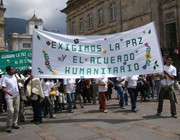
After several months of intense political debate, Colombia’s Senate passed constitutional reform measures containing extensive transitional justice provisions. The Legal Framework for Peace was adopted to confront decades of massive human rights violations and help to bring a sustainable peace to Colombia’s ongoing internal armed conflict.

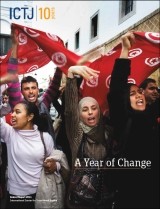
ICTJ recently released its 2011 annual report, covering the period from September 2010 through August 2011. Our tenth anniversary year, it has also been a period of transition for ICTJ and for transitional justice, as we responded to new opportunities in North Africa and the Middle East, and refocused on our future by embarking on a new strategic planning process.

On June 29, the government of Maine joined chiefs from the state's five tribes to sign an agreement creating the Wabanaki-State Child Welfare Truth and Reconciliation Commission. Eduardo Gonzalez, director of ICTJ's Truth and Memory Program, attended the signing ceremony, and spoke about its importance—both local and global—in an interview with the Maine Public Broadcasting Network. Listen to the interview MPBN 04:54min

This joint report released today by the International Center for Transitional Justice (ICTJ) and the Institute for Human Rights Study and Advocacy (ELSHAM-Papua) provides important insight into the ongoing debate on steps required to achieve a sustainable peace in Papua. The report reviews Papua's recent history within a transitional justice framework, and provides expert recommendations on truth seeking, justice, reparations, institutional reform, and enforcing the rights of women victims.

This joint report by ICTJ and the Institute for Human Rights Study and Advocacy (ELSHAM-Papua) provides important insight into the ongoing debate on steps required to achieve a sustainable peace in Papua. The report reviews Papua's recent history within a transitional justice framewor...

Granito: How to Nail a Dictator, a recent documentary from Skylight Pictures, shows the international effort that has worked tirelessly to bring Montt to account for his crimes. ICTJ is pleased to announce that Granito will be aired on Thursday, June 28 at 10pm on the PBS series P.O.V.

As Yemen prepares to embark on a national dialogue about its future, addressing the legacy of the past human rights violations remains one of its key challenges. A Law on Transitional Justice and National Reconciliation has been under discussion since February 2012 and may now be adopted in the coming weeks.

The Truth and Reconciliation Commission (TRC) of Canada held its fourth national event in Saskatoon, Saskatchewan June 21. After attending a prior hearing, students from the We'koqma'q Mi'kmaw School in Nova Scotia created “Our Legacy Our Hope,” a documentary bearing witness to the intergenerational effects of Residential Schools and the ongoing work of the commission to address these legacies.

Following field research in late 2009 and a 2010 workshop in Kinshasa, ICTJ produced a report in French on the challenges of enforcing court-ordered reparations. This briefing paper outlines and summarizes the challenges and recommendations discussed in the report. It also proposes ad...

Almost 150 criminals, racist killers, and those responsible for mass atrocities committed during and immediately after apartheid have been recommended for special pardon in a deeply flawed and unconstitutional process headed by President Jacob Zuma, the South African Coalition for Transitional Justice (SACTJ) warned today.

Seven years after its approval, the ambitious project to demobilize illegal armed groups in Colombia called Justice and Peace is in crisis. The fact that it has only seven convictions, most of which have been appealed and only one upheld on appeal, is seen as proof of its failure...

Under what conditions can truth commissions make a positive contribution to gender justice? How can they put in place a friendly process for children? Can they contribute to the rights of indigenous peoples? ICTJ, in partnership with the Barcelona International Peace Resource Center, is pleased to announce the 4th Intensive Course on Truth Commissions, focused this year on the challenge of recognizing the experiences of vulnerable populations in the work of truth commissions.

In societies confronting the legacies of war, tyranny, or entrenched injustice, the experiences of indigenous people have often been marginalized. ICTJ has published a handbook offering guidance on planning truth commissions and commissions of inquiry that safeguard the interests of indigenous communities and address violations against them.

Established in 2004, Morocco’s Equity and Reconciliation Commission (IER: l’Instance équité et réconciliation) was one of the first attempts made in the Arab world to address human rights violations perpetrated in the post-independence period. It also aimed to include female victims o...

The trial of Ratko Mladic for genocide, crimes against humanity, and multiple war crimes committed during the war in Bosnia and Herzegovina, began yesterday. But these charges have done little to damage the hero status he enjoys today among the majority of Serbs, writes Refik Hodzic. Unless this legacy is addressed in the communities of Srebrenica and the rest of Bosnia, the outcome of his trial may prove to be merely symbolic, if that.

Transitional justice, at the core of its mission, strives to “break the ground on a future of peace and stability.” For countries with a violent or repressive past—and this can be said of most—implementing truth-seeking, criminal justice, reparations, and institutional reform measures forms the basis for establishing a culture of justice and respect for the rule of law.

With the goal of creating an opportunity for debate between civil society and the Colombian government on JPL reform, ICTJ and the Mission to Support the Peace Process from the Organization of American States have organized an event titled “Challenges and Opportunities of the Justice and Peace Law Reform,” to take place May 14 in Bogotá.

ICTJ welcomes the appointment of seven distinguished experts as members of the Brazilian National Truth Commission. The government has taken a historic step to honor victims and ensure the people of Brazil know the full truth about the human rights abuses committed in their country; the pursuit of justice can only make Brazilian democracy stronger.

It has been nearly seven years since the passage of the Justice and Peace Law (JPL) in Colombia. The process continues today amidst controversies and important reflections on the direction it should take. What progress has been made and what are the shortcomings of how the law has been implemented?

Colombia continues to endure a complex conflict spanning more than four decades that has resulted in almost 400,000 registered victims and has displaced more than three million people. In a podcast with ICTJ’s vice president Paul Seils, we explore the concepts of prioritization and selection of cases and their relevance to Colombia's Justice and Peace process.

Colombia’s Justice and Peace Law (JPL) lies at the heart of the country’s efforts to dismantle notorious paramilitary groups and provide justice to thousands of their victims. As the government seeks to reform the JPL to allow for a more effective process, ICTJ will run a series of features to provide a deeper insight into the background and successes and challenges of the law.

In seeking to establish accountability for past atrocity, many transitional justice mandates have also sought to redress crimes against indigenous populations. To further explore this relationship, ICTJ and our partners in Canada and Colombia are holding two side events to the UN Permanent Forum on Indigenous Issues.

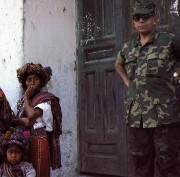
Indigenous peoples are among those most affected by contemporary conflict. The resource-rich territories they occupy are coveted by powerful, often violent groups. Their identity is perceived with mistrust, sometimes with hate. Indigenous communities live at a precarious intersection ...