



1519 results

During the 1970s, political violence in Argentina resulted in massive violations of human rights including thousands of deaths, prolonged and arbitrary arrests, disappearances, unfair trials, pervasive torture, in addition to cruel, inhuman, and degrading treatment. Since the restorat...

This case study offers an overview of some of the major issues and recent developments in transitional justice in Croatia. While the main focus is on war crimes prosecutions before the International Criminal Tribunal for the former Yugoslavia and Croatian courts, it also examines trut...

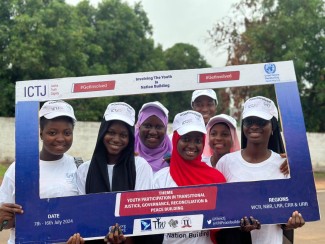
Almost eight years since The Gambia's former President Yahya Jammeh left power, the country is still seeking justice for the human rights abuses committed during his 22-year dictatorship. In May 2023, the Ministry of Justice released a plan to implement the recommendations of the country's Truth, Reconciliation and Reparations Commission. While the plan promises to deliver justice and repair harms, for it to have its intended impact, it requires broad public participation in the process, especially that of young people. With that in mind, ICTJ has partnered with the UN Peacebuilding Fund on a project to encourage Gambian youth to take a leading role in this process and the country's future.

This report examines community expectations and experiences of Timor-Leste’s unique transition from occupation to independence. It documents the results of focus group discussions on an array topcis including violence and conflict, truth recovery, justice, accountability, reconciliat...

ICTJ and the Center for Human Rights and Global Justice at NYU School of Law are pleased to announce that that Darren Walker, President of the Ford Foundation, and Sherrilyn Ifill, President and Director-Counsel of the NAACP Legal Defense Fund, will join ICTJ President David Tolbert in conversation for the ninth Emilio Mignone Lecture on Transitional Justice.

Little has been written about the relationship between transitional justice measures and DDR programs with respect to child ex-combatants. We argue that the primary avenue through which transitional justice measures may positively affect the reintegration of former child combatants is...

Lebanon has long been afflicted by a combination of political deadlock and a lack of accountability that has resulted in ongoing human rights violations and overall systemic rot. Comprehensive reforms, along with an inclusive truth-seeking process, broad public dialogue, and other way...

The 2006 crisis in Timor-Leste saw close to 15 percent of the population displaced from their homes, threatening to sink the country into protracted instability and violence. Remarkably, five years later the country was back on track, with the internal displacement issue largely resol...

Argentina’s trials for crimes committed during the dictatorship of military juntas are widely seen as a successful national effort to seek accountability for past abuses. And while victims’ demands for justice continue to remain high, the judiciary is facing challenges to ensure the cases are dealt with expeditiously and fairly. In a interview for ICTJ's Spanish podcast series "Lessons from Latin America," Mirna Goransky, Assistant General Prosecutor for the Attorney General’s Office shares her perspectives on human rights trials in Argentina.

The International Center for Transitional Justice strongly welcomes the decision of the UK High Court ordering the British government to pay damages to a group of Kenyans who were imprisoned and tortured by colonial authorities following the Mau Mau Rebellion of the 1950s.