1519 results

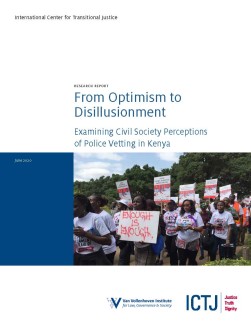
This report examines the police vetting in Kenya that was part of a broader reform in response to the 2007-2008 post-election violence, focusing on why civil society became disillusioned with the initiative. Drawing on interviews with civil society representatives and former members o...

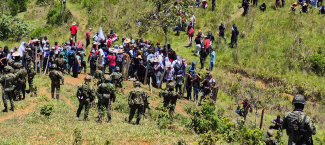
This report examines Colombia’s Victims and Land Restitution Law (2011), which provides comprehensive reparations to conflict victims and restitution to victims of forced displacement who rely on land for their livelihoods – and assesses the challenges of implementing the law under cu...

This paper examines the unique, enduring consequences of conflict-related sexual violence in northern Uganda, focusing specifically on the impact of the lack of accountability for sexual crimes leading to motherhood on girls and women, and on the children they bore as a result of viol...

Women and girls in Northern Uganda were victims of various forms of sexual violence, crimes whose consequences endure today. Many of the survivors bore children as a result of their violations, and the children born of wartime rape have been largely overlooked by the state. Meanwhile,...

Based on interviews with 1,200 people, this study assesses conflict victims' experience with the government's Interim Relief Program since its inception in 2008. The findings are intended to inform a future reparations policy that would seek to help those whose human rights were viola...

Five years since the end of Nepal's brutal civil war, victims are losing patience waiting for truth, justice, and reparation. Last year ICTJ completed a six month research project to analyze the effects of the the government's Interim Relief Program and determine the steps still required for Nepal to fulfill its obligation to provide reparations to victims. The findings have been published in a report titled “ From Relief to Reparations: Listening to the Voices of Victims.”

The Special Court for Sierra Leone (SCSL or Special Court) was established in 2002 when the two United Nations (UN) ad hoc international tribunals for the former Yugoslavia and for Rwanda had already existed for several years and when the first lessons could be drawn from their experi...

When Janet Arach was still a schoolgirl, she was abducted by Joseph Kony’s Lord’s Resistance Army (LRA) in northern Uganda. During her eight years in captivity, she was forced to marry an LRA rebel and gave birth to two children. Read more on Janet's journey to become an agent of change for her community in Uganda.

Banjul, June 12, 2019—“Never Again!” sings Awa Bling in her recently released song produced with the support of ICTJ. She is part of a movement of youth and prominent artists who are reclaiming this universal slogan by creating their own songs about transitional justice and bringing their voices to some of the most forgotten regions of The Gambia. Local and international fans can now access new music videos released on social media by five talented Gambian hip hop artists.

Banjul, The Gambia, December 11, 2019—Women from three rural areas of the Gambia will submit a report to the Truth, Reconciliation and Reparations Commission (TRRC) on December 16 that describes their experiences of sexual and gender-based violence during the dictatorship of former President Jammeh and the impact of the violations on their lives and families. In the report, the women join voices to offer recommendations to the TRRC and the Gambian government.