

1526 results

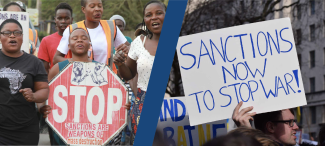
As a tool of foreign policy, sanctions have historically been deployed by one or more states to coerce a change of behavior or policy. In recent years, however, states have increasingly imposed sanctions on actors responsible for human rights violations, which has expanded their potential to advance transitional justice goals. Now, ICTJ is releasing a new report that considers this potential as well as the obstacles to justice sanctions may engender.

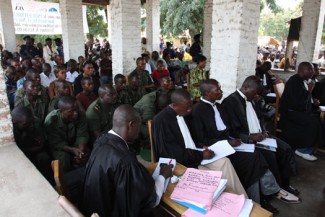
A new report by the International Center for Transitional Justice analyzes the Congolese judicial authorities’ response to international crimes committed in the territory of the Democratic Republic of the Congo from 2009 to 2014, with a particular focus on the war-torn east (North Kivu, South Kivu, and Ituri). It finds that the number of open investigations into international crimes is very low compared to the large number of atrocities being committed.

The International Center for Transitional Justice (ICTJ) released a new report today providing detailed information and analysis on how Iraq dismantled Saddam Hussein’s Baath Party and purged state institutions of party members. The report, titled “A Bitter Legacy: Lessons of De-Baathification in Iraq,” carries valuable lessons for countries in the Middle East and North Africa (MENA) as they consider how to deal with legacies of abuse by the security and political apparatuses of former regimes.

A new ICTJ report finds that the time is ripe for Georgia to take meaningful steps to reckon with the dark chapters of its recent past and ensure that abuses never happen again. The report warns that while political conditions in the country may not be perfect, waiting longer to acknowledge victims and deal with the past may lead to more abuses and a possible conflict in the long run.

TUNIS/NEW YORK, April 12, 2011—The proceedings at the ‘Addressing the Past, Building the Future: Justice in Times of Transition’ conference, which is to be held in Tunis April 14-15, will be reported on a conference blog set up by the International Center for Transitional Justice (ICTJ). The...

March 21, 2013, New York, NY- The International Center for Transitional Justice (ICTJ) is launching a global awareness campaign for the International Day for the Right to the Truth, March 24, to affirm the right of victims to know the truth about human rights violations. Under the slogan, “Truth is the foundation of justice,” ICTJ’s campaign will highlight the important role that truth commissions can play in societies dealing with a legacy of violence and repression.

The International Center for Transitional Justice (ICTJ) signed a cooperation agreement with the Tunisian government on January 16 to provide further technical assistance in establishing transitional justice mechanisms in the country. The development comes two years after protests forced President Zine El Abidine Ben Ali to step down and flee the country in January 2011.

The actions of the South African government, in allowing Bashir to depart, have dealt a grave blow to the rights of victims of atrocities in Darfur and to the prospects of establishing a credible system of international criminal justice through the ICC.

The fall of Bashar al-Assad’s regime after 53 years of authoritarian rule marks a significant moment in the pursuit of justice, peace, and human rights. While this transition opens the door to new possibilities, it also underscores the immense obstacles and responsibilities that lie ahead.

ICTJ is outraged by the recent massacre in Syria, where over 1,000 civilians were brutally killed in yet another wave of violence. This appalling crime underscores the urgent and undeniable need to protect civilians and provide justice and accountability.