


1526 results

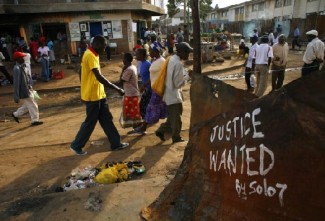
The findings of Kenya's Truth, Justice and Reconciliation Commission (TJRC) were due to be released in August of this year, providing citizens with a comprehensive report that establishes the facts, causes and alleged perpetrators of serious crimes in Kenya since its independence, almost 50 years ago. To date, Kenyans are still waiting to learn the truth.

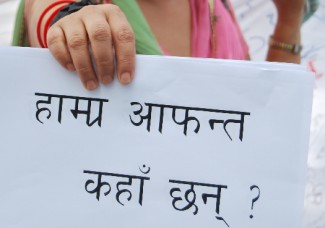
Six years after the conflict ended, the government of Nepal has failed to initiate a comprehensive investigation into the past. As a result, it has failed to uphold the rights of victims and Nepali society to know the truth about abuses. Inaction is particularly cruel regarding the relatives of the disappeared, for whom lack of information on the fate and whereabouts of their loved ones equates to permanent anguish and extreme suffering.

In Guatemala, it has taken years of relentless organizing by civil society and cooperation with international partners to begin to prosecute the most responsible, but progress has been made. Claudia Paz y Paz Bailey, currently the prosecutor general and head of the Public Prosecutor’s Office, has played an instrumental role in the struggle for accountability. In this recent interview, ICTJ spoke with Ms. Paz about confronting the legacy of the past at the national level within an international system of global criminal justice.

The United Nations has proclaimed December 10 as International Human Rights Day. The date commemorates the signing of the Universal Declaration of Human Rights in 1948, which represented the reaction of the international community to the horrors of the Second World War. Today is a day for reflection more than celebration. A cursory scan of events from the last few weeks has thrown up examples that demonstrate that the belief in human rights for all - in treating all states the same - is more of a tissue-thin membrane than a robust bulwark.

This briefing paper sets out the obligations of the state and international best practice with respect to the right to truth, both as a key element of a transitional justice strategy and as a critical component of providing effective remedy to victims of gross violations of human righ...

ICTJ is pleased to announce that Fatmata Claire Carlton-Hanciles has joined its Advisory Board. Mrs. Carlton-Hanciles is currently the Principal Defender, The Special Court for Sierra Leone (SCSL).

On Monday, December 10, the International Center for Transitional Justice will help tell the stories of victims and human rights activists at the forefront of the struggle for human rights across the globe. Send us images and texts that portray efforts seeking accountability, truth, remembrance, and redress in your community: we will share them on ICTJ’s Facebook page, and feature a selection of these stories on our website.

The latest ICTJ Program Report presents ICTJ’s work in Africa. In a deeply insightful interview, Suliman Baldo, director of ICTJ’s Africa program and one of the world’s leading experts on transitional justice in Africa, discusses transitional justice processes in Ivory Coast, Kenya, Democratic Republic of Congo, and Uganda.

ICTJ partnered with the Center for Global Affairs at New York University to explore how political will of international and national actors impacts national war crimes proceedings. The panel examined four diverse country scenarios - the Democratic Republic of the Congo, Serbia, Iraq, and Guatemala.

The International Center for Transitional Justice (ICTJ), in cooperation with the United Nations Development Programme (UNDP), with support from the Governments of Denmark and South Africa, and in close consultation with the Assembly of States Parties to the Rome Statute (ASP), held a...