
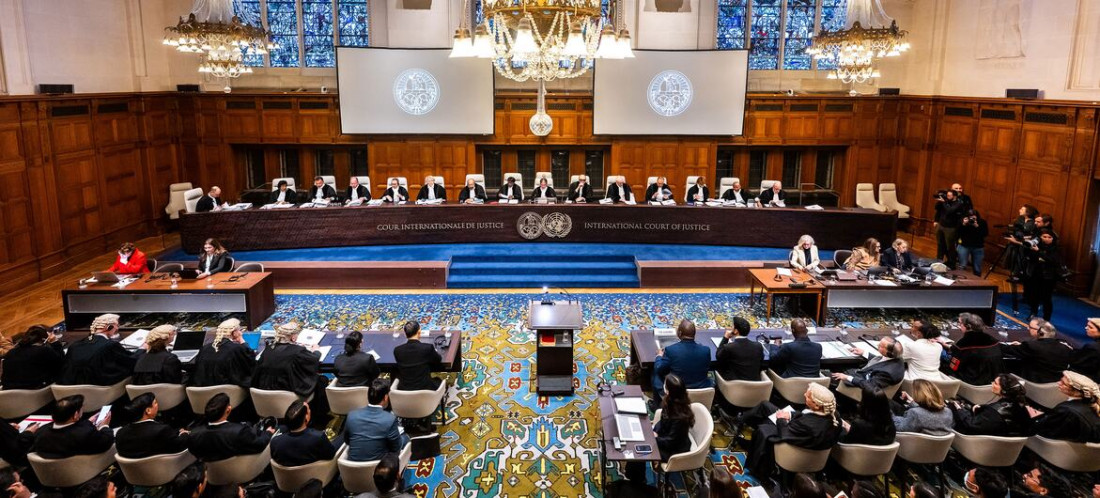
The International Court of Justice (ICJ) issued a historic ruling finding Myanmar committed genocide against the Rohingya group in northern Rakhine State during the 2017 “clearance operations,” in violation of its obligations under the Convention on the Prevention and Punishment of the Crime of Genocide. The judgment represents a long-awaited acknowledgment of the victims who have suffered repeated gross violations of human rights because of their ethnicity and later due to their displacement, mainly in overcrowded refugee camps in Bangladesh. ICTJ welcomes the court’s findings, pays tribute to all victims, and recognizes the courage and perseverance of those whose testimonies have contributed to this landmark decision.
Myanmar remains largely overlooked by the international community, despite the continuing political violence that has all but erased any hope for a peaceful transition to democracy. While the judgment specifically addresses the genocide committed against the Rohingya population, it also underscores the devastating consequences of decades of authoritarian rule, systemic discrimination against other minority groups, and entrenched impunity.
ICTJ’s work in Myanmar was brought to a halt in 2023 due to a lack of financial and political support. For years, ICTJ raised serious concerns about the likelihood that the authoritarian policies in the country and the complete impunity for the crimes committed could lead to further atrocities. Those concerns were tragically borne out.
In November 2019, The Gambia filed a complaint against Myanmar before the ICJ, seeking accountability for the atrocities committed against the Rohingya. This initiative came as the country was itself embarking on an ambitious transitional justice process, following the departure into exile of former president and dictator Yahya Jammeh in 2017. Despite significant resource constraints and political setbacks, The Gambia has demonstrated that a country emerging from its own experience of repression can play a leading role in advancing justice. It is a beacon of hope and a model for victims on the African continent.
Therefore, the historic significance of this ruling is twofold. On one hand, it marks the first time the ICJ has found a state responsible for committing genocide, setting an important milestone in the application of international law. On the other hand, it emphasizes The Gambia’s determination to uphold international human rights law, at a time when international commitment to human rights and multilateralism faces mounting challenges.
The ICJ’s decision must serve as a reminder that the suffering of the hundreds of thousands of people has not ended, and that ongoing violations and the conditions that made the genocide possible must be urgently addressed. Myanmar bears the primary responsibility for complying with the court’s judgment. Yet, the pursuit of justice cannot rest with it alone: The international community has a responsibility to support accountability efforts and ensure that the rights and dignity of victims remain central to the response.
The judgment should also reinforce the importance of prevention and accountability in other contexts where civilian populations have experienced or face mass atrocities and strengthen the resolve of states and international institutions to act before violations escalate into genocide.
Finally, this historic victory must serve as an opportunity to recognize and support The Gambia’s own pursuit of justice. While the country has made important progress in implementing the recommendations of its Truth, Reconciliation and Reparations Commission (TRRC), challenges remain. The submission of the TRRC’s report in 2021, the establishment of the Reparations Commission in 2025, and the appointment of Special Prosecutor Martin Hackett in April 2026 represent concrete outcomes for victims. However, the operationalization of the Special Tribunal for The Gambia, a hybrid mechanism established with ECOWAS and intended to prosecute those responsible for serious violations, continues to face significant financial and institutional obstacles.
Without sustained political commitment and adequate international support, the country risks further delays in delivering justice to victims who have already waited too long. Ensuring that The Gambia’s transitional justice process provides justice is not only essential to fulfilling the country’s obligations to victims, but also to strengthening a model that can inform efforts in other countries emerging from authoritarian rule and mass violations.
________
PHOTO: The International Court of Justice (ICJ) in The Hague holds a public hearing focusing on a genocide case brought by The Gambia against Myanmar. UN Photo/ICJ/Frank van Beek)

