5 results

Colombia currently faces a transformed, fragmented form of violence centered on territorial and social control rather than the traditional insurgency. This report argues that state security strategies remain misaligned, relying on outdated military approaches and metrics. To avoid lon...

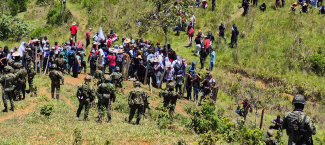
An aerial view of a group of soldiers interacting with a large civilian crowd in a rural setting

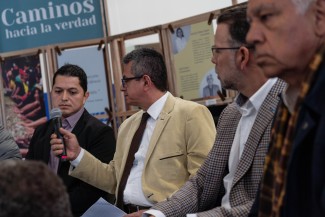
As part of its mandate, Colombia's Commission for the Clarification of Truth carried out 68 processes of acknowledgment led or supported by a specialized team. These processes sought to acknowledge victims and the harms they suffered, as well as individual or collective responsibiliti...

Former guerrilla member Gabriel Ángel holds the microphone for former paramilitary member Nodier Giraldo during an event at the Truth Commission.

ICTJ is more than two decades old. At the time it was established, many of those who contributed to transitions in Argentina, Chile, Guatemala, South Africa, and the former Yugoslavia saw the value of a specialized organization that could draw from diverse national experiences to prov...

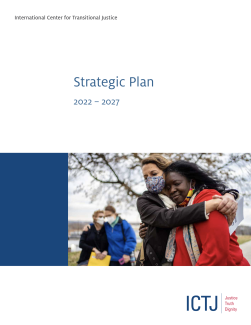
The cover of a report with the text, "2022-2027, Strategic Plan," with an image of people embracing underneath.

This report examines the preventive impact of transitional justice mechanisms in Colombia before the 2016 peace agreement. It finds that these measures have contributed to prevention by strengthening institutional responses to rights violations, shaping the public agenda, developing a...

This study, carried out in partnership with Aulas de Paz and Universidad Santo Tomás, explores experiences of acknowledgment of responsibility under Colombia’s Justice and Peace Law. Drawing on interviews with victims, former combatants, and judicial officials, it identifies key lesso...

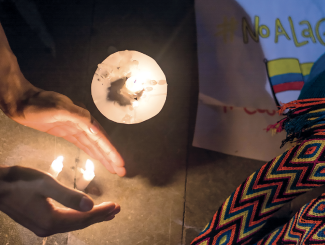
A person lights a candle during an anti-war protest in Barranquilla, Colombia.

