390 results

Tunis—On March 2-3, 2020, ICTJ is holding a conference in Tunis, Tunisia, on the fight against corruption and the recovery of ill-gotten assets as a critical element of transitional justice processes. The conference will bring together activists, policymakers, and experts from Tunisia and other countries in the global South emerging from conflict or authoritarian rule, including Armenia, The Gambia, Kenya, the Philippines, and South Africa.

Building on its work in Tunisia since 2012, ICTJ met with representatives of youth-led civil society organizations and social movements and state institutions involved in pursuing accountability for Ben Ali-era corruption. This paper focuses on the strategies and i...

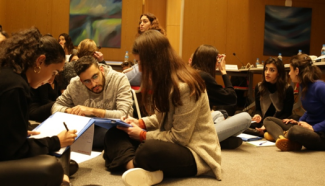
Youth activists in Tunisia have played a vital role in keeping corruption at the center of public debate since the country's revolution in 2011. Through decentralized, nationwide protest movements, young Tunisians have been calling for measures that root out systems of endemic corruption. ICTJ sat down with one youth leader to discuss her activism and views on Tunisia's transitional justice process.

New York—On February 26, ICTJ and NYU Law’s Center for Human Rights and Global Justice will welcome former President of Colombia and Nobel Peace Prize Laureate Juan Manuel Santos for a conversation on the role of transitional justice in peace negotiations.

Eminent human rights defender José Zalaquett passed away on February 15. “Pepe,” as he was known by many, helped pioneer the field of transitional justice and inspired countless human rights defenders around the globe.

On April 4 last year, the commander of the Libyan National Army Khalifa Haftar ordered his troops to advance on Tripoli and “liberate it from terrorists.” Various stakeholders issued a multitude of statements and joint declarations after the assault, all asserting that only a political solution would resolve Libya’s crisis and threatening to hold accountable any faction that escalated the conflict. But in reality, most of the stakeholders have been playing two fields all along: the diplomatic one, in which they continuously reiterate support for political solutions and UN-led initiatives, and then the battlefield.

On February 12, 2019, the Assembly of the African Union adopted the African Union Transitional Justice Policy. The policy serves as a guide for member states on effective and credible transitional justice processes to achieve sustainable peace, justice, reconciliation, social cohesion...

PDF of the first page of the briefing paper "A Roadmap for Justice in Africa"

In its primary findings, Kenya's Truth, Justice and Reconciliation Commission noted that women and girls have been subject to systematic, state-sanctioned discrimination in all spheres of their lives, and that the state has failed to take measures to end the practices that r...

As subscribers, you enjoy timely commentary on what’s happening in transitional justice around the world written by one of our experts exclusively for our monthly World Report newsletter. In this month’s edition, we bid farewell to 2019 by looking back on the experts’ choices of the past year.

On December 12, ICTJ’s head of office for Colombia María Camila Moreno received the Alfonso López Michelsen Award for her dedicated work to advance peace and uphold international human rights and humanitarian law.