

939 results

This is the third time that the Tunisian government, supported by several Members of Parliament, has put debate of the National Reconciliation Law on the political agenda. Rearranged in form but with the same substantial faults, this law has mobilized the opposition — for the third time — of approximately 20 civil society organizations that met yesterday and plan to soon hold a press conference.

The impact of Tunisia's transitional justice process is rooted in its ability to give voice to diverse segments of the population, including historically marginalized communities. A workshop hosted by ICTJ brought generations of women together to explore truth-telling techniques and create space for all voices.

For decades, successive Myanmar political and military leaders, including Aung San Suu Kyi’s, have flatly denied what millions of their citizens know: that the military has committed and continues to commit human rights violations. A new UN inquiry into those crimes is provides a moment of truth for Suu Kyi's commitment to justice, writes ICTJ's Aileen Thomson.

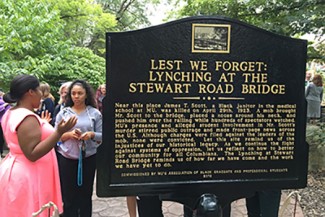
To mark 15 years of ICTJ, we asked staff past and present for the memories that stand out from their work. Former ICTJ consultant and Executive Director of the Truth and Reconciliation Commission in Greensboro, North Carolina Jill Williams reflects on her efforts to bridge a cultural gap in the pursuit of shared values.

A new ICTJ report argues that in Africa's interconnected Great Lakes region, each country’s attempt to provide justice for past violations offers lessons for similar processes in others. We gathered civil society activists from across the region to discuss which strategies have worked for them, which have not, and opened up about the greatest challenges they face in securing justice.

On the International Day for the Right to Truth we spotlight one of the most powerful ways truth commissions can reassert victims' dignity: public hearings. These open events can have a potentially cathartic power for victims and their families, but also the public at large by generating solidarity and empathy for the suffering of others in societies deeply polarized and traumatized by atrocities and denial.

In Tunisia, public hearings have fundamentally changed public dialogue about the past. The Truth and Dignity Commission will hold special session scheduled to coincide with the International Day for the Right to the Truth on March 24th. Watch live here:

In Tunisia, the Truth and Dignity Commission's public hearings have fundamentally altered the dialogue around the past in Tunisia. To mark the International Day for the Right to Truth ICTJ Director of Communications Refik Hodzic sat down with two women whose work has been critical to the success of the commission – ICTJ Salwa El Gantri and TDC Commissioner Ibtihel Abdellatif – to discuss what they have taken away from public hearings so far.

The right to the truth carries special resonance in Kenya, and so on March 24th Kenyan state agencies, survivors, civil society organizations, and international partners will join together in Nairobi to observe the International Day for the Right to the Truth. It provides an opportunity not just for remembrance, but also for greater dialogue between the government and victims about the implementation of reparations programs and of the findings presented in the Truth, Justice and Reconciliation Commission's final report.

Education, as a critically important institution that is widely considered to be both formative and transformative, is something that transitional justice cannot afford to overlook. Transitional justice in its early years did not directly engage with education, but today this has chan...