743 results

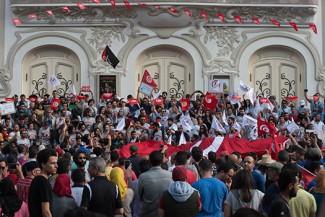
Lebanon’s ongoing “October Revolution” represents the largest decentralized, anti-government protest the country has seen at least since the end of the civil war in 1990. The demonstrations have brought thousands of Lebanese to the streets to condemn widespread corruption among the political class, paralyzing the country for weeks.

In countries emerging from violent conflict and repression around the world, prosecutors are facing significant challenges and pressures when seeking to investigate and prosecute serious crimes, such as torture, extrajudicial killings, and enforced disappearance. To reflect on these challenges, ICTJ together with the International Nuremberg Principles Academy, and with support from the governments of Australia and Sweden, convened a side event on December 6, 2019, during the 18th Assembly of State Parties of the International Criminal Court.

Since the Gambia's Truth, Reconciliation, and Reparation Commission (TRRC) began public hearings in January 2019, an important part of the country’s narrative has not yet come to light or been publicly acknowledged: the experiences of women. This report brings forward the voices of wo...

Banjul, The Gambia, December 11, 2019—Women from three rural areas of the Gambia will submit a report to the Truth, Reconciliation and Reparations Commission (TRRC) on December 16 that describes their experiences of sexual and gender-based violence during the dictatorship of former President Jammeh and the impact of the violations on their lives and families. In the report, the women join voices to offer recommendations to the TRRC and the Gambian government.

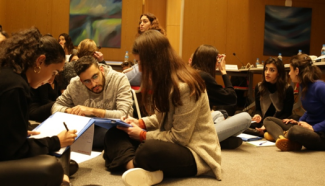
New York, December 4, 2019—"Get ready to speak up and be heard because your voice matters!”—that is the message a new guidebook released today on transitional justice sends to Syrian youth. Produced by ICTJ and Dawlaty, a Syrian human rights organization based in Beirut, the guidebook introduces the concepts of transitional justice to young audiences in an engaging and interactive way while capturing the challenges of applying them in difficult contexts.

This guide is designed to engage young people who are interested in or are working on transitional justice issues in their communities. Intended to serve primarily as a training tool, it provides basic information about transitional justice and related principles and offers tips and s...

For over a month now, Lebanese people have been in the streets peacefully calling for an end to corruption, economic disenfranchisement, and government mismanagement, calling instead for accountability and reform of the systems that have allowed these things to occur. The protests are historic for several reasons: their scope and magnitude, as well as the way they have unified a country that has for so long had division baked into nearly every aspect of life, down to its system of governance.

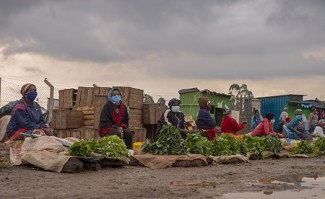
Between April 15 and May 3, 2019, ICTJ held a number of consultations with Kenyan youth from several informal settlements in Nairobi and Mombasa to reflect on their understanding of security sector reforms and their connection to the ongoing national dialogue process, particularly as ...

In its report, the Kenya Truth, Justice and Reconciliation Commission concluded that “corruption is endemic in Kenya” and that “there is a direct link between corruption and gross violation of human rights.” This paper considers the extent of impunity for corruption in Kenya, how corr...

In 1998, Colombian filmmaker Sergio Cabrera released “Time Out,” a fictional comedy in which guerrilla members and soldiers — usually mortal enemies — call a momentary truce to watch the national soccer team play in the qualifiers for the 1994 World Cup. Twenty years later, former combatants of both sides, members of the security forces, and victims of the conflict came together at Llano Grande in the region of Dabeiba to watch Cabrera’s film and play a game of soccer.