



751 results

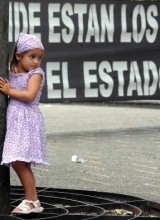
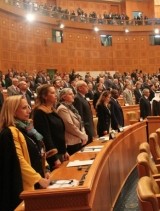
The Spanish Supreme Court has ruled the judiciary has no place investigating the deaths and disappearances of the Franco era. The verdict is a disappointment for the victims of Francoism and confirms Spain remains unwilling to deliver justice for the crimes of the past, writes Eduardo González, director of ICTJ's Truth and Memory program

Lebanon has yet to seriously address the issue of thousands of people who went missing or were forcibly disappeared during the country’s civil war. ICTJ spoke with Lebanese activists to discuss a recent initiative taken by the families of the missing and civil society organizations to create a draft law on the missing.

Five years since the end of Nepal's brutal civil war, victims are losing patience waiting for truth, justice, and reparation. Last year ICTJ completed a six month research project to analyze the effects of the the government's Interim Relief Program and determine the steps still required for Nepal to fulfill its obligation to provide reparations to victims. The findings have been published in a report titled “ From Relief to Reparations: Listening to the Voices of Victims.”

A two-day roundtable discussion on a draft law on the missing and forcibly disappeared persons was held February 24–25 in Beirut, Lebanon. Organized by the Committee of the Families of the Kidnapped and Disappeared in Lebanon, Support of Lebanese in Detention and Exile (SOLIDE), Act for the Disappeared, and ICTJ, the roundtable was part of the project “Lebanon’s unaddressed legacy: the missing and the families’ right to know,” funded by the European Union (EU) and the Embassy of Switzerland in Lebanon.

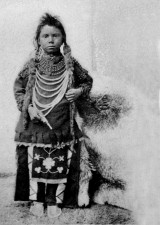
Canada’s Truth and Reconciliation Commission (TRC) released its interim report and a new historical publication titled They Came for the Children in Vancouver today. The TRC was established in 2008 to examine and make public the truth about Canada’s former Indian Residential Schools, a system designed to forcibly assimilate aboriginal children. From 1874 to 1996 more than 150,000 children were taken from their families and placed in church-run schools. They were prohibited from speaking their native languages and practicing cultural traditions, and physical, sexual, and emotional violence was commonplace.

The civil war in El Salvador officially ended 20 years ago, yet justice and accountability for past violations remain acutely absent. To launch a Spanish language podcast series focusing on Latin America ICTJ spoke with Carlos Dada, editor of the digital newspaper El Faro, about the critical role the media has played in uncovering the truth about past atrocities in El Salvador.

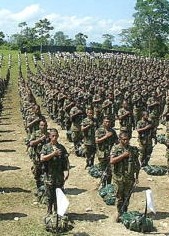
December 16, 2011 saw the world’s first ruling mandating reparations be paid for the unlawful recruitment of minors into armed forces. More than 300 former youth paramilitaries in Colombia will receive reparations including monetary compensation and medical and psychological care.

Following a restive year, Indonesia's human rights record is one of the situations under review during the 13th session of the UN Human Rights Council Universal Periodic Review (UPR) process in May–June 2012.

Based on interviews with 1,200 people, this study assesses conflict victims' experience with the government's Interim Relief Program since its inception in 2008. The findings are intended to inform a future reparations policy that would seek to help those whose human rights were viola...

Pablo de Greiff, director of Research at ICTJ, has presented his candidacy for the role of Special Rapporteur for the Promotion of Truth, Justice, Reparation, and Guarantees of Non-Recurrence. This new position is being established by the United Nations Human Rights Council to bring greater attention to accountability for serious crimes and human rights violations.