629 results

Fania Davis thinks the time has come for a truth-telling process about racial injustice in the United States, and she is working to make it a reality. We sat down with her and her colleague, Jodie Geddes, to discuss their vision for a national process, what they hope it would achieve, and what they have learned from their conversations with local leaders so far.

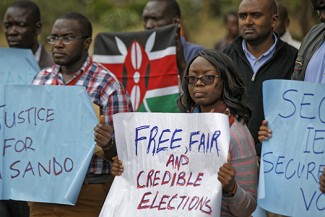
Kenya is just days away from the 2017 general election, but challenges dot the horizon, including the recent assassination of an election official. ICTJ's Chris Gitari calls for a strong, accountable security sector and the implementation of the Truth, Justice and Reconciliation Commission Report.

Where does transitional justice stand in Sri Lanka? Kelli Muddell, Director of ICTJ's Gender Justice Program, explores the country's contested historical narratives.

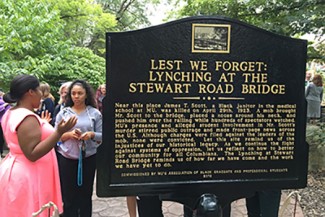
As grassroots efforts to confront the legacy of racial injustice in the United States take hold from New Orleans to Maine and beyond, how can transitional justice experiences around the world inform their work? That was a major focus of a recent conference ICTJ co-convened, hosted by Kean University.

A new ICTJ report on truth and memory in Nepal sparked discussion – and calls for victim-centered policies – at national and local launch events.

Criminal accountability and the search for truth about abuses committed during Nepal’s armed conflict have become inextricably intertwined, at the expense of victims’ broader rights to truth. But for conflict victims, the truth is more than just a pathway to criminal justice writes ICTJ's Aileen Thomson.

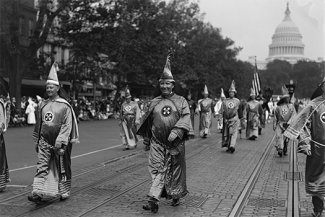
The removal of monuments to Confederate heroes is an important blow to the white-supremacy ideology that underpins ongoing racial injustices in the United States today, from mass incarceration to institutional violence. ICTJ President David Tolbert calls for a reckoning with these haunting injustices through memorials, acknowledgements and more.

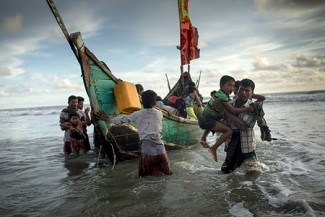
A new ICTJ report argues that discussions about a future return of refugees and coexistence among groups currently at war in Syria must begin now, even in the face of ongoing violence and displacement.

Discussions about a future return of refugees and coexistence among groups currently at war in Syria must begin now, even in the face of ongoing violence and displacement. This report, based on interviews with refugees, makes it clear that the restoration of dignity will be important ...

In 1986, Wachira Waheire was whisked off the street, taken to Kenya's most infamous torture chamber, and sentenced to four years in prison. Over the next 30 years, his quest for justice led him to meetings with his torturers to courtroom showdowns with the country's Attorney General. Discover his ongoing struggle for truth, acknowledgement, and reparations alongside all survivors of abuse in Kenya.

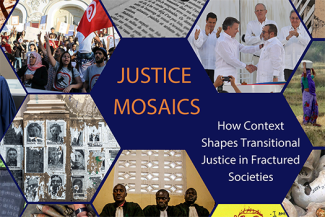
A new book by ICTJ titled Justice Mosaics: How Context Shapes Transitional Justice in Fractured Societies examines the challenges of responding to massive human rights violations in different and difficult circumstances in today's world.

This report presents the main findings of a multiyear research project conducted by the International Center for Transitional Justice on the challenges and opportunities of responding to serious and massive human rights violations in different contexts. The project commissioned 21 stu...

What hope is there for justice for victims of atrocities in profoundly fractured societies, where systems of government have broken down and social and political divisions run deep? What is the role of transitional justice in forging peace in countries like Colombia, after decades of ...

To mark 15 years of ICTJ, we asked staff past and present for memories that stand out to them - moments that throw the stakes of our work into sharp relief and resonate with them years later. Virginie Ladisch and Clara Ramirez-Barat recall how one Canadian student, in exploring the legacy of the country's Residential Schools, arrived at the concept of "never again."

The impact of Tunisia's transitional justice process is rooted in its ability to give voice to diverse segments of the population, including historically marginalized communities. A workshop hosted by ICTJ brought generations of women together to explore truth-telling techniques and create space for all voices.

For decades, successive Myanmar political and military leaders, including Aung San Suu Kyi’s, have flatly denied what millions of their citizens know: that the military has committed and continues to commit human rights violations. A new UN inquiry into those crimes is provides a moment of truth for Suu Kyi's commitment to justice, writes ICTJ's Aileen Thomson.

To mark 15 years of ICTJ, we asked staff past and present for the memories that stand out from their work. Former ICTJ consultant and Executive Director of the Truth and Reconciliation Commission in Greensboro, North Carolina Jill Williams reflects on her efforts to bridge a cultural gap in the pursuit of shared values.

A new ICTJ report argues that in Africa's interconnected Great Lakes region, each country’s attempt to provide justice for past violations offers lessons for similar processes in others. We gathered civil society activists from across the region to discuss which strategies have worked for them, which have not, and opened up about the greatest challenges they face in securing justice.

On the International Day for the Right to Truth we spotlight one of the most powerful ways truth commissions can reassert victims' dignity: public hearings. These open events can have a potentially cathartic power for victims and their families, but also the public at large by generating solidarity and empathy for the suffering of others in societies deeply polarized and traumatized by atrocities and denial.

In Tunisia, public hearings have fundamentally changed public dialogue about the past. The Truth and Dignity Commission will hold special session scheduled to coincide with the International Day for the Right to the Truth on March 24th. Watch live here:

In Tunisia, the Truth and Dignity Commission's public hearings have fundamentally altered the dialogue around the past in Tunisia. To mark the International Day for the Right to Truth ICTJ Director of Communications Refik Hodzic sat down with two women whose work has been critical to the success of the commission – ICTJ Salwa El Gantri and TDC Commissioner Ibtihel Abdellatif – to discuss what they have taken away from public hearings so far.

The right to the truth carries special resonance in Kenya, and so on March 24th Kenyan state agencies, survivors, civil society organizations, and international partners will join together in Nairobi to observe the International Day for the Right to the Truth. It provides an opportunity not just for remembrance, but also for greater dialogue between the government and victims about the implementation of reparations programs and of the findings presented in the Truth, Justice and Reconciliation Commission's final report.

Education, as a critically important institution that is widely considered to be both formative and transformative, is something that transitional justice cannot afford to overlook. Transitional justice in its early years did not directly engage with education, but today this has chan...

This paper explores the power of a transitional justice approach to education reconstruction in post-conflict settings. Its central question is how the aims of transitional justice can guide educational reform processes after conflict or periods of massive human rights violations, wit...

As ICTJ looks back on its 15 years of work, join us in celebrating our allies across the globe who struggle for human rights, against impunity. To honor their efforts in the trenches of this struggle, we will bring you their stories in the weeks and months to come. This is the story of Mark Thompson, CEO of Relatives for Justice, a group struggling for truth and justice in Northern Ireland.