




629 results

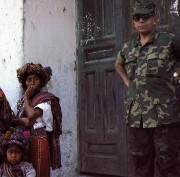
The search for justice in Guatemala continues, more than 15 years after the end of its long and brutal civil war. Claudia Paz, Guatemala’s prosecutor general and head of the Public Prosecutor’s Office, spoke with ICTJ about the struggle of victims and survivors to obtain justice for the crimes they suffered.

NEW YORK, March 22, 2011—The International Center for Transitional Justice (ICTJ) congratulates Pablo de Greiff, director of ICTJ’s Research Unit, on the nomination as the first UN Special Rapporteur on the promotion of truth, justice, reparation and guarantees of non-recurrence of serious crimes and gross violations of human rights.

NEW YORK, March 15, 2012—Brazilian federal prosecutors announced yesterday that they have opened a criminal investigation against a military officer accused of the enforced disappearance of civilians during the 1964–1985 military dictatorship. This is a welcome blow against the use of a 1979 amnesty law to shelter government agents who committed horrific crimes against civilians from accountability.

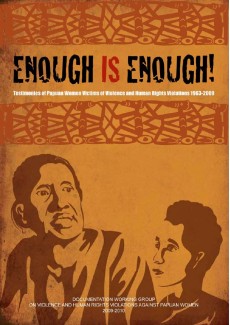
“We women of Papua have been bruised, cornered, besieged from all directions. We are not safe at home, and even less so outside the home. The burden we bear to feed our children is too heavy. The history of the Papuan people is covered in blood, and women are no exception as victims o...

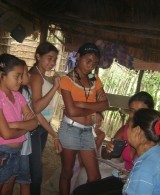
In a simple house made of wood and straw and smelling of earth, women, girls, and the occasional man narrate, sometimes laughing and other times crying, the stories of how their life used to be before being forcibly displaced to San Juan Nepomuceno. This is one of the many local memory initiatives taking place throughout Colombia today.

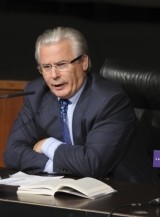
The Spanish Supreme Court has ruled the judiciary has no place investigating the deaths and disappearances of the Franco era. The verdict is a disappointment for the victims of Francoism and confirms Spain remains unwilling to deliver justice for the crimes of the past, writes Eduardo González, director of ICTJ's Truth and Memory program

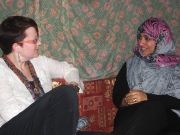
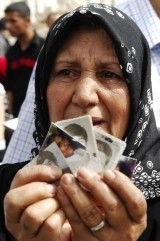
Lebanon has yet to seriously address the issue of thousands of people who went missing or were forcibly disappeared during the country’s civil war. ICTJ spoke with Lebanese activists to discuss a recent initiative taken by the families of the missing and civil society organizations to create a draft law on the missing.

A two-day roundtable discussion on a draft law on the missing and forcibly disappeared persons was held February 24–25 in Beirut, Lebanon. Organized by the Committee of the Families of the Kidnapped and Disappeared in Lebanon, Support of Lebanese in Detention and Exile (SOLIDE), Act for the Disappeared, and ICTJ, the roundtable was part of the project “Lebanon’s unaddressed legacy: the missing and the families’ right to know,” funded by the European Union (EU) and the Embassy of Switzerland in Lebanon.

Canada’s Truth and Reconciliation Commission (TRC) released its interim report and a new historical publication titled They Came for the Children in Vancouver today. The TRC was established in 2008 to examine and make public the truth about Canada’s former Indian Residential Schools, a system designed to forcibly assimilate aboriginal children. From 1874 to 1996 more than 150,000 children were taken from their families and placed in church-run schools. They were prohibited from speaking their native languages and practicing cultural traditions, and physical, sexual, and emotional violence was commonplace.

The civil war in El Salvador officially ended 20 years ago, yet justice and accountability for past violations remain acutely absent. To launch a Spanish language podcast series focusing on Latin America ICTJ spoke with Carlos Dada, editor of the digital newspaper El Faro, about the critical role the media has played in uncovering the truth about past atrocities in El Salvador.

Following a restive year, Indonesia's human rights record is one of the situations under review during the 13th session of the UN Human Rights Council Universal Periodic Review (UPR) process in May–June 2012.

Pablo de Greiff, director of Research at ICTJ, has presented his candidacy for the role of Special Rapporteur for the Promotion of Truth, Justice, Reparation, and Guarantees of Non-Recurrence. This new position is being established by the United Nations Human Rights Council to bring greater attention to accountability for serious crimes and human rights violations.

The People’s Representative Assembly of Indonesia passed on September 7, 2004, a bill creating a “Truth and Reconciliation Commission”, which is charged with clarifying abuses committed before 2000 and determining whether to award individualized amnesties for perpetrators and reparati...

During a thematic hearing December 13–14, Kenya's Truth, Justice and Reconciliation Commission (TJRC) heard testimonies from children on their own experiences as part of the commission's investigation into gross human rights violations and historical injustices in the country between 1963 and 2008.

As Nepal’s parliament enters the final discussions on a draft Truth and Reconciliation Commission (TRC) bill, questions remain regarding the relationship between amnesty and reconciliation provisions within the bill.

A report released today by ICTJ, together with the Indonesian Association for Families of the Disappeared (IKOHI) and the Coalition for Justice and Truth (KKPK), calls on the government to fulfill its obligations to provide reparations to thousands of victims of gross human rights violations.

During peace negotiations, there is often a belief that providing amnesties for certain crimes will help promote national reconciliation. Nepal's Truth and Reconciliation Commission (TRC) Bill currently contains provisions on both amnesty and reconciliation. However, the Bill itself i...

Indonesia has initiated transitional justice mechanisms to address human rights abuses that occurred during and after the New Order regime, but insufficient political will has rendered these efforts inadequate in achieving justice and reconciliation for victims.

Brazil’s recent decision to examine the abuses of the military dictatorship from several decades ago could change the face of democracy at home, making it more genuine and transparent. At the same time it could have a wider impact, allowing Brazil to take a decisive stand on human rights regionally and internationally.

ICTJ spoke with Pablo Parenti about the trial that just concluded which investigated human rights violations and crimes against humanity that occurred at the Naval Mechanics School (ESMA), used as a detention and torture center during the Argentine dictatorship.

ICTJ interview with Pablo Parenti, of the Attorney General’s Unit for coordination and monitoring cases involving violations of human rights during the Argentine dictatorship.

ICTJ and the Center for Memory, Peace and Reconciliation of Colombia are organizing an event on Memory: Public Policy for Transformation. Dialogue at the conference will serve as the basis for providing recommendations to the process of creating the Center for Historical Memory and designing public memory policy in the country.

As part of an ongoing partnership between ICTJ’s Children and Youth Program and the Truth and Reconciliation Commission (TRC) of Canada, youth from throughout Canada attended the third national TRC hearings to document the work of the commission. This weekend they are attending a retreat to finalize their radio segments and short films to raise awareness about what they have learned.

This year’s Annual Emilio Mignone Lecture on Transitional Justice, coordinated by ICTJ and the Center for Human Rights and Global Justice at the NYU School of Law, focused on the intersection between transitional justice and international development.

Join ICTJ as we co-host a delegation of RECOM’s leaders at two events in New York on November 14 and 15. They will share their experience campaigning for truth in the Western Balkans, present the draft mandate submitted to the presidents of the region, and discuss a successful public campaign that has gathered over 500,000 signatures in support of the commission.

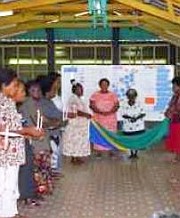
HONIARA, Oct. 30, 2011—Today women from Solomon Islands will come together to present their submission to the Solomon Islands Truth and Reconciliation Commission (TRC). More than 60 women from different regions of the country have collaborated in recording their experiences and sharing their vision for the future in this document.

Morocco’s “Years of Lead” period was marked by policies of state violence against political dissidents including torture, arbitrary detention, and enforced disappearances. “ Morocco: Gender and the Transitional Justice Process” analyzes whether the various transitional justice processes undertaken by the IER sufficiently fulfill the gender-specific focus of its mandate.

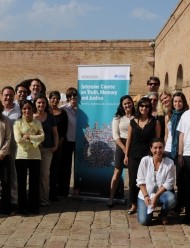
ICTJ hosted its third Intensive Course, Truth-seeking and the Challenge of Sustainable Peace, on September 26–30. Based on concrete field experience, the participants explored the relationship between truth-seeking and peace in societies that have experienced or are still experiencing armed conflict.

ICTJ enthusiastically welcomes today’s decision of the United Nations Human Rights Council to establish a mandate for a special rapporteur on the promotion of truth, justice, reparation and guarantees of non-recurrence of serious crimes and gross violations of human rights.

ICTJ applauds Brazil’s momentous step toward the creation of a truth commission and notes opportunities to ensure its success. Brazil’s Chamber of Deputies approved on Wednesday a bill creating the National Truth Commission to establish the facts and responsibilities about crimes committed under the country’s military regime.

In a conversation dedicated to the International Day of the Disappeared, Eduardo Gonzalez, director of ICTJ’s Truth and Memory Program talks to Jose Pablo Baraybar, director of the Peruvian Forensic Anthropology Team. Gonzalez and Baraybar explore why it is crucial for societies in transition to address the issue of the disappeared, the tension between demands of conventional justice and the right to truth, and the need for a strategy in searching for the disappeared.

ICTJ is pleased to present the KickStarter campaign to launch the Iriba Center for Multimedia Heritage in Kigali, Rwanda. The Iriba Center, whose name means “the source,” is a project to make accessible an audiovisual history of Rwanda, to “keep the country’s history alive.”

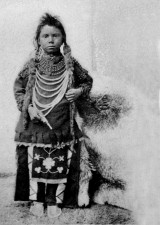
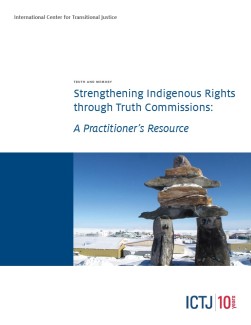
ICTJ hosted a conference on “Strengthening Indigenous Rights through Truth Commissions” July 19-21, 2011. Regional and international experts convened to discuss how truth commissions can incorporate and address indigenous peoples’ rights. Videos of each session and summaries of the conference proceedings are available.

ICTJ's expert conference on the relationship between truth-seeking and indigenous rights is in session. View the live stream here.

NEW YORK, July 19, 2011—Leaders of the global indigenous rights community gathered in New York today for a three-day meeting to discuss how truth commissions can support indigenous rights. The Strengthening Indigenous Rights through Truth Commissions conference was organized by the International...

“Residential schools affected everything about how we live. They targeted and destroyed our strong family unit, the basic foundation of our communities. They destroyed the glue that holds us together—love, respect and sharing.” These words, spoken by Charlie Furlong, a community leader of the Gwich'in people of Canada’s Northwest Territories, sum up the chilling legacy of the country’s policy of forced assimilation of indigenous cultures implemented through a system of Indian Residential Schools (IRS) from the 1870s to 1998.

The second Latin American Conference on Transitional Justice closed July 8. In the concluding remarks, ICTJ Truth and Memory Program Director Eduardo Gonzalez stated that while this conference has focused on sharing the comparative experiences throughout Latin America, this has not been an academic exercise but a call to action. Read more on the conference blog

Although Brazil's dictatorship ended years ago, focus on transitional justice there is peaking now, as debate stirs over how to best address its past. Recent developments - including the Brazilian government's proposal of a truth commission, the opening of national archives, and the Inter-American Court of Human Rights' decision limiting the 1979 amnesty law - are at the core of the discussion. Eduardo Gonzalez, director of ICTJ's Truth and Memory Program, discusses the role accountability for the past can play in Brazil today.

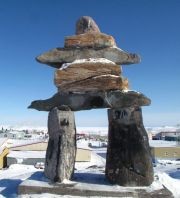
The Canadian Truth and Reconciliation Commission (TRC) will hold its second of seven national events from June 28 to July 1 in Inuvik, Northwest Territories. The event will provide survivors of Canada’s Indian Residential Schools (IRS) and other participants an opportunity to contribute to documenting and publicizing what took place in this program of forced assimilation.

ICTJ has released One morning they came to our community: Stories of political violence in communities of Peru, a compilation of victims’ stories about Peru’s internal armed conflict from 1980 to 2000. The stories constitute an important form of recognizing the truth, as well as a demand for justice and reparations.

This paper explores practical issues regarding the relationship between the Truth and Reconciliation Commission (TRC) and Special Court (SC) in Sierra Leone. It looks at: 1) the legal relationship of the Commission and the Court; 2) the question of whether the TRC information should b...

This report presents a study of ex-combatants' knowledge and opinions of the Truth and Reconciliation Commission (TRC) and Special Court (SC) in Sierra Leone. Ex-combatants and these accountability institutions are interdependent. Ex-combatants need the TRC and SC to help them reinteg...

This handbook explains the mandate, origins, purposes, and operating methods of the Truth and Reconciliation Commission (TRC) and Special Court in Sierra Leone. It discusses the differences and similarities between them, in clear, non-technical language. The TRC and Special Court can...

This paper provides an initial summary of the work of the Sierra Leone Truth and Reconciliation Commission (TRC) and points to some of the key difficulties it has encountered. The Commission's first year was challenging: it effectively lost its full preparatory period and the first tw...

This paper summarizes the results of a mapping survey on transitional justice initiatives in Indonesia undertaken by ICTJ from August 2002 to May 2003. While the Indonesian government has created several state agencies and laws to address past cases of violence, it is still plagued by...

This paper aims to address the question "What advice would you give to colleague NGOs in countries where the momentum for the establishment of a truth commission is already strong?" It is intended to provide basic guidance to NGOs that are likely to engage with formal, official truth ...

This publication sets out basic principles and approaches to truth commissions and is intended to assist policymakers in advising on the development of truth-seeking mechanisms. It summarizes lessons learned from the experiences of over 30 truth commissions in the past two to three d...

This report disscusses the Greensboro Truth and Reonciliation Commission's Final Report on the 1979 killings of five anti-Ku Klux Klan demonstrators. It focuses on a meeting of representatives from truth recovery efforts around the world to assess the Greensboro experience. Topics cov...

This report provides an overview of how truth commissions can address gender issues. It aims to help those involved with the truth commission process make informed decisions regarding different operational directions by highlighting potential advantages and disadvantages of the variou...

This report evaluates Ghana's National Reconciliation Commission (NRC) against its own objectives and the comparative experiences of truth commissions in other countries. Although the NRC was successful in securing some reconciliation, it was plagued by lack of resources and an overt ...