629 results

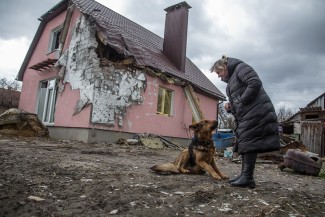
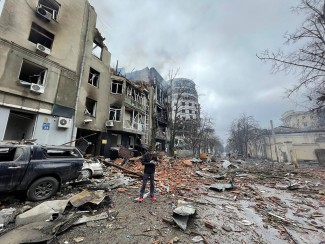
Two and a half years after Russia’s full-scale invasion of Ukraine, victims continue to demand justice for the massive violations they have suffered, which have left many of them gravely harmed. The International Criminal Court opened an investigation into alleged crimes in March 2022. It now faces a critical challenge: how to ensure that Ukrainian victims can meaningfully participate in all stages of its procedures, despite the court’s location far from the conflict.

As we mark July 17, designated International Justice Day by the states parties of the International Criminal Court (ICC) just over two years ago, we should not limit our focus to the work of the court or criminal justice as such. Pursuing justice in the aftermath of atrocity presents an opportunity to do three crucial things: reaffirm a society’s shared values about basic ideas of right and wrong; restore confidence in the institutions of the state charged with protecting fundamental rights and freedoms; and recognize the human dignity of the victims of atrocities that have taken place.

On May 12, the Council of Europe’s Committee of Ministers agreed to create a mechanism to receive claims for damages caused by the Russian crime of aggression in Ukraine. The new registry is intended to receive information on claims of damage, loss, or injury caused by Russia’s invasion of Ukraine since February 24, 2022 and assess their eligibility for future adjudication or compensation. Many of the register’s chief proponents are hailing its creation as a key step toward accountability for the many violations of international law that Russia has committed in or against Ukraine. However, the register alone will not be sufficient to address the multitude of harms caused by the war.

ICTJ interview with Pablo Parenti, of the Attorney General’s Unit for coordination and monitoring cases involving violations of human rights during the Argentine dictatorship.

The Canadian Truth and Reconciliation Commission (TRC) will hold its second of seven national events from June 28 to July 1 in Inuvik, Northwest Territories. The event will provide survivors of Canada’s Indian Residential Schools (IRS) and other participants an opportunity to contribute to documenting and publicizing what took place in this program of forced assimilation.

The numerous atrocities committed by Russia in Ukraine have been part of the former's aggression since its initial invasion of the Crimea and Donbas regions in 2014, though they have skyrocketed in number and severity since the full-scale invasion in 2022. Among these crimes are enforced disappearances, which serve as the means by which the Kremlin more broadly intends to subjugate Ukrainians and eliminate any traces of the Ukrainian national identity.

A new youth coalition has announced they will act as advocates for the rights of their fellow young Ivorians, and tell a new history of the violence that has so far been silent.

June 20, 2019 — In a tightly packed room at the United Nations, human rights experts gathered for a historic symposium to commemorate a dark chapter of South Korea’s past, the Jeju Uprising and Massacre that began on April 3, 1948, and continued until 1951, which Koreans now refer to as “the 4.3 Jeju” events. Over 100 persons, including notable academic panelists, human rights experts, journalists, diplomats, religious leaders, and peace activists attended the symposium.

On February 6, 2022, President Kaies Saied announced that he would dissolve Tunisia’s Supreme Judicial Council. While his supporters welcomed the declaration with satisfaction, many more across broad segments of society greeted it with outrage and resentment. That the president made this unilateral announcement on the premises of the Ministry of Interior—responsible for public security—stung all the more, as if to send a message that he would not hesitate to use executive power to counter perceived disobedience, judicial or otherwise.

South Sudan’s transition to democratic governance through a highly anticipated, first-ever post-independence general election has to wait once again for another two years. Despite this latest extension, the country has achieved notable milestones in its transitional justice process.