84 results

Civil society actors involved in transitional justice processes use narrative communication in strategic and agile ways. This work is vitally important, and yet it does not receive the attention and support it should.

Long before ICTJ existed, societies everywhere wrestled with the justice-related dilemmas caused by violent conflict, and victims, communities, and courageous leaders found answers of their own. What was missing was a place where people who took part in those different experiences could meet, share knowledge and lessons, and build a community to respond together to the evolving challenges to justice and peace. In 2001, ICTJ was created to be that place and to catalyze a collective effort to address massive human rights violations and build a peaceful, inclusive, and just future.

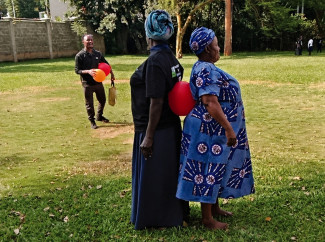
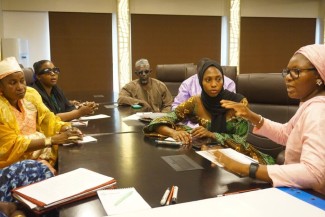
From May 25 to June 1, 2025, ICTJ held a series of community dialogues in three rural regions of the Gambia on sexual and gender-based violence, including crimes committed during the Yahya Jammeh dictatorship. The dialogues brought together 122 individuals, including community leaders, victims, and young people, to share their experiences and discuss pathways for justice.

The field of transitional justice is increasingly recognizing the relevance of mental health and psychosocial support (MHPSS) in contexts of massive human rights violations. Despite growing advocacy and awareness at the global policy level, however, the field lacks a systematic approa...

an image of colorful painting featuring a young girl

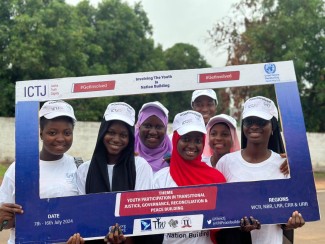
Almost eight years since The Gambia's former President Yahya Jammeh left power, the country is still seeking justice for the human rights abuses committed during his 22-year dictatorship. In May 2023, the Ministry of Justice released a plan to implement the recommendations of the country's Truth, Reconciliation and Reparations Commission. While the plan promises to deliver justice and repair harms, for it to have its intended impact, it requires broad public participation in the process, especially that of young people. With that in mind, ICTJ has partnered with the UN Peacebuilding Fund on a project to encourage Gambian youth to take a leading role in this process and the country's future.

In February 2024, the Office of the United Nations High Commissioner for Human Rights hosted an event in Seoul, South Korea, marking the 10th anniversary of the release of the report of the United Nations Commission of Inquiry on Human Rights in the Democratic People's Republic of Korea. ICTJ Senior Expert Ruben Carranza spoke at the event and discussed lessons learned involving nonjudicial forms of accountability. In this interview, he talks about why a broader approach to transitional justice is necessary and how transitional justice measures can help promote peace and possible reunification on the peninsula.

On February 29, 2024, The Gambia-Economic Community of West African States Joint Technical Committee held its inaugural meeting on the establishment of a hybrid court to hold to account those responsible for gross human rights violations committed in the country between July 1994 and January 2017 during the dictatorship of former President Yahya Jammeh. Such an internationalized court presents an opportunity to deliver criminal accountability to the victims and Gambian society as whole. It is also just the latest step in The Gambia’s transitional justice journey.

ICTJ’s partner Afghanistan Human Rights and Democracy Organization (AHRDO) recently opened a new virtual museum and database dedicated to Afghan victims of conflict and human rights abuses. “The Afghanistan Memory House” not only preserves the memory of these victims but helps pave the path for truth and justice. To launch the virtual museum, ICTJ and AHRDO cohosted a panel discussion on memorialization, moderated BBC journalist Lyse Doucet, in ICTJ’s office in New York this past December.

On November 28, 2023, ICTJ organized an international dialogue in Bogotá, Colombia, to share innovative strategies for advancing victims’ rights to redress for human rights abuses and for establishing more victim-centered development policies. The gathering also marked the official launch of ICTJ’s new report—Advancing Victims’ Rights and Rebuilding Just Communities Local Strategies for Achieving Reparation as a Part of Sustainable Development—which presents findings from a two-year comparative study of local efforts in Colombia, The Gambia, Tunisia, and Uganda to advance reparations.

Throughout 2023, ICTJ’s experts have offered their unique perspective on breaking news around the globe as part of the World Report. Their insightful commentaries have brought into focus the impact these events have on victims of human right violations as well as larger struggles for peace and justice. In this edition, we look back on the past year through the Expert’s Choice column.