

746 results

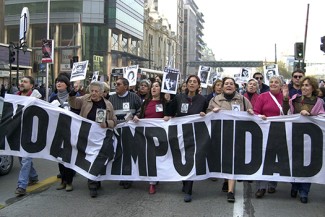
In today’s United States, civic trust that has been systematically eroded among many communities of color. There is little basis, either historically or in the current political atmosphere, for African Americans and other minorities to have this essential trust in government institutions, particularly in the police. To build that relationship, there must first be a reckoning, writes ICTJ President David Tolbert.

A new ICTJ report argues that in Africa's interconnected Great Lakes region, each country’s attempt to provide justice for past violations offers lessons for similar processes in others. We gathered civil society activists from across the region to discuss which strategies have worked for them, which have not, and opened up about the greatest challenges they face in securing justice.

Education, as a critically important institution that is widely considered to be both formative and transformative, is something that transitional justice cannot afford to overlook. Transitional justice in its early years did not directly engage with education, but today this has chan...

This paper explores the power of a transitional justice approach to education reconstruction in post-conflict settings. Its central question is how the aims of transitional justice can guide educational reform processes after conflict or periods of massive human rights violations, wit...

As ICTJ looks back on its 15 years of work, join us in celebrating our allies across the globe who struggle for human rights, against impunity. To honor their efforts in the trenches of this struggle, we will bring you their stories in the weeks and months to come. This is the story of Mark Thompson, CEO of Relatives for Justice, a group struggling for truth and justice in Northern Ireland.

Six years into the carnage in Syria, atrocious crimes run rampant, with savage abuses committed against all groups in the devastated country, and the murderous regime, abetted by powerful allies, is still in power. The UN Security Council remains deadlocked and unable to take any steps towards...

South Africa Parliament faces a historic moment. In this op-ed, ICTJ's Vice President Paul Seils remembers the great hope that marked the ICC’s emergence: "No country embodied that hope and that reality more powerfully and more inspiringly than South Africa."

The Africa Union's resolution to collectively support a strategy to withdraw from the ICC looks more like a machination of those who have instrumentalized an argument against the court to protect themselves from the long arm of justice, write ICTJ's top experts on Africa.

Potential political interference, poor evidence gathering and difficulty accessing remote areas are some of the main challenges to prosecuting economic and environmental crimes related to armed conflict in the Democratic Republic of Congo. Overcoming these challenges was the focus of a two-day workshop for judges and prosecutors in Goma and Bukavu, organized by the International Center for Transitional Justice (ICTJ), in collaboration with the United States Institute for Peace.

ICTJ has formally accepted the invitation to participate in Colombia’s Selection Committee, reflecting its commitment to work for peace and victims’ rights in that country. It has not yet selected its delegate, contrary to prior reports.