609 results

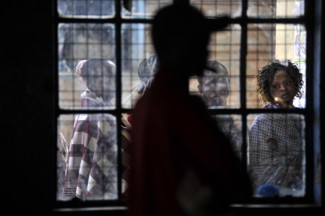
In its primary findings, Kenya's Truth, Justice and Reconciliation Commission noted that women and girls have been subject to systematic, state-sanctioned discrimination in all spheres of their lives, and that the state has failed to take measures to end the practices that r...

ICTJ joins the global observations of the International Day for the Elimination of Violence Against Women, and the start of the “16 Days of Activism against Gender-Based Violence Campaign.” On this day, we recognize the ongoing efforts to protect women from violence in different parts of the world.

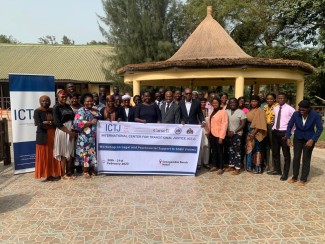
“Despite laws already in place, the number of sexual and gender-based violence [SGBV] cases is still rising, including cases of rape, female genital mutilation, sexual assault, and harassment. This means there is the need for enforcement of such laws,” asserted Didier Gbery, ICTJ’s head of program for The Gambia, at the opening of a workshop this past March on increasing SGBV victims’ access to justice. The workshop was one of two that ICTJ organized in early 2023 to strengthen the capacity of stakeholders in The Gambia to defend SGBV victims and provide them with vital gender-sensitive support.

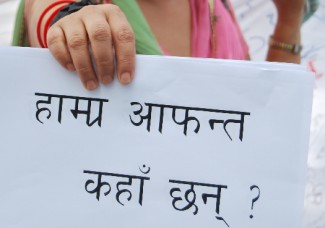
The democratic transition in Ethiopia is taking a worrisome turn. The sweeping reforms introduced by Prime Minister Abiy Ahmed in 2018 after decades of repressive rule and three years of deadly protests raised hopes for a more just and free society, one in which power is distributed equally among the country’s many ethnic groups. Worryingly, the failure to reach an inclusive political agreement on the way forward has triggered intercommunal violence and conflicts that have left hundreds of people dead and more than 2.7 million displaced throughout the country.

Research Brief: Selected examples of Defence, Intelligence and Justice Investigative Reports into detention and interrogation practices.

ICTJ partnered with the Center for Global Affairs at New York University to explore how political will of international and national actors impacts national war crimes proceedings. The panel examined four diverse country scenarios - the Democratic Republic of the Congo, Serbia, Iraq, and Guatemala.

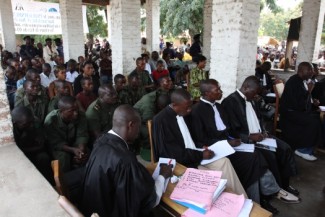
ICTJ, in cooperation with the United Nations Joint Human Rights Office (UNJHRO) and the United Nations Development Programme (UNDP), organized a high-level conference in Kinshasa today to discuss ways to strengthen the Congolese judicial system and its ability to investigate and prosecute serious crimes, such as genocide, war crimes, and crimes against humanity.

In recent years, states have increasingly imposed sanctions in relation to the commission of human rights violations, which has expanded their potential to advance transitional justice goals. In this context, ICTJ recently published a new report offering an analysis of international sanctions from a transitional justice perspective. In this interview, the report's author, ICTJ Senior Expert Elena Naughton, discusses how sanctions may advance or hinder efforts to deliver accountability, acknowledge and redress victims, and prevent recurrence in response to massive human rights abuses.

As the work of the Special Court for Sierra Leone draws to a close, we take stock of the historic milestones it has passed since its creation in advancing transitional justice through a special multimedia project, “ Exploring the Legacy of the Special Court for Sierra Leone.” This website will support two conferences: one in New York on November 7-8, 2012, and one in Freetown on January 9-10, 2013. The website will be regularly updated to provide information on the history of the court and its legacy through interactive multimedia and other features.