

479 results

ICTJ and its partners in the Bridges of Truth project presented in Damascus the findings from their recent report on the first community dialogues held in Syria since the fall of the al-Assad regime in December 2024. On October 7, victims and family members, civil society actors, representatives from the country’s nascent transitional justice commissions, government officials, and international partners gathered to reflect on the lessons learned from the dialogues and the path forward for truth, justice, and accountability in Syria.

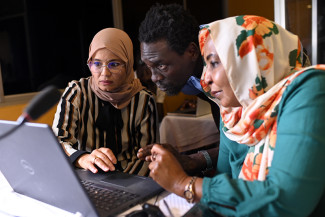
Despite the enormous challenges, Sudanese civil society and other stakeholders are prioritizing transitional justice, acknowledging the need to address past injustices to end the cycle of conflict in their country. ICTJ continues to support them as they envision and design victim-centered, gender-sensitive, and inclusive strategies. Leading these efforts is ICTJ's Ilaria Martorelli. In this interview, she discusses the prospects for lasting peace, accountability, and repair in Sudan.

ICTJ and its partners in the Bridges of Truth project hosted an event in Damascus on October 7 to present findings from their recent report on the community dialogues held in April in Syria and to commemorate the project’s eighth anniversary.

On August 8, Armenia and Azerbaijan signed the Joint Declaration on Future Relations. Hailed by some as a “historic peace deal,” it neither is a treaty nor ends the 37-year Nagorno-Karabakh conflict. Rather, it is a political framework that requires international support and attention.

ICTJ, in collaboration with the Dutch Ministry of Foreign Affairs, recently convened the first international dialogue in Geneva in support of Syria’s two new justice commissions. From July 10 to 11, members of the National Commissions for Transitional Justice and for the Missing joined representatives of Syrian victim groups and experts and practitioners from around the world to discuss the present opportunities and challenges for peace and justice in Syria and how best to support the nascent institutions in fulfilling their mandates and advancing acknowledgment, truth, accountability, and repair.

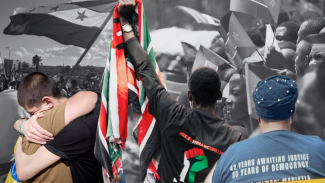
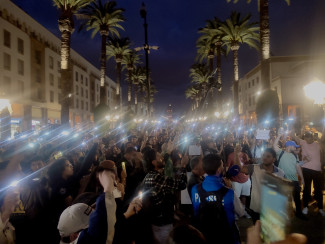
The police response to the peaceful anti-government protests in Kenya over the past year has been deadly and brutal. Their actions have rocked the country and reaffirmed the 2013 findings of the Kenyan Truth, Justice and Reconciliation Commission (KTJRC) that state security agencies, particularly the police, have historically used excessive and disproportionate force and “been the main perpetrators of bodily integrity violations of human rights in Kenya including massacres, enforced disappearances, torture and ill-treatment, and sexual violence.”

Across Syria today, we continue to witness human rights violations and abuses that run counter to the very principles upon which the revolution was built. In particular, recent violence in the coast and Sweida has deepened the sense of fear and mistrust already felt by many communities. Meanwhile, Syria's new transitional justice commissions have been working hard to lay the foundations of their mandates. Now, at this critical juncture, they must show that they are ready to lead and first and foremost to serve victims.

At the end of April in Syria, dozens of local residents in several cities and towns sat down together for the first time to finally speak about their experiences during the 14-year conflict that tore society apart and resulted in countless human rights violations. These community dialogues, organized by ICTJ in partnership with the Bridges of Truth project, provided a safe space for participants to share their stories and hardships, discuss their needs, and express their hopes for justice and reconciliation.

This report summarizes the key observations offered by Syrians during community dialogues in April 2025. Convened by Bridges of Truth, a collaboration of Syrian civil society organizations and ICTJ, the dialogues captured a wide spectrum of perspectives and experiences and provided va...

Some 20 people sit in chairs around a table located inside a courtyard.

On July 10 and 11, ICTJ convened a high-level dialogue in Geneva that brought members of Syria’s newly established transitional justice commissions together with international experts and representatives from Syrian civil society represented by the Bridges of Truth project and victims’ groups and multilateral institutions. The two-day event provided guidance to the commissioners as they develop and implement their mandates and supported Syrian-led efforts to build transparent and inclusive institutions.