184 results

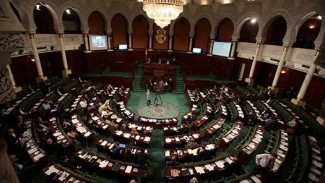
On Friday, the United Nations hailed the progress made since 2014 in Tunisia in terms of transitional justice, underlining the importance of “enabling the transitional justice process to achieve its objectives." "The United Nations Resident Coordinator in Tunis, Diego Zorilla, congratulates all...

On March 22 in Geneva, we listened to the experiences of Syrians affected by attacks on schools. The Save Syrian Schools project presented the results of its one-year-long research—an unprecedented collaboration of 10 Syrian human rights organizations and the ICTJ.

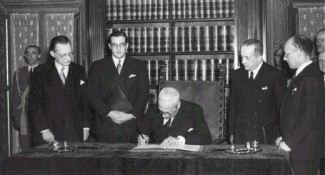
Constitutional reforms can be valuable in a transitional justice process, but their effectiveness depends on the degree to which they are woven into the social and cultural understanding of the country's legal framework.

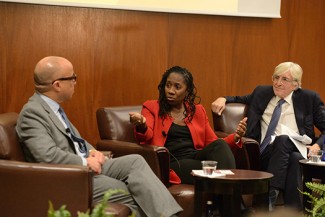
Do the concepts and strategies of transitional justice have a role to play in the United States? Our 2017 Emilio Mignone Lecture asked that question, with Darren Walker, President of the Ford Foundation, and Sherrilyn Ifill, President and Director-Counsel of the NAACP Legal Defense Fund, joining ICTJ's David Tolbert in conversation. Watch the full discussion here.

Last month, the United Nations established a new mission in Haiti, focused on strengthening rule of law institutions and human rights reporting. Can it work with activists to challenge impunity? We sat down with Isabelle Clérié, a Haitian civil society organizer, about the mission, what it can accomplish, and how the past is understood in the country.

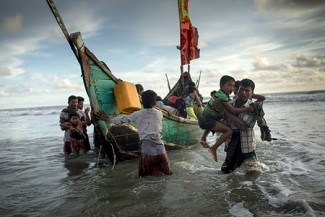
During the past month, over 400,000 members of Myanmar’s Rohingya Muslim community have been driven from their homes as part of an ethnic cleansing campaign led by the military. What lies at the root of the current violence, how is it connected to political transition, and does transitional justice have a role to play? ICTJ's Anna Myriam Roccatello answers those questions and more.

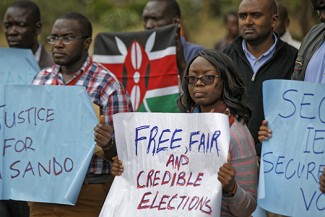
Kenya is just days away from the 2017 general election, but challenges dot the horizon, including the recent assassination of an election official. ICTJ's Chris Gitari calls for a strong, accountable security sector and the implementation of the Truth, Justice and Reconciliation Commission Report.

Where does transitional justice stand in Sri Lanka? Kelli Muddell, Director of ICTJ's Gender Justice Program, explores the country's contested historical narratives.

As grassroots efforts to confront the legacy of racial injustice in the United States take hold from New Orleans to Maine and beyond, how can transitional justice experiences around the world inform their work? That was a major focus of a recent conference ICTJ co-convened, hosted by Kean University.

In 1986, Wachira Waheire was whisked off the street, taken to Kenya's most infamous torture chamber, and sentenced to four years in prison. Over the next 30 years, his quest for justice led him to meetings with his torturers to courtroom showdowns with the country's Attorney General. Discover his ongoing struggle for truth, acknowledgement, and reparations alongside all survivors of abuse in Kenya.