4 results

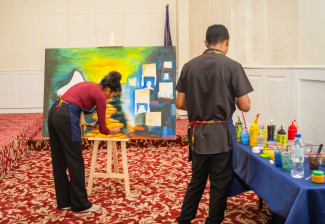
Over 100 representatives of civil society organizations, victims’ associations, government institutions, and diplomatic missions recently gathered in Addis Ababa to discuss what an inclusive transitional justice process in Ethiopia should look like. Participants explored best practices, local approaches, as well as persistent challenges to ensuring that those most affected by injustice play a central role in any process designed to address it.

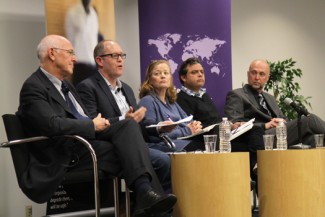
What happens when a state refuses to acknowledge the suffering of victims of mass atrocities? Or when the public celebrates perpetrators as heroes? Earlier this month, a panel discussion hosted by The International Center for Transitional Justice and New York University’s Center for Global Affairs grappled with the impact of denial on justice.

This joint report released today by the International Center for Transitional Justice (ICTJ) and the Institute for Human Rights Study and Advocacy (ELSHAM-Papua) provides important insight into the ongoing debate on steps required to achieve a sustainable peace in Papua. The report reviews Papua's recent history within a transitional justice framework, and provides expert recommendations on truth seeking, justice, reparations, institutional reform, and enforcing the rights of women victims.

This joint report by ICTJ and the Institute for Human Rights Study and Advocacy (ELSHAM-Papua) provides important insight into the ongoing debate on steps required to achieve a sustainable peace in Papua. The report reviews Papua's recent history within a transitional justice framewor...