390 results

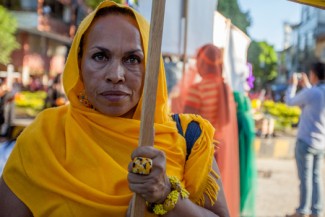
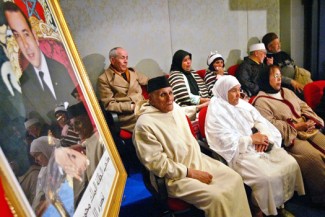
The month of January has a particular significance in the Middle East and North Africa. It was the month when the Arab uprisings were sparked five years ago. It was also the month when the transitional justice process was inaugurated in Morocco, 12 years ago. What can be learned from Morocco’s experience?

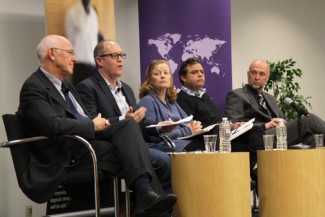
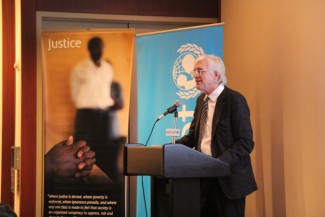
On January 21, ICTJ and UNICEF held a special event to launch an important new report on the links between education and transitional justice. The launch was accompanied by a panel discussion moderated by ICTJ President David Tolbert.

With hopes running high after the National League for Democracy’s landslide victory in November, a new ICTJ paper calls on the soon-to-be-established Burmese government to seriously consider taking steps to deal with Myanmar’s troubled past as a way to help end the cycle of violence and human rights violations in the conflict-torn country.

This briefing paper calls on the soon-to-be-established NLD-led Burmese government to seriously consider taking steps to deal with Myanmar’s troubled past as a way to help end the cycle of violence and human rights violations in the conflict-torn country.

In this op-ed, ICTJ's Aileen Thomson and Bo Kyi argue that in the wake of Myanmar's historic elections, the release of all political prisoners held by the government would be an important step towards national reconciliation.

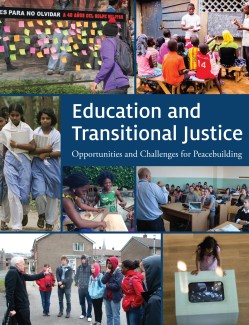
This report, part of a joint research project by ICTJ and UNICEF on the intersections of education, transitional justice, and peacebuilding, explores how a transitional justice framework can help to identify educational deficits relating to the logic of past conflict and/or repression...

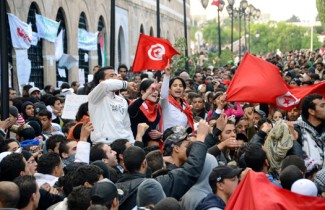
ICTJ welcomes the award of the 2015 Nobel Peace Prize to Tunisia's National Dialogue Quartet for helping the country transition to democracy. With the award, the Nobel committee acknowledges the "decisive contribution" made by the group of civil society organizations after Tunisia’s 2011 revolution.

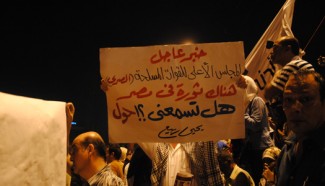
After toppling Hosni Mubarak’s dictatorship in February 2011, Egyptians were eager for a reckoning with past injustices. But after years of political turmoil, the possibility of a genuine transitional justice process in Egypt is uncertain. We turned to three leading Egyptian activists to examine if there really is a chance for justice and reform in Egypt in the near future.

The resignation and indictment of President Otto Pérez Molina for corruption was a significant victory over impunity in Guatemala. In an interview with journalist Carlos Dada, we discussed how recent developments in Guatemala could impact other countries in Central America, such as Honduras and El Salvador.

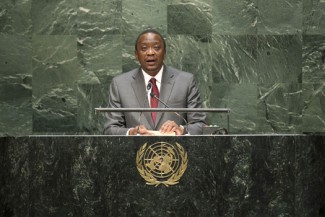
In this op-ed, ICTJ's President David Tolbert urges President Uhuru Kenyatta and Kenyan institutions to take concrete actions without further delay to provide reparations for victims, tackle the struggling police vetting reform, and prosecute the serious crimes that were committed during the post-election violence.

On 26 June each year, the world marks the International Day in Support of the Victims of Torture. The day was instituted in 1997 by the General Assembly of the United Nations, in an effort to build up the unanimity of condemnation required to abolish torture effectively in our time. In the effort to...

In this op/ed, the head of ICTJ's Kenya Program, Christopher Gitari, argues that President Kenyatta's recent apology to victims—though commendable—must be supported by solid reforms and initiatives for rebuilding the lives of those who have suffered the most.

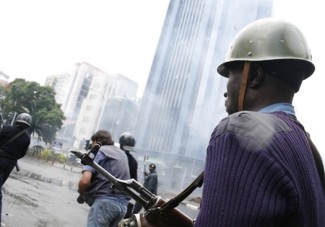
A new documentary produced by ICTJ highlights the need to reform Kenya's police force, and stresses the vital role civil society plays in conducting a thorough vetting process and the establishment of public trust in security forces.

ICTJ joins the global observations of the International Day for the Elimination of Violence Against Women, and the start of the “16 Days of Activism against Gender-Based Violence Campaign.” On this day, we recognize the ongoing efforts to protect women from violence in different parts of the world.

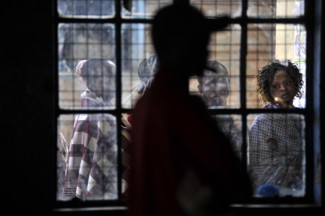
Kenya continues to deal with the repercussions of violence stemming from its disputed 2007 presidential elections, when political protests and targeted ethnic violence rocked the country, leaving thousands dead and hundreds of thousands displaced. Head of our Kenya office Chris Gitari gives an update on how Kenya is moving forward, and explains ICTJ's work in the country.

Continuing political repression, cronyism, and ongoing conflicts are disrupting attempts to put Myanmar on a linear path to democracy, peace, and development, says a new report from the ICTJ. According to the report, titled “Navigating Paths to Justice in Myanmar’s Transition,” dealing with current and historical abuses is essential to achieving genuine progress on peacebuilding and economic development in the country.

This report asserts that dealing with past abuses in Myanmar is essential to achieving genuine progress on peacebuilding and economic development in the country. Conflict and high levels of political repression have racked Myanmar for more than half a century. Both President Thein Sei...

In early May, the African National Congress (ANC) held on to power in South Africa’s general election. However, there is a widespread feeling that the party that oversaw the creation of the groundbreaking Truth and Reconciliation Commission has walked away from its obligations to the South African people.

ICTJ President David Tolbert will be a featured speaker at this year’s Al Jazeera Forum in Doha, Qatar. Al Jazeera Forum is the flagship event of Al Jazeera Media Network, at which Al Jazeera showcases its contribution to the world of media and politics.

In the span of only one month, Tunisia has witnessed the historic passing of a transitional justice law and adoption of a new constitution. A key actor in the country's transition is the media.

To mark International Women’s Day, we invite you to read about four countries at the top of our gender justice priorities in the coming year, each with its own history, context, and complex sets of challenges.

For decades, Lebanese governments have made only partial and ineffective attempts to hold powerful individuals, groups, and foreign states accountable for violations committed on Lebanese soil, including against civilians. The consequences of their failure to act – for victims and Lebanese society – are grave. ICTJ's new report looks at the culture of impunity for serious violations of human rights continues to thrive in Lebanon.

A culture of impunity for serious violations of human rights continues to thrive in Lebanon, says a report released today by ICTJ.

This report examines the situation of impunity in Lebanon that has persisted since the 1975-1990 war through the lenses of core elements of transitional justice. It analyzes Lebanon’s past experience of ineffective transitional justice measures -- including limited domestic trials, na...

Marking three years since Tunisia's revolution, ICTJ President David Tolbert argues that transitional justice developments in the country are not only worthy of attention, but serve as useful markers for transitions in the region and beyond.

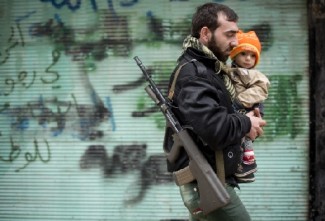
A newly adopted UN Security Council resolution calls on the Syrian government to cooperate in destroying its chemical weapons arsenal, stressing that “those responsible for any use of chemical weapons must be held accountable.” Yet, it does not provide a framework for pursuing accountability, in the short or long term. What role might transitional justice play in a post-conflict Syria? Should Syria rush to prosecute war criminals once the fighting draws to a close? These are some of the pressing questions explored in ICTJ’s newest briefing paper.

This briefing paper focuses on establishing a credible approach to accountability and human rights in a post-conflict Syria. Looking ahead to an eventual resolution to the war, it recognizes that Syrian authorities and civil society, as well as the international community, will have t...

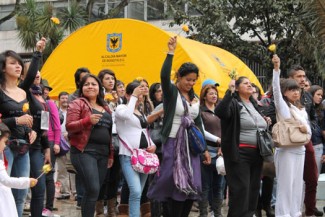
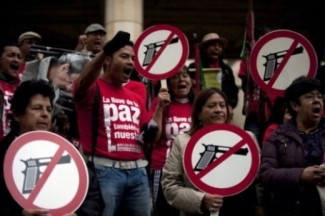
With the aim of reinforcing the legitimacy of the peace process, which could lead to a historic compromise that would deeply influence the future of the country, thousands of Colombians are marching today to express their support for the discussions, for peace, and for democracy. Their motto is: “We are the majority: Now is the time for peace!”

From its inception in 2003, the process of de-Baathification – the purge of Iraq’s state institutions of Saddam Hussein’s Baath Party members in the aftermath of the US-led invasion - polarized Iraqi politics and led to the collapse of many state functions. Today, Iraq continues to be haunted by its legacy. An examination of Iraq’s flawed vetting experience is presented in a major new ICTJ report, titled "A Bitter Legacy: Lessons of De-Baathification in Iraq."

The International Center for Transitional Justice (ICTJ) released a new report today providing detailed information and analysis on how Iraq dismantled Saddam Hussein’s Baath Party and purged state institutions of party members. The report, titled “A Bitter Legacy: Lessons of De-Baathification in Iraq,” carries valuable lessons for countries in the Middle East and North Africa (MENA) as they consider how to deal with legacies of abuse by the security and political apparatuses of former regimes.

Based on significant field research and interviews with the Higher National de-Baathification Commission, this report focuses on Iraq’s purge of members of Saddam Hussein’s Baath Party, which is the most well-known example of large-scale and politically based dismissals in the Middle ...

Recent proposals on using transitional justice as a means of stabilizing Syria in the aftermath of the eventual fall of the Assad regime— including by providing incentives for loyalists to give up a possible ‘fight to the death’ in Damascus — are a significant development in the debate on Syria. As Syrian groups and international actors gathered as “Friends of Syria” consider these proposals, it is of paramount importance to be clear about what is meant by transitional justice.

The International Center for Transitional Justice (ICTJ) signed a cooperation agreement with the Tunisian government on January 16 to provide further technical assistance in establishing transitional justice mechanisms in the country. The development comes two years after protests forced President Zine El Abidine Ben Ali to step down and flee the country in January 2011.

The latest ICTJ Program Report presents ICTJ’s work in Africa. In a deeply insightful interview, Suliman Baldo, director of ICTJ’s Africa program and one of the world’s leading experts on transitional justice in Africa, discusses transitional justice processes in Ivory Coast, Kenya, Democratic Republic of Congo, and Uganda.

An end could be in sight for the longest-running armed conflict in the Western Hemisphere. Peace negotiations between the government and the Revolutionary Armed Forces of Colombia (FARC) rebels have begun on 17 October in Oslo, Norway, and will continue in Havana, Cuba.

The latest ICTJ Program Report explores transitional justice issues in Colombia and charts our work in the country with the longest running armed conflict in the world. In this interview, head of ICTJ's Colombia office Maria Camila Moreno answers questions on the ongoing transitional justice mechanisms in the country, and describes ICTJ's work with the government and civil society groups on issues of criminal justice, reparations and memory. She provides a look ahead to the new peace negotiations between the Colombian government and the FARC, and identifies key transitional justice issues at stake for the talks.

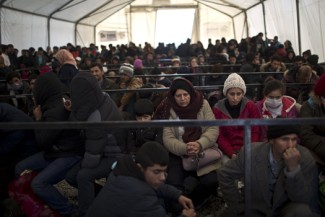
Transitional Justice is often pursued in contexts where people have been forced from their homes by human rights violations and have suffered additional abuses while displaced. Little attention has been paid, however, to how transitional justice measures can respond to the injustices ...

The latest ICTJ Program Report explores transitional justice issues in the Middle East and North Africa (MENA) and charts our work in this important and dynamic region. Claudio Cordone, ICTJ’s program director covering the MENA region, discusses individual country scenarios, prospects for transitional justice processes and explains ICTJ’s involvement and impact. Cordone speaks about transitional justice principles being at the root of popular uprisings referred to as “Arab Spring” and the challenges facing societies in their efforts to reckon with legacies of dictatorships and recent violence. He describes ICTJ’s efforts to address the impact of violence on women and promote their participation in transitional justice initiatives. The interview provides a thorough overview of ongoing initiatives and future prospects in Tunisia, Libya, Egypt, Syria, Yemen, Lebanon and Israel and Occupied Palestinian Territory.

Forced disappearance is a crime against humanity. The decisions made by politicians and officials authorizing such practices in different countries cannot be justified legally or morally. They must be held to account and be shown for what they are: enemies of a civilized society.

As the world marks August 30, the International Day of the Disappeared, we are reminded that forced disappearances and transitional justice share a common history. Indeed, processes working in concert that came to form the field of transitional justice were born from the search for truth and justice about the disappeared.
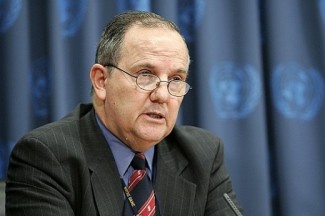
On August 9, 2012, UN Special Rapporteur on the promotion of truth, justice, reparation, and nonrecurrence Pablo de Greiff presented the first annual report to the Human Rights Council. The report provides an overview of key activities undertaken by the Special Rapporteur between May 1 and July 25, reviews the foundations of the mandate and outlines the strategy for its implementation.

Nepal’s armed conflict ended six years ago, but commitments made to pursue accountability and establish oversight over security forces have yet to be implemented. ICTJ’s briefing paper “Building Trust and Strengthening the Rule of Law” examines how an ad hoc vetting mechanism for officers in senior command positions could help consolidate democracy in Nepal. Author Alexander Mayer-Rieckh says that as Nepal abandons its commitments to pursue accountability for serious crimes, it undermines the ability of its security forces to maintain the rule of law and protect a new era of peace.

ICTJ’s briefing paper “Building Trust and Strengthening the Rule of Law” examines how an ad hoc vetting mechanism for officers in senior command positions could help consolidate democracy in Nepal. Author Alexander Mayer-Rieckh says that as Nepal abandons its commitments to pursue acc...

When 26-year old Tunisian street vendor Mohamed Bouazizi incinerated himself on December 17, 2010, his act resonated across an entire region and sparked what is known as the Arab Spring. His cry echoed across the world because it was a universal call for justice, basic fairness, and equal treatment. Indeed, it was a call for the rule of law. In a new op-ed, ICTJ's President David Tolbert calls upon the UN General Assembly to prove its commitment to justice and the rule of law.

In cases other than those of environmental disasters, some mix of persecution and fear of violence based on ethnicity, race, or religion, plus violations of human rights and repression based on political beliefs and opinions often characterizes forced displacement for both internally ...

As with most post-conflict challenges, the issues of displaced populations and weak security institutions each have profound effects on the other. A common cause of displacement in post-conflict environments is a lack of physical security, either because formal security institutions f...

The ICTJ Program Report is a new online feature that presents ICTJ’s work and impact around the globe. Through monthly in-depth interviews with our experts, the ICTJ Program Report will offer a view of ICTJ’s work on reparations, criminal justice, truth and memory and other transitional justice developments in countries where we work. To launch the series, we speak with Paul Seils, ICTJ's vice president and the head of our Program Office.

Argentina’s trials for crimes committed during the dictatorship of military juntas are widely seen as a successful national effort to seek accountability for past abuses. And while victims’ demands for justice continue to remain high, the judiciary is facing challenges to ensure the cases are dealt with expeditiously and fairly. In a interview for ICTJ's Spanish podcast series "Lessons from Latin America," Mirna Goransky, Assistant General Prosecutor for the Attorney General’s Office shares her perspectives on human rights trials in Argentina.

In 2006, the Afghanistan Independent Human Rights Commission (AIHRC) launched an unprecedented effort to document the violations of international humanitarian law in Afghanistan between 1978 and 2001. Though it has not yet been made public, the 1000-page AIHRC Conflict Mapping Report ...

As new evidence of past violations comes to light, Afghanistan must prioritize transitional justice measures to break the cycle of abuse. ICTJ's new briefing paper provides analysis of past reports identifying the patterns of abuses and puts forth recommendations to the government of Afghanistan.