



392 results

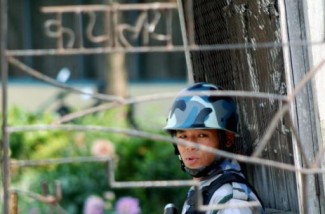
Nepal’s armed conflict ended six years ago, but commitments made to pursue accountability and establish oversight over security forces have yet to be implemented. ICTJ’s briefing paper “Building Trust and Strengthening the Rule of Law” examines how an ad hoc vetting mechanism for officers in senior command positions could help consolidate democracy in Nepal. Author Alexander Mayer-Rieckh says that as Nepal abandons its commitments to pursue accountability for serious crimes, it undermines the ability of its security forces to maintain the rule of law and protect a new era of peace.

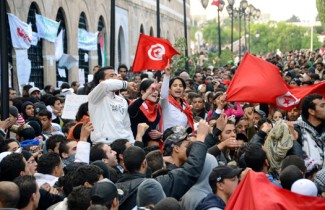
Throughout the week of April 23, I have been attentively following the news to know what would be the impact of this Friday’s hirak (Arabic for protests or mass rallies) in Algeria. The tenth consecutive Friday of protests that began on February 22 is a reaction to the announcement made by an invalid president, Abdelaziz Bouteflika, from a hospital in Geneva, of his intention to continue holding his position for a fifth term.

The announcement by the Executive Committee of Ethiopia’s ruling party that the country will implement the 2002 Algiers peace agreement and decisions of the Ethiopia-Eritrea Boundary Commission brings hope that a 20-year war that divided families and communities is finally over.

This briefing paper calls on the soon-to-be-established NLD-led Burmese government to seriously consider taking steps to deal with Myanmar’s troubled past as a way to help end the cycle of violence and human rights violations in the conflict-torn country.

The Maryland Lynching Truth and Reconciliation Commission held its first public hearing in Cumberland, Allegany County, Maryland, on October 2, 2021. The event, broadcast live from Emmanuel Episcopal Church, brought together commissioners, panelists, and guests to acknowledge and memorialize the tragic lynching of 18-year-old Robert Hughes (aka William Burns) in Cumberland in 1907. In the coming months, the commission will convene several more of these public hearings in counties across the state of Maryland.

This report explores pathways for transitional justice in Yemen, emphasizing victims’ experiences, political dynamics, and existing justice mechanisms. It examines national and local efforts, including mediation and reconciliation initiatives, and highlights the role of Yemeni civil s...

The sun shines into an urban courtyard of what it appears to be residential buildings.

Expectations for advancing much-needed justice and dismantling state and non-state criminal networks that persistently violate human rights have been dashed over the past three years in Mexico. Violence and impunity have increased. President Andrés Manuel López Obrador's campaign promises have not materialized in a serious effort to address the lack of security in the country or the justice system’s inefficiency. However, several efforts have persisted, characterized by cooperation among state institutions, civil society, and victims’ groups that not only give hope, but confirm the way forward.

In Venezuela, there is now an absence of representative democracy and a vacuum of public trust in politicians. However, this situation presents an opportunity for other actors and other approaches, so far disparaged by hardliners on both sides. Civil society organizations, which have earned credibility through their dedicated work addressing the humanitarian crisis and defending human rights, can seize this opportunity.

This guide is designed to engage young people who are interested in or are working on transitional justice issues in their communities. Intended to serve primarily as a training tool, it provides basic information about transitional justice and related principles and offers tips and s...

Banjul, The Gambia – On October 26, 2019, t he International Center for Transitional Justice (ICTJ) in partnership with an artist collective in The Gambia will premier e a short documentary film about a group of young musicians and activists taking part in the country’s unfolding transitional justice process.