




25 results

Recent Israeli strikes in Beirut and other populated areas in Lebanon, among the conflict's most intense so far, have destroyed critical infrastructure and devastated civilian communities. ICTJ stands unequivocally with the Lebanese people and all victims across the region and calls for an immediate end to all attacks on and threats to civilian communities and infrastructure.

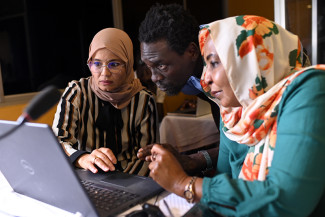
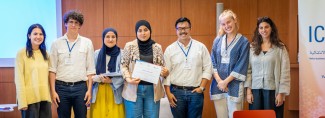
ICTJ recently convened human rights defenders, journalists, and lawyers from Libya, Sudan, Syria, Tunisia, and Yemen for a workshop on digital, open-source investigations. Held on November 3-8 in Kampala, Uganda, the course trained participants on open-source tools with a view to strengthening their work investigating, documenting, and monitoring human rights violations.

Since 2014, conflict in Yemen has caused hundreds of thousands of deaths, displaced millions, destroyed the economy, and exacerbated systemic marginalization, creating one of the world’s worst humanitarian catastrophes. Yet currently, transitional justice and reconciliation take up little space in the Yemeni political arena. In this context, ICTJ has released a new report that explores pathways to a just and sustainable peace in Yemen.

This report explores pathways for transitional justice in Yemen, emphasizing victims’ experiences, political dynamics, and existing justice mechanisms. It examines national and local efforts, including mediation and reconciliation initiatives, and highlights the role of Yemeni civil s...

The sun shines into an urban courtyard of what it appears to be residential buildings.

In this era of technological transformation, it is critically important to develop digital strategies for documenting human rights violations, analyzing data for accountability or reparations purposes, and safely advocating for human rights online. This is particularly true in contexts where victims, human rights actors, and members of the media live in fear. To this end, ICTJ has recently led trainings for human rights activists in conflict-affected countries on open-source investigation tools to help them do their work more effectively.

This past month, the United States officially observed Juneteenth for the fourth time since President Joe Biden declared it a federal holiday in 2021. Commemorations are a chance to acknowledge past milestones and reflect on their relevance to the present. In the spirit of Juneteenth, it is important to highlight and celebrate the wins and progress made toward fulfilling the promise of liberty for all.

This year marks the 50th anniversary of the hip hop movement. To honor its contributions to the struggle for justice, truth, and equality, the Skoll Foundation hosted a panel discussion and concert event featuring hip hop artists, including cofounder of the legendary rap group Run-DMC Darryl McDaniels and Colombian rapper and producer Ali aka Mind, as part of its 20th World Forum held in April in Oxford, United Kingdom. ICTJ, which received the Skoll Award for Social Innovation in 2009 and has partnered with the Skoll Foundation since, invited Ali aka Mind as a representative of Rexistencia Hip Hop, an artistic mentorship and creation lab led by ICTJ’s office in Colombia and the Latin American media outlet and foundation Cartel Urbano.

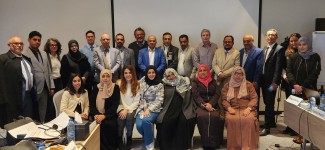
In 2016, the Yemeni National Commission to Investigate Alleged Violations to Human Rights began documenting violations committed since the 2011 uprising and during the subsequent brutal civil war, which continues today. To date, the commission has documented more than 23,000 human rights abuses and referred over 2,000 cases to Yemen’s Public Prosecutor for prosecution. However, no verdict has been issued in any of these cases. To help the commissioners and members of Yemen’s judiciary advance accountability, ICTJ organized a workshop for them on transitional justice mechanisms. However, to deliver a justice that meets all the reparative needs of victims, these efforts must be an integral part of a broader, multifaceted transitional justice process.

The United States has never collectively confronted its history of colonialism, slavery, and racism in an effort to reform the systems that perpetuate harms to Black communities and other marginalized groups, or to redress these wrongs. Events in recent years, however, have amplified calls for meaningful action to reckon with the past. Given that truth seeking is integral to the investigation of past wrongs, ICTJ and a coalition of practitioners from multiple law firms has released a new report that examines the experiences of official truth commissions from around the world to identify relevant considerations for US stakeholders.

The United States has never collectively confronted its history of colonialism, slavery, and racism in an effort to reform the systems that perpetuate harms to Black communities and other marginalized groups, or to redress these wrongs. Events in recent years, however, have amplified ...

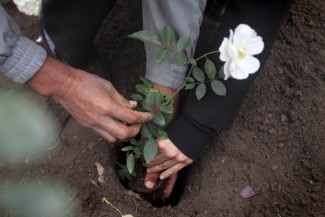
Two sets of hands plant a white flower in the ground.