425 results

As UN member states convene virtually this week for the annual General Assembly, they will likely focus on a narrow list of agenda items, topped by issues related to the deadly coronavirus pandemic and a global economic downturn. For this reason, ICTJ would like to recall the vital importance of justice for global peace, security, health, and development by sharing findings from an analysis of the open debate on transitional justice that the UN Security Council held on February 13, 2020, as part of its peacebuilding and sustaining peace agenda.

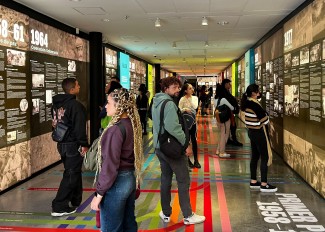
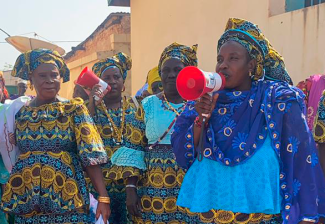
On November 28, ICTJ hosted an international conference to explore the synergies between reparations and sustainable development in Bogotá, Colombia. The event, titled “Advancing Victims’ Rights and Rebuilding Just Communities: An International Dialogue on Reparations and Sustainable Development,” brought together ICTJ partners from The Gambia, Tunisia, and Uganda along with civil society and government representatives from Colombia to discuss local strategies for advancing reparations for human rights abuses and how repairing victims and affected communities can contribute to local and national development. On the occasion, ICTJ also launched a new research report on the topic.

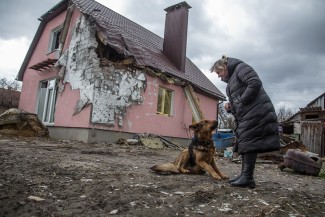
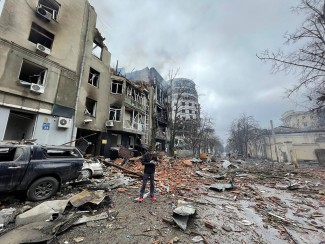
Two and a half years after Russia’s full-scale invasion of Ukraine, victims continue to demand justice for the massive violations they have suffered, which have left many of them gravely harmed. The International Criminal Court opened an investigation into alleged crimes in March 2022. It now faces a critical challenge: how to ensure that Ukrainian victims can meaningfully participate in all stages of its procedures, despite the court’s location far from the conflict.

On 26 June each year, the world marks the International Day in Support of the Victims of Torture. The day was instituted in 1997 by the General Assembly of the United Nations, in an effort to build up the unanimity of condemnation required to abolish torture effectively in our time. In the effort to...

On May 12, the Council of Europe’s Committee of Ministers agreed to create a mechanism to receive claims for damages caused by the Russian crime of aggression in Ukraine. The new registry is intended to receive information on claims of damage, loss, or injury caused by Russia’s invasion of Ukraine since February 24, 2022 and assess their eligibility for future adjudication or compensation. Many of the register’s chief proponents are hailing its creation as a key step toward accountability for the many violations of international law that Russia has committed in or against Ukraine. However, the register alone will not be sufficient to address the multitude of harms caused by the war.

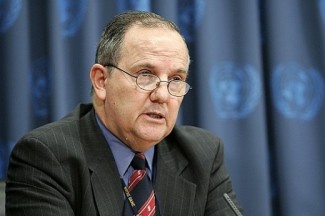
ICTJ interview with Pablo Parenti, of the Attorney General’s Unit for coordination and monitoring cases involving violations of human rights during the Argentine dictatorship.

The numerous atrocities committed by Russia in Ukraine have been part of the former's aggression since its initial invasion of the Crimea and Donbas regions in 2014, though they have skyrocketed in number and severity since the full-scale invasion in 2022. Among these crimes are enforced disappearances, which serve as the means by which the Kremlin more broadly intends to subjugate Ukrainians and eliminate any traces of the Ukrainian national identity.

In this op-ed, ICTJ President David Tolbert argues that Japan's recent, controversial apology to South Korean "comfort women" falls short of international standards.

On April 11, 2019, Jaqy Mutere, cofounder and coleader of Grace Agenda, accepted an award from Physicians for Human Rights recognizing the work of the Survivors of Sexual Violence in Kenya Network and Grace Agenda, a leader in this movement. Jaqy cofounded Grace Agenda after she began working with women who, like her, had experienced sexual violence during the protests that erupted in Kenya after the contested December 2007 elections.

June 20, 2019 — In a tightly packed room at the United Nations, human rights experts gathered for a historic symposium to commemorate a dark chapter of South Korea’s past, the Jeju Uprising and Massacre that began on April 3, 1948, and continued until 1951, which Koreans now refer to as “the 4.3 Jeju” events. Over 100 persons, including notable academic panelists, human rights experts, journalists, diplomats, religious leaders, and peace activists attended the symposium.