420 results

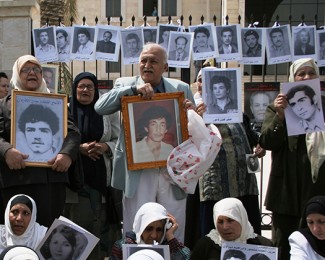
A culture of impunity for serious violations of human rights continues to thrive in Lebanon, says a report released today by ICTJ.

The field of transitional justice increasingly recognizes the relevance of mental health and psychosocial support in contexts of massive human rights violations. Despite growing advocacy and awareness at the global policy level, however, the field lacks a systematic approach to the issue. Now, a new ICTJ report contributes to such an approach.

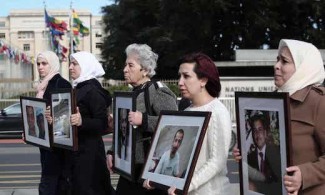
Ever since the armed conflict in Lebanon broke out in the mid-1970s, the main demand of the families of the missing and disappeared has been to secure the right to know the truth and the right to an effective investigation, verification of facts, and public disclosure of what happened. These families persisted in their demands over the decades, against the odds and despite social, political, and cultural forces pushing for collective amnesia. Their perseverance, along with civil society’s invaluable efforts, shined a continuous light on the issue of the disappeared, igniting a public debate that parliamentarians could no longer ignore. Last month, they voted in favor of the Law for the Missing and Forcibly Disappeared Persons in Lebanon.


New York, January 25, 2021—"You cannot deliver 500 kilograms of transitional justice,” explains a high-level UN official in a new ICTJ report released today that explores the theoretical and practical challenges of measuring the results of transitional justice processes. These processes are complex and politically contested and are thus notoriously difficult to evaluate. The report offers key insights related to and tools for evaluating and monitoring transitional justice processes and assessing their impact.

The United States has never collectively confronted its history of colonialism, slavery, and racism in an effort to reform the systems that perpetuate harms to Black communities and other marginalized groups, or to redress these wrongs. Events in recent years, however, have amplified calls for meaningful action to reckon with the past. Given that truth seeking is integral to the investigation of past wrongs, ICTJ and a coalition of practitioners from multiple law firms has released a new report that examines the experiences of official truth commissions from around the world to identify relevant considerations for US stakeholders.

Kampala, October 17, 2022—Sixteen years after the decades-long conflict between the Ugandan government and the rebel group the Lord’s Resistance Army (LRA) ended, victims continue to grapple with its persistent effects. Victims of conflict-related sexual violence (CRSV) and children born of war, in...

New York, March 10, 2021—“We want to turn the page, but not at the cost of justice”—that was a message repeated by victims of human rights abuses interviewed in a new report released today on transitional justice in the Central African Republic (CAR). Produced by the International Center for Transitional Justice and Cordaid, ‘A Drop of Water on a Hot Stone’: Justice for Victims in the Central African Republic presents findings from a study exploring victim-centered approaches to justice in CAR and their feasibility in a context of profound fragility and extreme poverty.

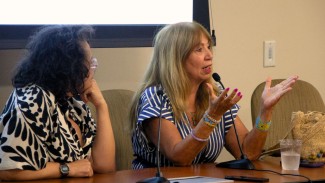
ICTJ’s partner Afghanistan Human Rights and Democracy Organization (AHRDO) recently opened a new virtual museum and database dedicated to Afghan victims of conflict and human rights abuses. “The Afghanistan Memory House” not only preserves the memory of these victims but helps pave the path for truth and justice. To launch the virtual museum, ICTJ and AHRDO cohosted a panel discussion on memorialization, moderated BBC journalist Lyse Doucet, in ICTJ’s office in New York this past December.

Côte d’Ivoire descended into chaos following the October 2010 elections. One of the enduring lessons from this tragic experience could be that elections should never give a reason to set one’s country on fire. Like it or not, however, presidential elections in Côte d’Ivoire have become a malaise that grips the country every five years. And while the 2015 presidential elections were carried out peacefully, the recent October 2020 elections unfortunately were not. The tensions and violence that accompanied it, though far less devastating, brought back macabre memories of the 2010 post-election carnage that left 3,000 people dead and forced more an a million to flee their homes.

I Am Not Who They Think I Am, a new film by ICTJ and MediaStorm, exposes the stigma facing children born of conflict and their mothers and advocates for their right to reparations and redress from the state.