

425 results

This publication is intended to assist in the implementation of principles contained in international human rights documents and treaties. It is a practical tool to provide guidance on implementing reparations initiatives. Its focus is not on redressing single or isolated human rights...

This publication provides an operational framework for vetting and institutional reform. It is intended address the challenges of institutional and personnel reform in post-conflict States through the creation of vetting processes that exclude persons who lack integrity from public in...

This report examines the preventive impact of transitional justice mechanisms in Colombia before the 2016 peace agreement. It finds that these measures have contributed to prevention by strengthening institutional responses to rights violations, shaping the public agenda, developing a...

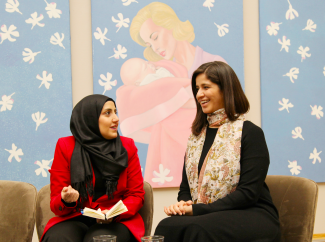
On February 8, ICTJ held an event in The Hague on the missing and disappeared in Syria, in partnership with the Dutch Ministry of Foreign Affairs. The event brought together activists, journalists, artists, and policymakers to reflect on the critical humanitarian needs of victims and their families and the role of the newly established international body on the missing in Syria, which is mandated in part to address these needs.

This paper explores political exclusion in Kenya and its consequences on the social fabric of the nation. It draws from past governmental reports and analysis to formulate new recommendations that can inform current discourse. It first provides an overview of ethnicity in Kenya. ...

New York, June 3, 2019—Today, with just over a month to go before the 2019 UN High-Level Political Forum (HLPF) on Sustainable Development, ICTJ and its partners have released the Report of the Working Group on Transitional Justice and SDG16+, entitled “On Solid Ground: Building Sustainable Peace and Development After Massive Human Rights Violations.”

Customary justice is the primary way in which most communities in South Sudan resolve disputes. Its ability, however, to deal with massive human rights violations is limited due to the complexity of intercommunal violence and a lack of clarity on its proper role. This report contends ...

A man stands facing a table around which several men are seated.

Can education help right the wrongs of the past, especially when the majority of the population was affected by those wrongs? Teboho Moja examines that question in the context of South Africa, where efforts to reform a discriminatory educational system and redress its consequences have been met with mixed results.

On May 11, the South African Department of Justice and Constitutional Development (DOJ) invited comments on new regulations governing the distribution of reparations to victims of the apartheid era in the form of medical and educational benefits. Civil society organizations and groups representing survivors’ interests have raised concerns regarding the scope of the regulations, as well as the DOJ’s overall failure to engage with survivors and consider their views when drafting reparations policies.

On August 9, 2012, UN Special Rapporteur on the promotion of truth, justice, reparation, and nonrecurrence Pablo de Greiff presented the first annual report to the Human Rights Council. The report provides an overview of key activities undertaken by the Special Rapporteur between May 1 and July 25, reviews the foundations of the mandate and outlines the strategy for its implementation.