107 results

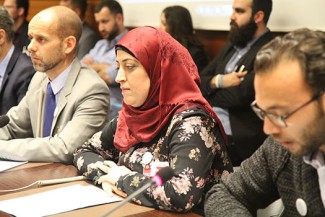
On March 22 in Geneva, we listened to the experiences of Syrians affected by attacks on schools. The Save Syrian Schools project presented the results of its one-year-long research—an unprecedented collaboration of 10 Syrian human rights organizations and the ICTJ.

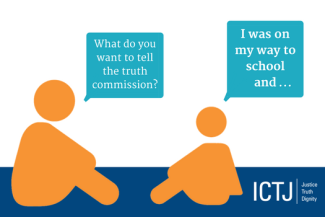
Societies seeking to grapple with the past have much to gain by speaking with young people about their experiences and ideas more effectively. But by the same token, they have a responsibility to gather those statements in a way that both protects and respects youth voices. We sat down with Valerie Waters, author of a new report on taking statements from young people, to discuss the guide and clear up common misconceptions about the statement-taking process.

ICTJ and its partners will hosted a national dialogue in Kampala, Uganda on the aftermath of sexual violence. The aim: to shift stigma from victims to perpetrators and end the culture of silence. Sarah Kihika Kasande, head of ICTJ's Uganda office, explains why such efforts are essential to ending impunity and securing a lasting peace in the country.

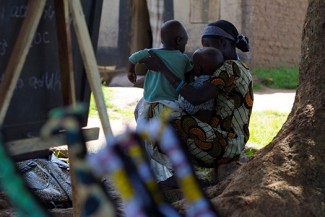
Children born of wartime sexual violence often face rejection from the communities their mothers call home. For these families, the failure of the state to address the harm they suffered and the enduring stigma leads to their further marginalization. An ICTJ film on this stigma, and the paths to overcome it, sparked discussion at a panel held at the Austrian Mission to the United Nations.

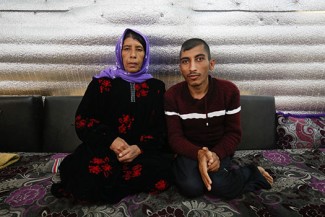
Even in the face of ongoing brutality, many of the nearly 12 million Syrians displaced by the conflict long for their return home – dependent, of course, on certain conditions being met. For our latest report, ICTJ interviewed dozens of Syrians refugees in Lebanon to discuss the impact of the conflict on their lives, their expectations for a potential return home, and their view of what coexistence in Syria might look like. We sat down with the report's authors, Rim El-Gantri and Karim El Mufti, to discuss their findings.

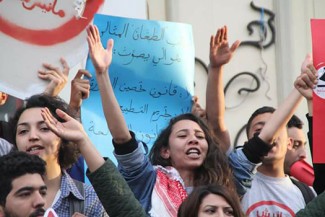
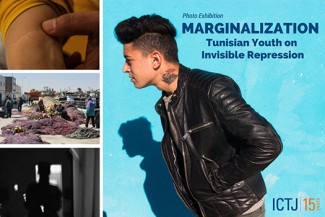
Ongoing economic and social inequality, a legacy of the dictatorship, affects Tunisians across generations, but has particularly pronounced impacts on young people. ICTJ worked with four young photographers to confront the consequences of marginalization and explore its impacts on Tunisian youth. Their four photo galleries comprise the exhibition "Marginalization in Tunisia: Images of an Invisible Repression.”

To mark 15 years of ICTJ, we asked staff past and present for memories that stand out to them - moments that throw the stakes of our work into sharp relief and resonate with them years later. Virginie Ladisch and Clara Ramirez-Barat recall how one Canadian student, in exploring the legacy of the country's Residential Schools, arrived at the concept of "never again."

The impact of Tunisia's transitional justice process is rooted in its ability to give voice to diverse segments of the population, including historically marginalized communities. A workshop hosted by ICTJ brought generations of women together to explore truth-telling techniques and create space for all voices.

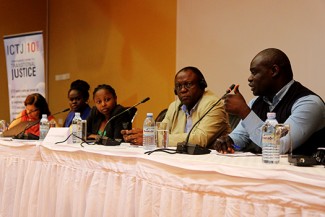
A new ICTJ report argues that in Africa's interconnected Great Lakes region, each country’s attempt to provide justice for past violations offers lessons for similar processes in others. We gathered civil society activists from across the region to discuss which strategies have worked for them, which have not, and opened up about the greatest challenges they face in securing justice.

A panel of policy and media experts discusses women's experience in war and the responsibility of media covering their stories at the New York City premiere of a new documentary.