15 results

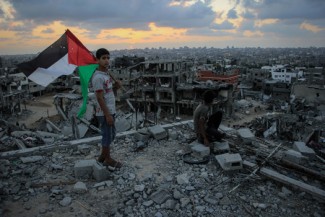
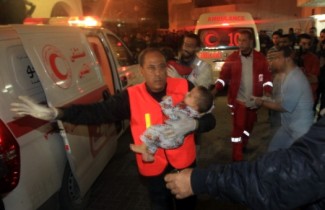
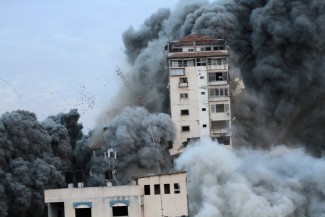
On October 7, the world watched in horror as members of the militant group Hamas slaughtered over 1,400 Israelis, most of whom were civilians including children and the elderly, in a premeditated and sophisticated attack. Israel’s response has so far been no less horrific. Incessant waves of indiscriminate airstrikes on Gaza have hit residential buildings, medical facilities, and other critical civilian infrastructure, besieging the entire enclave and leaving more than 5,000 people dead including 2,000 children. Unfortunately, these unspeakable atrocities—the condemnation and rejection for which we have run out of words—are not isolated events happening in a vacuum. They are, in fact, just the latest episodes in a 75-yearlong cycle of violence.

In this op-ed, ICTJ Vice President Paul Seils analyzes the criminal justice agreement announced by the Government of Colombia and the FARC and discusses what aspects of the deal need clarification to ensure that it is capable of delivering the kind of truth and justice that victims of Colombia's armed conflict deserve.

Many in Colombia are also interested in learning from international experiences where criminal accountability measures were applied to pursue justice after massive human rights violations, like in Bosnia and Herzegovina, Cambodia, Sierra Leone and East Timor. With the aim of promoting an exchange of ideas on what lessons could be useful for Colombia, the ICTJ will be holding a conference in Bogotá on November 24th.

In this op-ed, ICTJ President David Tolbert says states are backsliding on their human rights commitments, and urges the international community to redouble its resolve for justice and accountability.

ICTJ President David Tolbert will be a featured speaker at this year’s Al Jazeera Forum in Doha, Qatar. Al Jazeera Forum is the flagship event of Al Jazeera Media Network, at which Al Jazeera showcases its contribution to the world of media and politics.

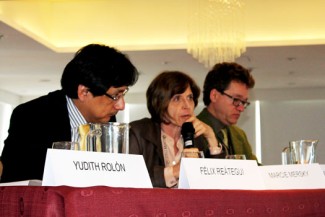
The one-day forum “Latin American Experiences with Truth Commissions,” organized by the International Center for Transitional Justice in Bogotá on July 22, brought together leading experts to discuss experiences and lessons learned from truth-seeking processes that shed light on massive human rights violations in four countries: Argentina, Guatemala, Paraguay, and Peru.

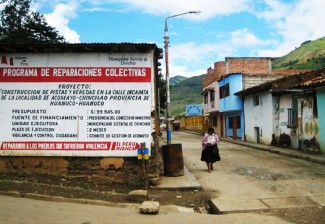
Reparations seek to recognize and address the harms suffered by victims of systematic human rights violations. ICTJ’s Reparative Justice program provides knowledge and comparative experience on reparations to victims' groups, civil society and policymakers worldwide. In this edition of the ICTJ Program Report, we look at ICTJ's work on reparations in dynamic transitional contexts such as Nepal, Colombia, Peru, DRC, and Uganda.

ICTJ’s president David Tolbert will be one of the featured speakers at this year’s Al Jazeera Forum in Doha, Qatar, which aims to explore the complex transformation of the socio-political and media landscapes of the Middle East and North Africa.

In this edition of ICTJ's Program report, Kelli Muddell, director of ICTJ's Gender Justice program, reflects on ICTJ’s vision of gender justice, the challenges facing survivors of sexual and gender-based violence in times of transition, and how ICTJ is working to address inequality in countries like Colombia, Nepal, and Tunisia.

The United Nations has proclaimed December 10 as International Human Rights Day. The date commemorates the signing of the Universal Declaration of Human Rights in 1948, which represented the reaction of the international community to the horrors of the Second World War. Today is a day for reflection more than celebration. A cursory scan of events from the last few weeks has thrown up examples that demonstrate that the belief in human rights for all - in treating all states the same - is more of a tissue-thin membrane than a robust bulwark.