220 results

The 2006 crisis in Timor-Leste saw close to 15 percent of the population displaced from their homes, threatening to sink the country into protracted instability and violence. Remarkably, five years later the country was back on track, with the internal displacement issue largely resol...

In cases other than those of environmental disasters, some mix of persecution and fear of violence based on ethnicity, race, or religion, plus violations of human rights and repression based on political beliefs and opinions often characterizes forced displacement for both internally ...

This paper examines the relationship between forced displacement and transitional justice in Colombia from a gender perspective. The text focuses on three main themes: first, the gendered impacts of forced displacement; second, the ways that official policy, as it has evolved from pro...

Although the conflict in Turkey remains ongoing and a political solution to the “Kurdish question” has not been reached, in recent years, the Turkish government has developed a series of laws and policies regarding the situation of displaced Kurds. The most significant of these polici...

This paper is concerned with the relationship between criminal justice and displacement that has taken place as a result of serious violations of international humanitarian law, and considers these issues within the context of justice efforts in the former Yugoslavia. It argues that i...

Displacement is one of the most widespread and tangible consequences of conflict, and has been chronically high in Africa’s Great Lakes region by any standard. This paper focuses on three salient gender-specific dynamics of conflict and displacement in the region that need to be incor...

As with most post-conflict challenges, the issues of displaced populations and weak security institutions each have profound effects on the other. A common cause of displacement in post-conflict environments is a lack of physical security, either because formal security institutions f...

The reparations policy for victims of Peru’s internal armed conflict, which lasted from 1980 to 2000, includes the internally displaced population among its beneficiaries under the Official Register of Victims. However, displaced persons are given lower priority than the other categor...

The crime of forced displacement has been a widespread practice in Colombia’s internal armed conflict for several decades. However, forced displacement cannot be reduced to an inherent or unintended effect of the conflict. The armed actors in the Colombian armed conflict—the army and ...

In collaboration with the Brookings-LSE Project on Internal Displacement, ICTJ’s Research Unit examined how transitional justice can be used to address the range of injustices associated with displacement and thereby serve as part of a comprehensive approach to the resolution of displ...

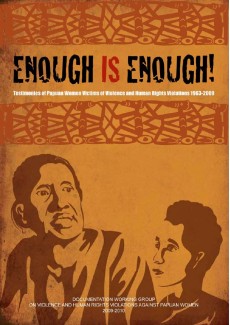
This joint report by ICTJ and the Institute for Human Rights Study and Advocacy (ELSHAM-Papua) provides important insight into the ongoing debate on steps required to achieve a sustainable peace in Papua. The report reviews Papua's recent history within a transitional justice framewor...

Seven years after its approval, the ambitious project to demobilize illegal armed groups in Colombia called Justice and Peace is in crisis. The fact that it has only seven convictions, most of which have been appealed and only one upheld on appeal, is seen as proof of its failure...

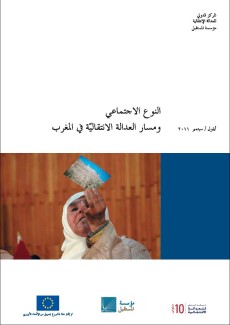
Established in 2004, Morocco’s Equity and Reconciliation Commission (IER: l’Instance équité et réconciliation) was one of the first attempts made in the Arab world to address human rights violations perpetrated in the post-independence period. It also aimed to include female victims o...

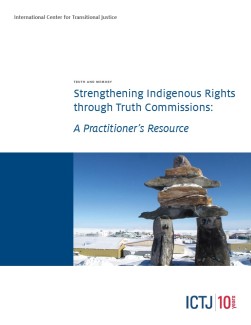
Indigenous peoples are among those most affected by contemporary conflict. The resource-rich territories they occupy are coveted by powerful, often violent groups. Their identity is perceived with mistrust, sometimes with hate. Indigenous communities live at a precarious intersection ...

“We women of Papua have been bruised, cornered, besieged from all directions. We are not safe at home, and even less so outside the home. The burden we bear to feed our children is too heavy. The history of the Papuan people is covered in blood, and women are no exception as victims o...

Property Rights in Kosovo explores cultural, political and social factors dating as far back as the Ottoman period that have contributed to the present state of property rights. It examines the legacy of the armed conflict and NATO intervention of 1999 in the massive population displa...

The International Center for Transitional Justice (ICTJ) and the United Nations Development Programme, with the support from the governments of Denmark and South Africa, held a retreat on Supporting Complementarity at the National Level: An Integrated Approach to the Rule of Law, at G...

This report is the fourth in a series monitoring the implementation of a collective reparations program in Peru since 2007, by ICTJ and the Association for Human Rights in Peru (APRODEH). The publication examines the effects of this reparations program through interviews with the bene...

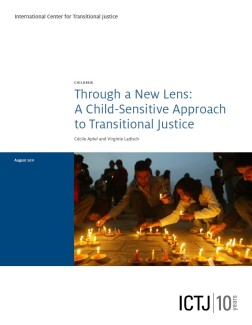
“Through a New Lens: A Child-Sensitive Approach to Transitional Justice” analyzes experiences of four countries—Liberia, Democratic Republic of Congo (DRC), Colombia and Nepal—and identifies some key lessons on children’s participation in transitional justice measures. Authored by Céc...

This report describes the Supreme Iraqi Criminal Tribunal. It discusses the court's establishment and organization, jurisdiction, individual criminal responsibility, rules of procedure and evidence, and general principles of criminal law. It examines, in depth, the guidelines and fram...

This report presents a study of ex-combatants' knowledge and opinions of the Truth and Reconciliation Commission (TRC) and Special Court (SC) in Sierra Leone. Ex-combatants and these accountability institutions are interdependent. Ex-combatants need the TRC and SC to help them reinteg...

This report provides parameters for the creation of a reparations program in Peru. The program must be included in the process of raising a new national awareness in Peru regarding past abuses and building a legal-political framework more responsive to human rights. To ensure sustaina...

This study examines various aspects of existing reparations following the 1991-1999 conflicts in the former Yugoslavia. It clarifies the different categories of reparation; identifies groups potentially entitled to compensation; assesses the extent and fairness of existing policies; a...

This paper analyzes the serious crimes process the UN established in Timor-Leste to try serious violations of human rights perpetrated in 1999. The main difficulty facing this process is that the vast majority of suspects are in Indonesia, and the Timorese government has not been able...

This study identifies the range of agencies in and outside the former Yugoslavia that collect documentation on war crimes and other human rights violations committed in the 1991-1999 wars. Several factors that point to the need for an overview of data-collecting agencies in the region...

