

507 results

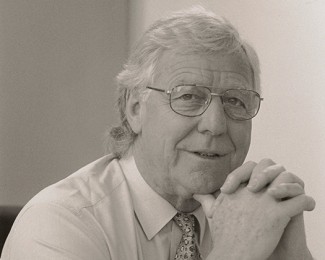
Dr. Alex Boraine, founder of the ICTJ, was larger than life. In his long career, he touched the lives of thousands in his beloved South Africa and around the world.

This report aims to help practitioners in the transitional justice field to understand the experience of establishing and operating hybrid courts and to address some common assumptions about these entities. To do so, it looks at hybrid or mixed courts in practice, drawing on experienc...

NEW YORK – The Swedish International Development Cooperation Agency (Sida) has awarded the International Center for Transitional Justice (ICTJ) a grant of 40 million Swedish kronor to implement its Strategic Plan 2018-2022. During this period, ICTJ will respond to the growing demand for its services...

On Friday, October 19, ICTJ welcomed the Special Rapporteur on the Human Rights of Internally Displaced Persons (IDPs), Ms. Cecilia Jimenez-Damary, at its headquarters in New York, where she gave an informal presentation. Jimenez-Damary’s eye-opening report on the human rights of IDPs takes up the crucial importance of including the voices and concerns of IDPs in transitional justice mechanisms.

On September 18, the trial of Dominic Ongwen resumed at the ICC. Ongwen is on trial for 70 counts of war crimes and crimes against humanity – including various forms of sexual violence and the recruitment of child soldiers – committed in the former IDP camps of Lukodi, Odek, Abok, and Pajule during the 20-year insurgency in Northern Uganda. Ongwen is the first former child soldier who is facing trial at the ICC for crimes in which he was also a victim.

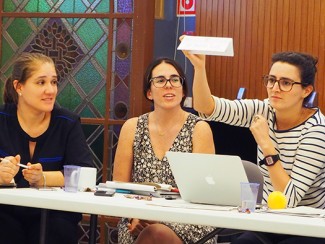
From October 1 to October 5, 2018, ICTJ hosted its eleventh intensive course on transitional justice in collaboration with the International Peace Center for in Barcelona. Participants included leaders in their respective fields, including human rights law, community justice and legal services, peacebuilding, education, and humanitarian affairs.

On the eve of Côte d'Ivoire’s 58th independence anniversary, in a dubious attempt at “social cohesion,” President Alassane Ouattara granted amnesty to 800 persons accused or convicted of crimes against the state during the post-election crisis of 2010-2011. Former First Lady Simone Gbagbo — who had been tried for undermining state security — and other high-ranking officials associated with former President Laurent Gbagbo’s party, the Ivorian Popular Front (FPI), were among those released. The lapses in accountability and acknowledgment in Cote d’Ivoire have emboldened perpetrators and made it impossible for many victims to move on with their lives. The challenges of transitional justice processes present clear obstacles to the sustainable peace that the people of Cote d’Ivoire have been working toward.

Indigenous peoples are still some of the most marginalized and vulnerable communities around the world. In a conflict, they are often some of the most affected as their resource-rich territories are coveted by powerful and violent groups, their identity and loyalty perceived with mistrust, and their...

The announcement by the Executive Committee of Ethiopia’s ruling party that the country will implement the 2002 Algiers peace agreement and decisions of the Ethiopia-Eritrea Boundary Commission brings hope that a 20-year war that divided families and communities is finally over.

ICTJ was pleased to host the newly elected United Nations Special Rapporteur on the promotion of truth, justice, reparations, and guarantees of non-recurrence, Fabian Salvioli (Argentina), at its New York office, where he discussed his vision and priorities.