765 results

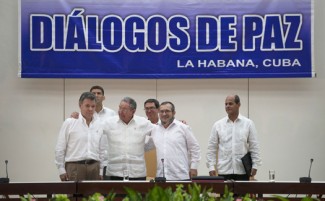
In this op-ed, ICTJ Vice President Paul Seils analyzes the criminal justice agreement announced by the Government of Colombia and the FARC and discusses what aspects of the deal need clarification to ensure that it is capable of delivering the kind of truth and justice that victims of Colombia's armed conflict deserve.

ICTJ deplores the resolution of the African National Congress, at its National General Council meeting on Sunday, to withdraw South Africa from the International Criminal Court and lead an Africa-wide walkout from the court.

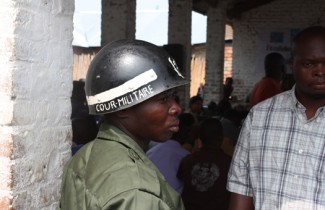
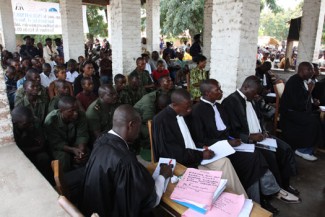
In cooperation with the High Judicial Council, ICTJ held a seminar today with senior representatives of the Congolese military and civilian judiciary and prosecutor’s office to discuss the dual jurisdiction of military and civilian courts over international crimes in the DRC.

The International Center for Transitional Justice welcomes the recent agreement between the Government of Colombia and the Revolutionary Armed Forces of Colombia to create a special criminal jurisdiction as part of an integrated system of truth, justice, reparations and guarantees of non-recurrence.

The resignation and indictment of President Otto Pérez Molina for corruption was a significant victory over impunity in Guatemala. In an interview with journalist Carlos Dada, we discussed how recent developments in Guatemala could impact other countries in Central America, such as Honduras and El Salvador.

Some of the relatives’ stories start with the banging of a door at night, followed by a sudden abduction; others begin with a seemingly innocent citation to appear at a police station for a “routine procedure”. In any case, the stories always unfold in a desolate manner: as a loved one ...

ICTJ talked to Kenyan youth leader Carine Umutoniwase to know how learning from a violent past inspires youth in countries recovering from conflict and repression to avoid past mistakes and to come up with solutions that contribute towards a more just and accountable society.

On International Youth Day, ICTJ reaffirms the importance of engaging youth in efforts to reckon with the past in societies grappling with repressive and violent histories.

In this op-ed, ICTJ's President David Tolbert urges President Uhuru Kenyatta and Kenyan institutions to take concrete actions without further delay to provide reparations for victims, tackle the struggling police vetting reform, and prosecute the serious crimes that were committed during the post-election violence.

On International Justice Day, the head of ICTJ's Criminal Justice program in the Democratic Republic of the Congo (DRC), Myriam Raymond-Jetté, reflects on how to build on small successes in prosecuting international crimes in the national courts.