

751 results

Truth commissions can make important contributions to peace processes if all parties can agree on common objectives and there is genuine local political will to shed light on past events. This is the key finding of a new study – titled “Challenging the Conventional: Can Truth Commissions Strengthen Peace Processes?” – to be released on 19 June 2014 by ICTJ and the Kofi Annan Foundation.

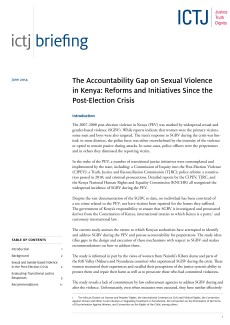
A new study from the International Center for Transitional Justice (ICTJ) shows that the Kenyan government has not effectively addressed the harms suffered by victims of sexual crimes committed during the violence that followed Kenya's disputed 2007 elections or ensured the accountability of perpetrators.

This briefing paper reviews the Kenyan government’s response to sexual and gender-based violence committed against women, men, and children during the 2007/2008 post-election crisis. It draws on interviews with over 40 survivors about their experience and analyzes the laws and transit...

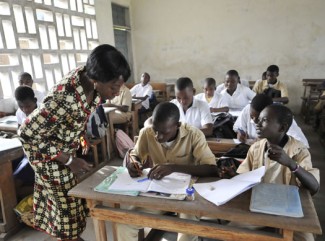
On the Day of the African Child, ICTJ recognizes the power of education to transform society, and acknowledges children and young people as agents of societal change, especially in countries dealing with a legacy of abuse.

This joint report by ICTJ and the Kofi Annan Foundation explores common assumptions about why truth commissions are created in the wake of armed conflict and what factors make them more likely to succeed – or fail. It arises from a high-level symposium hosted by the two organizations ...

Recent developments in the country are challenging the taboos of publicly acknowledging sexual violence and paving the way to addressing the impact of conflict on women. Steadily, a broader conversation on a gender-sensitive approach to truth and accountability is burgeoning in Colombia, as well as on promoting women’s active participation in decision-making processes to redress victims of human rights violations.

Colombia is at a crossroads after the results of the first round of the presidential elections, and the results could have grave consequences for the country's ongoing peace talks. In this interview, Maria Camila Moreno, director of ICTJ's Colombia program explains what's at stake.

This briefing paper summarizes the findings of consultations undertaken by ICTJ with women’s groups in Gulu, Lira, and Soroti on confronting impunity and engendering transitional justice processes in northern Uganda. Its purpose is to help incorporate women’s needs and justice demands...

In early May, the African National Congress (ANC) held on to power in South Africa’s general election. However, there is a widespread feeling that the party that oversaw the creation of the groundbreaking Truth and Reconciliation Commission has walked away from its obligations to the South African people.

ICTJ participated in the launch of a new report on the relationship between transitional justice and development, launched by the Swedish International Development Agency (Sida).