

622 results

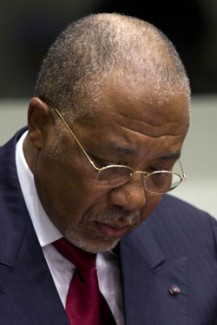
The significance of Charles Taylor’s judgment rendered few days ago in The Hague goes far beyond Taylor himself, or even the Special Court for Sierra Leone. This decision will be an unavoidable legal precedent in any future deliberation of the role played by leaders and states in crimes committed by forces they support in other countries, writes ICTJ's president David Tolbert in this op-ed.

ICTJ welcomes the decision by the Special Court for Sierra Leone to uphold the guilty verdict against former Liberian President Charles Taylor for war crimes and crimes against humanity. The court dismissed challenges from Taylor’s defense, and the prosecution’s request for the sentence to be increased to 80 years, and affirmed his 50-year sentence with immediate effect.

ICTJ has expressed concern over the Bangladesh Supreme Court’s sentencing to death of Abdul Quader Mollah, a senior leader in Bangladesh’s largest Islamic party, for crimes against humanity committed during the country’s 1971 war of independence with Pakistan. The decision retroactively increased Mollah’s original penalty from life imprisonment to capital punishment, in breach of international legal conventions.

Enforced disappearances are among the cruelest of crimes. To the kidnapping, torture, and in many cases, murder of the victim, perpetrators intentionally create fear and uncertainty about the fate of the missing person. Although men are predominantly targeted, the impact on women is severe and lasting.

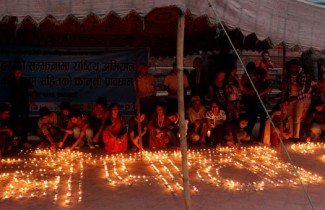
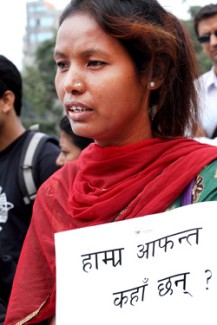
In a briefing paper released on the eve of the International Day of the Disappeared, ICTJ documents the experience of the wives of the disappeared in Nepal and calls for measures to address the poverty, social stigma, and legal limbo they continue to face in their day-to-day lives.

Based on the findings of over 450 interviews, this briefing paper looks at the socioeconomic impact of enforced disappearances on the wives of the disappeared in Nepal. More than 1,000 people remain unaccounted for after Nepal’s 10-year conflict ended in 2006. The majority were young ...

In the brutality of armed conflict or tyranny of a repressive regime, many who go missing are never found again: whether “disappeared” by agents of the state or abducted by an armed faction, the whereabouts of thousands are still unknown to this day. On this International Day of the Disappeared, ICTJ recognizes that enforced disappearances constitute crimes against humanity, and they affect women in ways unique from the impact on men.

About the Project There are few crimes with such devastating and far-reaching impacts as enforced disappearance. Innocents taken from their homes vanish to secret locations known only to the perpetrators. Imprisoned, tortured, and often killed for dubious reasons, their disappearance l...

Children and youth are especially vulnerable to the effects of conflict and gross human rights violations. In this edition of the ICTJ Program Report, ICTJ's Children and Youth Program Director Virginie Ladisch talks with us about the importance of integrating child and youth sensitivity into transitional justice mechanisms.

In Cote d’Ivoire, victims of the 2010-11 post-election violence have yet to receive reparations for violations that occurred during the political upheaval following the election of President Ouattara. Victims’ organizations in Cote d’Ivoire joined ICTJ and the ONUCI Human Rights Section for a three-day training session in Abidjan on reparative justice and the right to reparation.