

473 results

As Burundi and South Sudan teeter on the verge of renewed conflict, with warnings of possible genocides, a new report from ICTJ on the African Great Lakes region asserts that there are lessons to be learned from neighboring countries that may be relevant in preventing new conflicts. The report calls for a clear understanding of victims’ needs and demands, a thorough political analysis and identifying realistic opportunities for acknowledgment and accountability, among other measures.

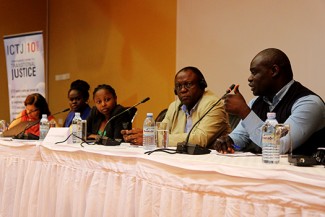
A new ICTJ report argues that in Africa's interconnected Great Lakes region, each country’s attempt to provide justice for past violations offers lessons for similar processes in others. We gathered civil society activists from across the region to discuss which strategies have worked for them, which have not, and opened up about the greatest challenges they face in securing justice.

In Africa's Great Lakes region, countries face common challenges like bad governance, inequitable distribution of natural resources, and ethnic divisions. As nations like Burundi, Central African Republic and South Sudan work towards peacebuilding and accountability, they should learn from what has worked and what has not in neighboring countries, writes Sarah Kihika Kasande, ICTJ's Head of Office in Uganda.

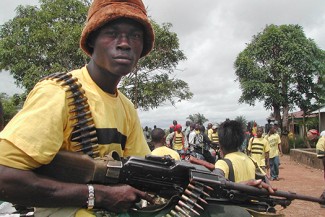
In the Netherlands, a court sentenced an arms dealer to 19 years in prison for his role in war crimes in Liberia. What does his case tell us about pursuing justice for economic crimes in Liberia and beyond?

What hope is there for justice for victims of atrocities in profoundly fractured societies, where systems of government have broken down and social and political divisions run deep? What is the role of transitional justice in forging peace in countries like Colombia, after decades of ...

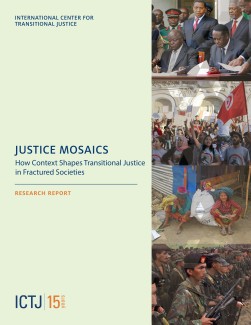
This report presents the main findings of a multiyear research project conducted by the International Center for Transitional Justice on the challenges and opportunities of responding to serious and massive human rights violations in different contexts. The project commissioned 21 stu...

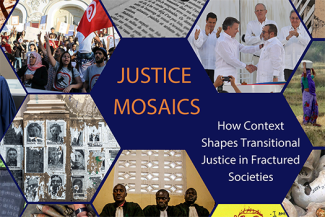
A new book by ICTJ titled Justice Mosaics: How Context Shapes Transitional Justice in Fractured Societies examines the challenges of responding to massive human rights violations in different and difficult circumstances in today's world.

In 1986, Wachira Waheire was whisked off the street, taken to Kenya's most infamous torture chamber, and sentenced to four years in prison. Over the next 30 years, his quest for justice led him to meetings with his torturers to courtroom showdowns with the country's Attorney General. Discover his ongoing struggle for truth, acknowledgement, and reparations alongside all survivors of abuse in Kenya.

Children born of wartime sexual violence often face rejection from the communities their mothers call home. For these families, the failure of the state to address the harm they suffered and the enduring stigma leads to their further marginalization. An ICTJ film on this stigma, and the paths to overcome it, sparked discussion at a panel held at the Austrian Mission to the United Nations.

ICTJ is pleased to announce an intensive course on transitional justice and peace processes to be held in Barcelona, Spain on October 9-13. Applications are now open.