96 results

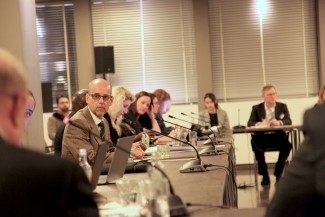
On December 2 to 6, 2024, the International Criminal Court’s (ICC) Assembly of States Parties—the court’s management oversight and legislative body—held its 23rd session in The Hague. As in previous years, ICTJ took an active part, and its experts joined many of the discussions sharing their knowledge and insight. ICTJ organized two side events, one focusing on Syrian victims and another on reparations for victims in Northern Uganda.

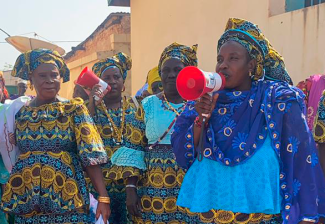
On November 28, ICTJ hosted an international conference to explore the synergies between reparations and sustainable development in Bogotá, Colombia. The event, titled “Advancing Victims’ Rights and Rebuilding Just Communities: An International Dialogue on Reparations and Sustainable Development,” brought together ICTJ partners from The Gambia, Tunisia, and Uganda along with civil society and government representatives from Colombia to discuss local strategies for advancing reparations for human rights abuses and how repairing victims and affected communities can contribute to local and national development. On the occasion, ICTJ also launched a new research report on the topic.

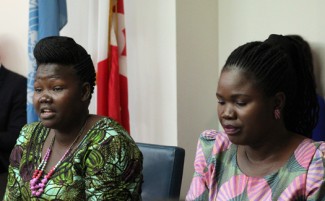
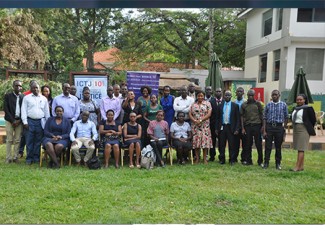
Workshop gathers survivors of gender-based wartime violence to share experiences with policymakers and practitioners.

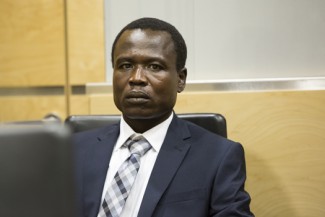
The long-awaited trials of two LRA leaders, Dominic Ongwen and Thomas Kwoyelo, will proceed in two different settings - but why? ICTJ's Sarah Kasande explains the significance of Ongwen's trial before the International Criminal Court and Kwoyelo's prosecution by the International Crimes Division of the High Court in Gulu, Uganda.

For years, ICTJ has championed the media and the role it plays in supporting truth-seeking and advancing accountability and redress for victims of conflict-related atrocities. In the places where we work, from South Africa, to the Gambia, Guatemala, Colombia and the Philippines, media projects and coverage—both mainstream and alternative—have been crucial in ensuring participation, mediating public discourse, contributing to acknowledgment for victims, and revealing long-hidden truths about crimes. This month, we share a dispatch from our work in Uganda.

NEW YORK, February 2, 2016 – A short documentary film depicting the devastating effects of stigma and discrimination against children born of wartime sexual violence, and their mothers, in northern Uganda was released today by the International Center for Transitional Justice (ICTJ) and MediaStorm....

On November 28, 2023, ICTJ organized an international dialogue in Bogotá, Colombia, to share innovative strategies for advancing victims’ rights to redress for human rights abuses and for establishing more victim-centered development policies. The gathering also marked the official launch of ICTJ’s new report—Advancing Victims’ Rights and Rebuilding Just Communities Local Strategies for Achieving Reparation as a Part of Sustainable Development—which presents findings from a two-year comparative study of local efforts in Colombia, The Gambia, Tunisia, and Uganda to advance reparations.

Kampala, October 17, 2022—Sixteen years after the decades-long conflict between the Ugandan government and the rebel group the Lord’s Resistance Army (LRA) ended, victims continue to grapple with its persistent effects. Victims of conflict-related sexual violence (CRSV) and children born of war, in...

This research note presents preliminary population-based data on attitudes about peace and justice in northern Uganda. The survey data presented in this report were collected from April to June 2007 in eight districts of northern Uganda.

Two women abducted by the Lord´s Resistance Army (LRA) return home with their children born of war and fight to be included in a society that deems them criminals.