

48 results

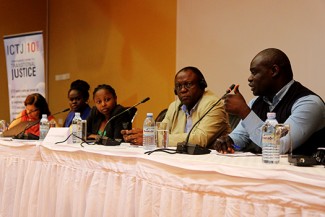
A new ICTJ report argues that in Africa's interconnected Great Lakes region, each country’s attempt to provide justice for past violations offers lessons for similar processes in others. We gathered civil society activists from across the region to discuss which strategies have worked for them, which have not, and opened up about the greatest challenges they face in securing justice.

In a major effort to promote accountability for serious crimes in Africa, ICTJ joined hundreds of human rights groups and transitional justice partners to ask the African Union to prioritize justice. Addressed to the new African Union (AU) Chairperson Dr. Nkosazana Dlamini-Zuma, the letter warns that strained relationships between the AU and the International Criminal Court (ICC) may put justice at risk.

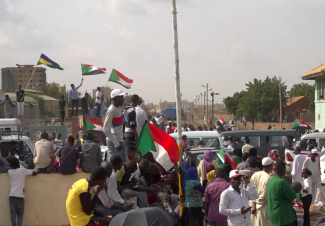
This April, Sudan marked a double anniversary: one of the 2019 revolution that toppled President Omar al Bashir’s decades-long repressive regime, the other of the 2023 outbreak of the ongoing civil war that has devastated the country. These contrasting occasions bring with them great hopes and deep pain. They also raise pressing questions: How long will Sudan have to suffer while the world’s attention seems turned the other way? How long will the voices of Sudanese who yearn for peace and justice continue to be sidelined?

Based on significant field research and interviews with the Higher National de-Baathification Commission, this report focuses on Iraq’s purge of members of Saddam Hussein’s Baath Party, which is the most well-known example of large-scale and politically based dismissals in the Middle ...

On January 12, 2008, the Iraqi parliament passed the “Law of the Supreme National Commission for Accountability and Justice.” The new law replaces the earlier framework governing Iraq’s De-Ba’athification policies. This document is intended to provide a short summary and preliminary a...

This paper discusses the significance of the trials of Saddam Hussein and his close associates held by the Supreme Iraqi Criminal Tribunal. It examines the challenges faced by the Tribunal - including concerns that the process was dominated by the U.S. government (hence undermining t...

The Documentation Affinity Group (DAG) was established in 2005 by ICTJ and five partner organizations as a peer-to-peer network with a primary focus on human rights documentation. Documenting Truth collects the best practices derived from the work of the DAG organizations in Cambodia,...

This paper summarizes the basic facts about the Dujail trial, the first trial before the Iraqi High Tribunal (IHT) against Saddam Hussein and seven others. It also summarizes facts about the IHT in general. It considers both what the Iraqis wanted out of the trial, what such prosecuti...

ICTJ partnered with the Center for Global Affairs at New York University to explore how political will of international and national actors impacts national war crimes proceedings. The panel examined four diverse country scenarios - the Democratic Republic of the Congo, Serbia, Iraq, and Guatemala.

After decades of repressive rules, military coups, and conflicts in the country’s marginalized peripheries, the Sudanese people have come together and proven their resolve to break with the past and begin a new chapter of their nation’s history. Undeterred by a brutal crackdown, thousands of...