

257 results

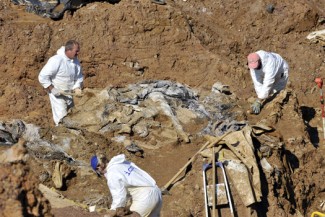
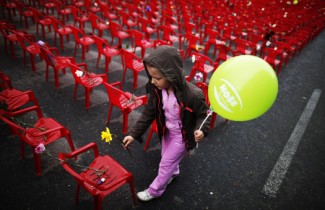
A group of leading world experts on truth-seeking and memorialization has called for the mayor of Prijedor, in Bosnia and Herzegovina, to publicly acknowledge and memorialize the non-Serb victims of atrocities committed in the city in the early 1990s.

A group of leading world experts on truth-seeking and memorialization has called for the mayor of Prijedor, in Bosnia and Herzegovina, to publicly acknowledge and memorialize the non-Serb victims of atrocities committed in the city in the early 1990s.

ICTJ's documentary Voices of Dignity inspired Wilson Herrera, professor of philosophy and researcher at the Universidad del Rosario in Colombia, to reflect on the role of victims in a democratic society, and on the importance of empowering them as agents of change and rights-holders, rather than relegating them to the status of permanent victims.

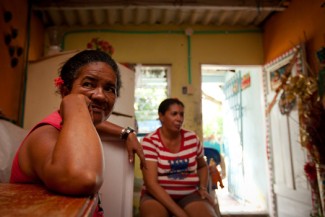
Enforced disappearances are among the cruelest of crimes. To the kidnapping, torture, and in many cases, murder of the victim, perpetrators intentionally create fear and uncertainty about the fate of the missing person. Although men are predominantly targeted, the impact on women is severe and lasting.

About the Project There are few crimes with such devastating and far-reaching impacts as enforced disappearance. Innocents taken from their homes vanish to secret locations known only to the perpetrators. Imprisoned, tortured, and often killed for dubious reasons, their disappearance l...

Children and youth are especially vulnerable to the effects of conflict and gross human rights violations. In this edition of the ICTJ Program Report, ICTJ's Children and Youth Program Director Virginie Ladisch talks with us about the importance of integrating child and youth sensitivity into transitional justice mechanisms.

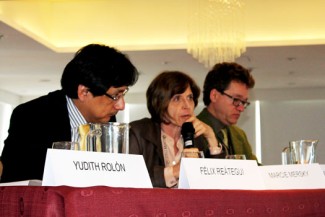
The one-day forum “Latin American Experiences with Truth Commissions,” organized by the International Center for Transitional Justice in Bogotá on July 22, brought together leading experts to discuss experiences and lessons learned from truth-seeking processes that shed light on massive human rights violations in four countries: Argentina, Guatemala, Paraguay, and Peru.

The International Center for Transitional Justice publishes a selection of excerpts from the Supreme Court's rulings and judgments regarding the Justice and Peace process.

Media play an essential role in peace negotiations and post-conflict situations. In the highly polarized and politicized context of Colombia, the Gabriel García Márquez Foundation for New Ibero-American Journalism (FNPI) chose May 3, Worldwide Freedom of Expression Day, to bring together directors and editors of Colombia’s main news media to reflect on their role at a historic moment for the country: the government’s peace talks with the FARC, which represent a possible end to five decades of armed conflict.

Reparations seek to recognize and address the harms suffered by victims of systematic human rights violations. ICTJ’s Reparative Justice program provides knowledge and comparative experience on reparations to victims' groups, civil society and policymakers worldwide. In this edition of the ICTJ Program Report, we look at ICTJ's work on reparations in dynamic transitional contexts such as Nepal, Colombia, Peru, DRC, and Uganda.