309 results

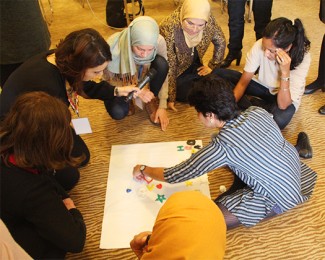
ICTJ’s Gender Symposium, held on February 2 to 4, 2019, in Tunis, Tunisia, brought together fearless women leaders working in 8 countries to advance the needs of victims and to bring gender issues to the center of transitional justice processes. What was achieved? What experiences cut across these diverse contexts? Kelli Muddell and Sibley Hawkins reflect on these questions and more in this short podcast.

This report analyzes the macro-criminality approach that was taken in Colombia’s Justice and Peace process and draws key lessons for the Special Jurisdiction for Peace. It examines how Law 1592 of 2012 and other regulatory instruments sought to move beyond a case-by-case method, prior...

Cover of Macrocriminality report

From February 22 to March 1, ICTJ held its annual retreat in Litchfield Hills, Connecticut. Staff members convened at the Wisdom House—an interfaith conference center that seeks to provide an environment conducive to introspection and teambuilding.

On September 22, 2018, the International Center for Transitional Justice and the University of Birmingham launched Voices of Memory, an interactive exhibition inspired by a group of nine Tunisian women from across the country and from different generations. It is the first collective te...

With the conclusion of the mandate of the Truth and Dignity Commission (TDC), ICTJ looks back on the major events in Tunisia stemming from the Arab Spring that led to the TDC's creation, which involved the participation of a broad spectrum of people representing the country's multifaith, politically divided, and economically stratified society.

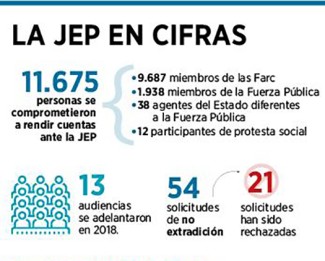
In little less than 10 months, Colombia has witnessed the creation of a completely new jurisdiction, the Special Jurisdiction for Peace (JEP). JEP has already opened two cases and three situations in its Chamber for the Acknowledgment of Truth and Responsibility.

As the work of Tunisia's Truth and Dignity Commission winds down, ICTJ's Salwa El Gantri and Kelli Muddell discuss some of the challenges and successes of its work and their vision for transparent, participatory processes to advance Tunisia’s transitional justice mandate in the short and long term.

This report focuses on “indirect victims” of human rights violations in Tunisia, namely, the wives, sisters, and children of political prisoners in Tunisia, who suffered discrimination, social exclusion, police violence, and harassment during the dictatorship. Presenting documentation...

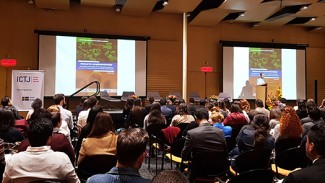
During a forum held in Bogotá, Colombia, on November 1, 2018, ICTJ launched the Spanish-language version of its Handbook on Complementarity: An Introduction to the Role of National Courts and the ICC in Prosecuting International Crimes. The Deputy Prosecutor of the International Criminal Court (ICC), James Kirkpatrick Stewart, gave the keynote address.

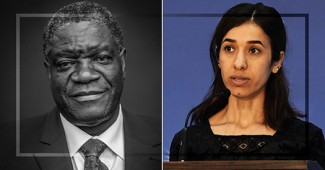
Recent recognition of the work of Nobel Laureate Nadia Murad has drawn global attention to the issue of sexual violence and gender-based violence in conflict. But, as ICTJ Expert Kelli Muddell argues, the nuances of gender norms and how they impact women, men, and vulnerable populations are still often missing from conversations about victims.