427 results

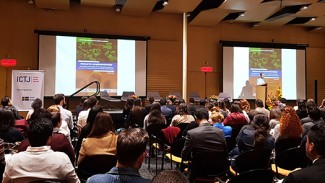
From February 22 to March 1, ICTJ held its annual retreat in Litchfield Hills, Connecticut. Staff members convened at the Wisdom House—an interfaith conference center that seeks to provide an environment conducive to introspection and teambuilding.

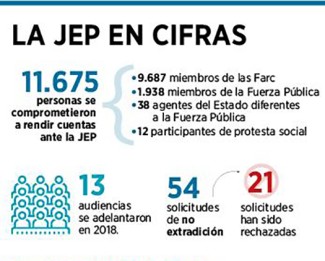
In little less than 10 months, Colombia has witnessed the creation of a completely new jurisdiction, the Special Jurisdiction for Peace (JEP). JEP has already opened two cases and three situations in its Chamber for the Acknowledgment of Truth and Responsibility.

NEW YORK – The Swedish International Development Cooperation Agency (Sida) has awarded the International Center for Transitional Justice (ICTJ) a grant of 40 million Swedish kronor to implement its Strategic Plan 2018-2022. During this period, ICTJ will respond to the growing demand for its services...

On Friday, October 19, ICTJ welcomed the Special Rapporteur on the Human Rights of Internally Displaced Persons (IDPs), Ms. Cecilia Jimenez-Damary, at its headquarters in New York, where she gave an informal presentation. Jimenez-Damary’s eye-opening report on the human rights of IDPs takes up the crucial importance of including the voices and concerns of IDPs in transitional justice mechanisms.

During a forum held in Bogotá, Colombia, on November 1, 2018, ICTJ launched the Spanish-language version of its Handbook on Complementarity: An Introduction to the Role of National Courts and the ICC in Prosecuting International Crimes. The Deputy Prosecutor of the International Criminal Court (ICC), James Kirkpatrick Stewart, gave the keynote address.

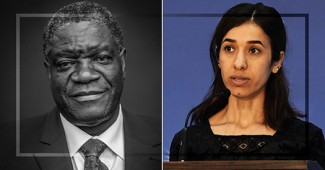
Recent recognition of the work of Nobel Laureate Nadia Murad has drawn global attention to the issue of sexual violence and gender-based violence in conflict. But, as ICTJ Expert Kelli Muddell argues, the nuances of gender norms and how they impact women, men, and vulnerable populations are still often missing from conversations about victims.

In the dynamic political landscape that has emerged following 50 years of conflict, Colombia is taking steps toward truth and accountability. The Commission for the Clarification of Truth, Coexistence, and Non-Repetition (the “Commission”) is scheduled to begin taking statements in November 2018. As part of its mandate, it will hear the stories of victims now living throughout the Diaspora.

Although youth are key political and social stakeholders who have much to contribute to—and gain from—transitional justice processes, they often remain marginalized from such processes or are given only a limited and predetermined space in which to engage. In recent years, the peacebu...

These are especially challenging times for those of us who work to assist societies in dealing with a legacy of atrocities and massive human rights violations. Violent armed conflicts have increased in number, duration, and ferocity around the globe. Immense displacement and waves of ...

In the aftermath of massive human rights violations, the voices of young people carry enormous potential: they can tell the truth about the past while offering new paths forward as their societies pursue peace and justice. However, if institutions want the insights of young people, they must avoid pre-formulated solutions and instead engage with youth on their own terms. A new guide released by ICTJ today aims to provide the tools necessary to do so, offering recommendations about how to responsibly and effectively gather statements from young people.