


407 results

This study, carried out in partnership with Aulas de Paz and Universidad Santo Tomás, explores experiences of acknowledgment of responsibility under Colombia’s Justice and Peace Law. Drawing on interviews with victims, former combatants, and judicial officials, it identifies key lesso...

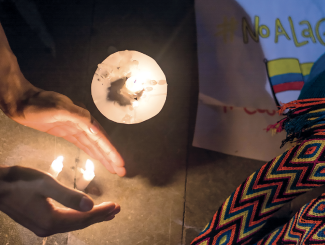
A person lights a candle during an anti-war protest in Barranquilla, Colombia.

The trend of missing and disappeared persons due to conflict remains more prevalent than ever today. Many governments around the world have remained undeterred in their abuse of power to invade a home or community and remove persons deemed to be a threat. This intractable problem has received global attention largely due to the efforts of family members who often risk their lives in pursuit of the right to know and ‍‍to bury their loved ones.

Fifteen years ago, a young nurse named Cristina Cobo was forcibly disappeared by members of the paramilitary group United Self-Defense Forces of Colombia. Paulina Mahecha, her mother, preserves her memory and that of over 20 other disappeared women from the departments of Meta...

Since the 1950s, the FARC had been present in the southern department of Caquetá in Colombia. The local population suffered from decades of armed confrontations between the FARC and the Colombian Army. This is the story of the collective memory project implemented with the El Pato municipal farmers’ association (AMCOP) in the El Pato-Balsillas farmer reserve zone.

New York, June 3, 2019—Today, with just over a month to go before the 2019 UN High-Level Political Forum (HLPF) on Sustainable Development, ICTJ and its partners have released the Report of the Working Group on Transitional Justice and SDG16+, entitled “On Solid Ground: Building Sustainable Peace and Development After Massive Human Rights Violations.”

In the United States, the debate over a national reparations program for slavery and Jim Crow has until now encountered political opposition. However, transitional justice approaches at the community level are increasingly surfacing to address racial injustice. A handful of 2020 presidential candidates have come out in support of reparations for slavery. Recently, Georgetown University took center stage in this debate when its student body voted in favor of a student-led initiative to establish a fee that will fund education and health care programs for the descendants of 272 enslaved persons sold by the university in 1838.

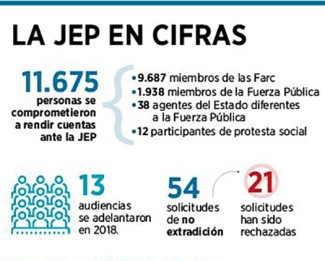
In little less than 10 months, Colombia has witnessed the creation of a completely new jurisdiction, the Special Jurisdiction for Peace (JEP). JEP has already opened two cases and three situations in its Chamber for the Acknowledgment of Truth and Responsibility.

NEW YORK – The Swedish International Development Cooperation Agency (Sida) has awarded the International Center for Transitional Justice (ICTJ) a grant of 40 million Swedish kronor to implement its Strategic Plan 2018-2022. During this period, ICTJ will respond to the growing demand for its services...

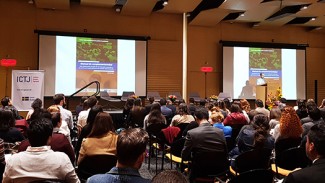
On Friday, October 19, ICTJ welcomed the Special Rapporteur on the Human Rights of Internally Displaced Persons (IDPs), Ms. Cecilia Jimenez-Damary, at its headquarters in New York, where she gave an informal presentation. Jimenez-Damary’s eye-opening report on the human rights of IDPs takes up the crucial importance of including the voices and concerns of IDPs in transitional justice mechanisms.

During a forum held in Bogotá, Colombia, on November 1, 2018, ICTJ launched the Spanish-language version of its Handbook on Complementarity: An Introduction to the Role of National Courts and the ICC in Prosecuting International Crimes. The Deputy Prosecutor of the International Criminal Court (ICC), James Kirkpatrick Stewart, gave the keynote address.

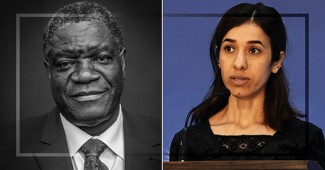
Recent recognition of the work of Nobel Laureate Nadia Murad has drawn global attention to the issue of sexual violence and gender-based violence in conflict. But, as ICTJ Expert Kelli Muddell argues, the nuances of gender norms and how they impact women, men, and vulnerable populations are still often missing from conversations about victims.

Although youth are key political and social stakeholders who have much to contribute to—and gain from—transitional justice processes, they often remain marginalized from such processes or are given only a limited and predetermined space in which to engage. In recent years, the peacebu...

These are especially challenging times for those of us who work to assist societies in dealing with a legacy of atrocities and massive human rights violations. Violent armed conflicts have increased in number, duration, and ferocity around the globe. Immense displacement and waves of ...

In the aftermath of massive human rights violations, the voices of young people carry enormous potential: they can tell the truth about the past while offering new paths forward as their societies pursue peace and justice. However, if institutions want the insights of young people, they must avoid pre-formulated solutions and instead engage with youth on their own terms. A new guide released by ICTJ today aims to provide the tools necessary to do so, offering recommendations about how to responsibly and effectively gather statements from young people.

As human rights advocates and state representatives increasingly acknowledge the necessity of involving children in truth-seeking processes, there is a growing need for practical tools that facilitate children’s participation while prioritizing their protection. This statement-taking ...

To mark the launch of our new publication, "Forms of Justice: A Guide to Designing Reparations Application Forms and Registration Processes for Victims of Human Rights Violations", we sat down with Jairo Rivas about his work in designing reparations forms in Peru and Colombia.

In a number of countries around the world, governments have created state-administered reparations programs for victims and communities that were most affected by massive human rights violations. The success of these programs, which often involve thousands of individuals, depends in p...

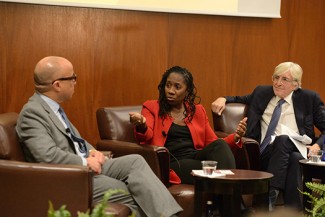
Do the concepts and strategies of transitional justice have a role to play in the United States? Our 2017 Emilio Mignone Lecture asked that question, with Darren Walker, President of the Ford Foundation, and Sherrilyn Ifill, President and Director-Counsel of the NAACP Legal Defense Fund, joining ICTJ's David Tolbert in conversation. Watch the full discussion here.

Last month, the United Nations established a new mission in Haiti, focused on strengthening rule of law institutions and human rights reporting. Can it work with activists to challenge impunity? We sat down with Isabelle Clérié, a Haitian civil society organizer, about the mission, what it can accomplish, and how the past is understood in the country.

Haiti is currently confronting several challenges regarding stability, the rule of law, and corruption. The establishment of the United Nations Mission for Justice Support in Haiti (MINUJUSTH) in April 2017 is aimed at contributing to state and civil society efforts to effectively add...

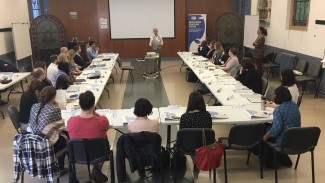
From Syria to Colombia and beyond, how do societies navigate the pursuit of justice in peace processes? That question animated ICTJ’s annual Intensive Course on Transitional Justice and Peace Processes, which this month gathered 31 participants from nearly 20 countries in Barcelona to discuss the place of justice in negotiations to end conflict. Go behind-the-scenes with our instructors and participants.

ICTJ and the Center for Human Rights and Global Justice at NYU School of Law are pleased to announce that that Darren Walker, President of the Ford Foundation, and Sherrilyn Ifill, President and Director-Counsel of the NAACP Legal Defense Fund, will join ICTJ President David Tolbert in conversation for the ninth Emilio Mignone Lecture on Transitional Justice.

With enforced disappearances on the rise, ICTJ President David Tolbert says the path to prevention is clear: the international community must reorder its priorities and change its approach. The disproportionate attention on counterterrorism takes us further away from accountability and prevention, Tolbert writes. He urges the international community to lead the way in unequivocally censoring governments that use enforced disappearance as a political tactic — and ensuring there can be no impunity for this crime.

In the wake of Charlottesville, some took to Twitter to distance the United States from the white supremacist march using #ThisIsNotUs. But this is us, writes Virginie Ladisch, and white Americans have an obligation to educate themselves about the history and persistence of white supremacy in their country.

Fania Davis thinks the time has come for a truth-telling process about racial injustice in the United States, and she is working to make it a reality. We sat down with her and her colleague, Jodie Geddes, to discuss their vision for a national process, what they hope it would achieve, and what they have learned from their conversations with local leaders so far.