
354 results

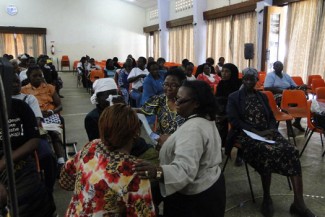
After years of waiting for the government to take action by implementing the recommendations of Kenya’s Truth, Justice, and Reconciliation Commission, victims of past human rights violations and mass violence are demanding that something be done.

In this op-ed, ICTJ's Aileen Thomson and Bo Kyi argue that in the wake of Myanmar's historic elections, the release of all political prisoners held by the government would be an important step towards national reconciliation.

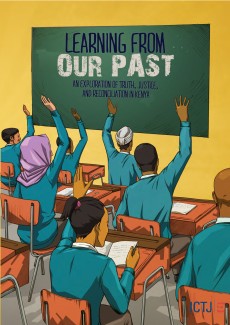
Young people in Kenya now have a new tool to help them learn about difficult periods in Kenyan history and discuss justice, democracy, leadership, and their role as Kenyan citizens.

This educational tool for educators and mentors is designed to help teach young people in Kenya about difficult periods in Kenyan history and foster discussion on issues of justice, democracy, leadership, and their role as Kenyan citizens.

Children are particularly affected by conflict and mass atrocities and have a unique perspective on how those events impact their communities. This makes their participation in transitional justice processes essential for countries to genuinely make a break with the past and successfully address legacies of mass violence.

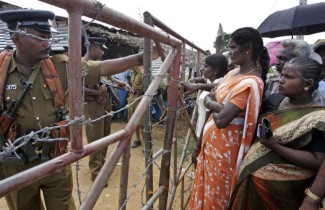
Sri Lanka may be undertaking a change of course towards accountability for atrocities committed during its 26-year civil war.

Some of the relatives’ stories start with the banging of a door at night, followed by a sudden abduction; others begin with a seemingly innocent citation to appear at a police station for a “routine procedure”. In any case, the stories always unfold in a desolate manner: as a loved one ...

ICTJ talked to Kenyan youth leader Carine Umutoniwase to know how learning from a violent past inspires youth in countries recovering from conflict and repression to avoid past mistakes and to come up with solutions that contribute towards a more just and accountable society.

On International Youth Day, ICTJ reaffirms the importance of engaging youth in efforts to reckon with the past in societies grappling with repressive and violent histories.

In this op-ed, ICTJ's President David Tolbert urges President Uhuru Kenyatta and Kenyan institutions to take concrete actions without further delay to provide reparations for victims, tackle the struggling police vetting reform, and prosecute the serious crimes that were committed during the post-election violence.